
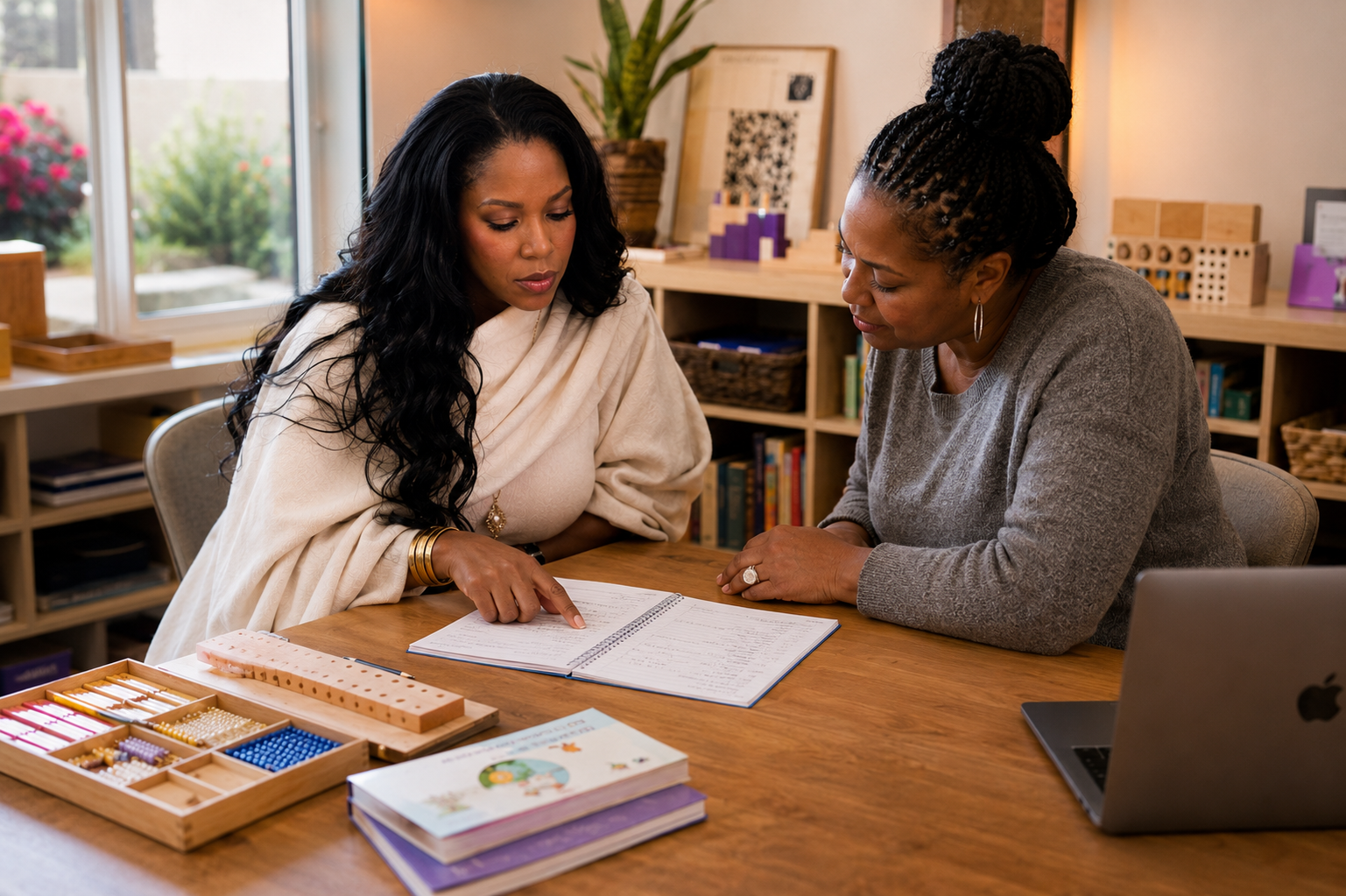
From a Montessori Guide to Homeschool Parents
One of the things I love most about homeschooling is the freedom it gives families. We can slow down when a child needs more time, move ahead when something comes easily, spend an afternoon reading, take math outside, cook during the school day, or follow a conversation that unexpectedly turns into a science lesson. We can also change our plans when something simply is not working.
That freedom is valuable. But freedom and a lack of structure are not the same thing.
In fact, one of the things I have learned from working with children and homeschool families is that many children become more independent when their days include predictable rhythms, clear expectations, and meaningful boundaries. The goal is not to recreate a traditional classroom at the kitchen table. The goal is to build the kind of structure that helps your child learn.
Homeschooling Does Not Have to Mean “School at Home”
When families first begin homeschooling, there can be pressure to recreate the school experience they already know. Math begins at 8:00, reading starts at 9:00, science follows at 10:00, and lunch happens at exactly noon. Every subject is divided into its own carefully timed block.
That approach is not necessary.
One of the advantages of homeschooling is that we do not have to organize learning around bells, class changes, bus schedules, cafeteria schedules, or the needs of hundreds of students. We can organize the day around the children who actually live in our homes.
At the same time, there is another extreme that is not always helpful. Sometimes flexibility slowly becomes, “We’ll get to it later.” Later becomes tomorrow, and tomorrow becomes next week. Before long, everyone is frustrated because the work is piling up, the child does not know what is expected, and the parent feels as though every school day requires a negotiation.
That is where the right homeschool structure becomes important.
Children Need to Know What Comes Next
Think about how much mental energy it takes to constantly wonder: What am I supposed to do? When do I have to start? How much do I have to finish? Can I stop now? Do I have to do this today? What happens after this?
When children have to ask those questions repeatedly throughout the day, they can spend an enormous amount of energy negotiating the routine instead of actually doing the work.
A predictable homeschool routine removes some of that uncertainty. Your child does not necessarily need a minute-by-minute schedule. They need a rhythm they understand.
Perhaps mornings begin with breakfast, getting dressed, and preparing the learning space. Maybe independent work happens before lunch. Maybe live classes always mean being at the computer a few minutes early with a notebook, pencil, and materials ready. Perhaps afternoons are reserved for reading, science experiments, art, outdoor learning, practical life, or unfinished work.
The exact routine will look different in every household. What matters is that your child begins to understand, “This is how our learning day works.”
That predictability creates room for independence.
Montessori Has Never Meant “Children Do Whatever They Want”
This is one of the biggest misunderstandings about Montessori education. Montessori environments offer children freedom, but that freedom exists within carefully prepared limits.
A child may have choices. A child may work independently. A child may spend longer with something that has captured their attention. But the environment itself is intentional.
Materials have a place. There are expectations for how they are used. Work is completed. The environment is cared for. Children learn how to manage themselves within a community. Teachers observe, guide, and intervene when necessary. Children gradually take on more responsibility as they are ready.
That same idea translates beautifully into a Montessori homeschool environment. We do not need to control every moment of a child’s day to provide structure. We create an environment that makes independence possible.
Structure and Flexibility Can Exist Together
Parents sometimes worry that creating a homeschool schedule will take away the flexibility they chose homeschooling for in the first place. It does not have to.
Imagine that your child is deeply absorbed in writing a story, but the schedule says it is time for science. Do you have to interrupt them at exactly 10:00? Of course not. You might recognize that something valuable is happening and give them another 30 minutes.
That is flexibility.
Now imagine that your child does not want to do math because math feels difficult today. They ask to skip it, then ask again tomorrow, and again the next day. Allowing math to disappear indefinitely is not necessarily flexibility. It may be avoidance.
Those are different situations, and one of our jobs as adults is learning to recognize the difference.
Sometimes children need more time. Sometimes they need a break. Sometimes the work really does need to be adjusted. And sometimes they need us to calmly communicate, “I know this is difficult. We are still going to work through it.”
That is also part of education.
Independence Does Not Mean Doing Everything Alone
This is especially important in homeschooling. We want children to become independent learners, but independence develops gradually.
A child who cannot yet organize five assignments independently probably does not need to be told to “manage their time better.” They need to be taught how.
You might begin by sitting together and making a short work plan. Then your child may begin checking off completed work. Later, they may learn to estimate how long an assignment will take. Eventually, they may begin organizing an entire work cycle without you.
The adult support decreases as the child’s ability increases. That is very different from suddenly handing a child a long list of assignments and expecting them to figure everything out.
Independence is not the absence of guidance. It is often the result of good guidance.
A Work Cycle Can Be More Helpful Than a Rigid Schedule
Many homeschool families do not need a traditional school schedule at all. A work cycle may make much more sense.
Instead of dividing the morning into fixed blocks for math, reading, and writing, you might establish a morning work cycle from 8:30 to 11:00. During that period, your child has several pieces of work to complete, such as a math lesson and practice, 30 minutes of reading, a written response to the reading, vocabulary practice, handwriting, and a science or social studies assignment.
Some work may require your support, while other work can be completed independently. Over time, your child can gradually develop more responsibility for deciding the order in which the work gets done.
That creates both structure and choice, and those two things can work very well together.
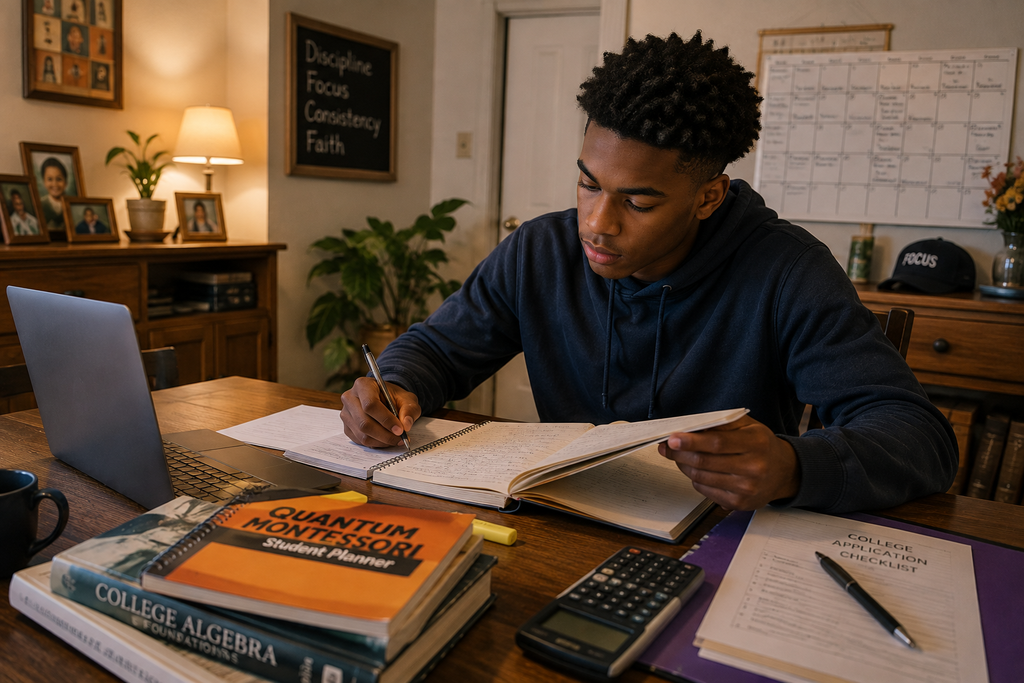
Your Learning Environment Is Part of the Structure
Structure is not only about time. It is also about the environment.
A child who has to search for a pencil every morning is starting the day with an unnecessary obstacle. A child working beside a television, video game console, ringing phone, and pile of unrelated items is being asked to filter out distractions before learning even begins.
Your homeschool space does not have to look like a Pinterest classroom. It does not have to be expensive, and it definitely does not have to be perfect. But it should make learning easier.
Keep commonly used supplies accessible. Give books a home. Make sure pencils are sharpened. Keep manipulatives where children can actually use them. Have notebooks available and create a reasonable place for completed work. Reduce distractions when focused work is happening. If your child uses a computer for online learning, help them keep the digital environment organized too.
A prepared environment quietly communicates, “You have what you need. You know where it is. You can begin.”
Online Learning Still Needs Structure Away From the Screen
This is something I feel strongly about as an educator. Online education should not mean that a child spends the entire school day clicking through a computer.
The computer is a tool. Children still need to read, write, use their hands, work with books and pencils, handle manipulatives, have conversations, move their bodies, conduct experiments, and explain what they think. They also need time away from the screen to actually do something with what they are learning.
A good online homeschool routine should account for both online and offline work. Sometimes the most important part of an online lesson happens after the computer closes.

Difficult Work Is Still Part of Learning
Homeschooling gives us an incredible opportunity to respond to children individually. That does not mean children should never experience difficulty.
Learning how to persist when something is not immediately easy is an important skill. We can support a struggling child without immediately removing the struggle. We can break an assignment into smaller pieces, reteach a concept, provide manipulatives, change how something is presented, allow movement, shorten a work period, give a child a break, return later, sit beside them, or ask better questions.
But sometimes the work still needs to be done.
There is a meaningful difference between accommodating a child’s learning needs and eliminating every uncomfortable learning experience. Children deserve support, but they also deserve the opportunity to discover, “I did not know how to do this before, but I stayed with it, and now I can.”
That feeling matters.
The Right Structure Will Change as Your Child Grows
A kindergarten homeschool routine should not look like a sixth-grade routine. Two sixth graders may not need the same structure either.
One child may wake up ready to work independently, while another may need significant support getting started. One child may need frequent movement, while another may become frustrated by interruptions once deeply focused. One may work beautifully from a checklist, while another may become overwhelmed when looking at an entire week’s assignments at once.
This is where observation becomes so important.
Instead of asking only, “What should a fifth grader’s schedule look like?” try asking, “What does my child need in order to be successful?”
Those questions lead to very different answers.
Signs Your Homeschool May Need More Structure
You may want to reconsider your current homeschool routine if schoolwork has become a daily negotiation, assignments are regularly pushed into the next day or week, or your child constantly asks what they should be doing. Frequently lost materials, an unclear beginning or ending to the school day, consistently avoided subjects, and difficulty beginning work without repeated prompting can also be signs that your current structure needs attention.
You may also need to make changes if everyone feels as though homeschooling lasts all day, expectations are constantly changing, or you feel responsible for remembering everything for your child.
None of these things means you are failing at homeschooling. They are information. Something in the environment, routine, workload, expectations, or level of support may need to change.
And that is one of the beautiful things about homeschooling: you can change it.
Start With Three Simple Questions
If your homeschool currently feels chaotic, do not build an elaborate schedule tonight. Start smaller.
First, ask yourself, “What does my child need to accomplish consistently?” Identify the work that matters most.
Next, ask, “What parts of our day already work well?” Do not rebuild something that is not broken.
Finally, ask, “Where does our day usually fall apart?” That is probably where your first structural change belongs.
Maybe you need a consistent starting time. Maybe your child needs a visual work plan. Maybe phones need to leave the learning space. Maybe math needs to happen earlier. Maybe you need fewer assignments, or perhaps your child needs more challenging work. Maybe everyone needs an actual lunch break. Maybe your child needs help learning how to organize their own work.
Change one or two things. Observe. Then adjust again. That is much more sustainable than trying to create the “perfect homeschool schedule.”
The Goal Is Not a Perfect Homeschool Day
There will be days when someone wakes up late, appointments interrupt the routine, or difficult mornings require a reset. There will be beautiful weather that makes you abandon the afternoon plan, lessons that take twice as long as expected, and lessons that take only ten minutes. There will be children who suddenly become fascinated by something you had not planned to teach that day.
That is real life.
Structure is not supposed to make your homeschool rigid. It is supposed to give your family something stable enough that you can be flexible without everything falling apart.
That is an important distinction.
We are not trying to create children who can perfectly follow schedules. We are trying to help children learn how to manage themselves: how to begin, persist, make choices, organize their work, recognize when they need help, finish something they started, and eventually take increasing responsibility for their own education.
That kind of independence does not happen because adults disappear from the process. It develops because we intentionally prepare children for it.
So if your homeschool needs structure, do not think of that as giving up the freedom homeschooling provides. Think of it differently.
Homeschooling is not the absence of structure.
It is the opportunity to build the right structure for the child in front of you.

Quantum Montessori® believes meaningful education begins with observation of the individual child. Through Montessori-inspired homeschool support and live online learning, we help families create learning experiences that combine independence, meaningful academic work, flexibility, and appropriate support.
Leave a Reply