
Before we decide a child is a reluctant writer, we need to figure out which part of writing is actually getting in the way
From a Montessori Guide to Homeschool Parents
“I hate writing.”
Sometimes children say it before the pencil even touches the paper.
You ask for a paragraph and suddenly they need water. Their pencil needs sharpening even though it was sharpened thirty seconds ago. They cannot think of anything to write. Their hand hurts. They do not know how to start. They tell you the topic is boring. They write three sentences and announce that they are finished.
If this happens often enough, it is easy to conclude that you have a reluctant writer.
Maybe you do.
But “I hate writing” is not particularly useful information by itself.
Writing asks a child to do many things at once. They have to generate an idea, hold that idea in their mind, decide what they want to say, organize it, find words, construct sentences, spell, punctuate, form letters or type, remember what they already wrote, consider what comes next, and eventually reread and revise the whole thing.
A child can have something thoughtful to say and struggle enormously with getting it onto paper.
Another child may write quickly and neatly without having developed much depth in the actual writing.
So when a student tells me, “I hate writing,” I do not immediately start looking for ways to make writing more entertaining.
First, I want to know what the child is actually telling me.
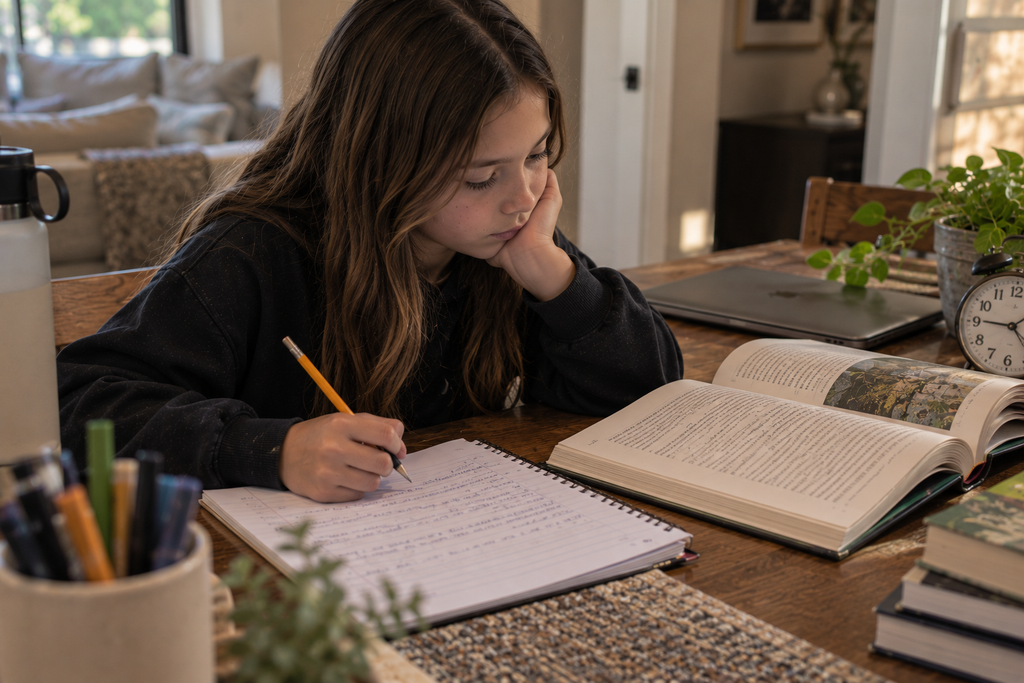
“Writing” Is Actually Several Different Skills
This is the first thing I want parents to understand.
When we ask a child to write, we are asking for the coordination of multiple skills. If one of those skills requires an enormous amount of effort, it can interfere with everything else.
Imagine trying to compose a thoughtful paragraph while consciously thinking about how to form nearly every letter.
Or trying to explain an idea while stopping repeatedly because you are unsure how to spell the words you want to use.
Or having five ideas in your head but not knowing which one should come first.
The finished page may look the same in all three situations.
Very little writing.
But those children do not need the same lesson.
That is why the amount a child produces cannot be the only thing we observe.
I want to watch the process.
Sometimes the Problem Is Handwriting
A child may know exactly what they want to say and still resist writing because physically producing the words requires too much attention.
This becomes particularly noticeable as children grow.
The intellectual expectations increase. We ask for longer responses, more detailed explanations, research notes, written reflections, multi-paragraph compositions, and work across every subject. A child who could compensate for inefficient handwriting when the assignment required three sentences may struggle when the same hand is now expected to sustain several pages.
That does not mean handwriting should disappear.
In fact, it tells me we may need to work on it more deliberately.
Sometimes I separate the skills temporarily. We may practice handwriting without simultaneously requiring sophisticated composition. Then, during another lesson, I can focus more heavily on developing ideas and organization.
The goal is not to make every page look perfect.
The goal is to make handwriting increasingly functional so that the physical act of writing stops consuming so much of the child’s attention.
Sometimes the Child Cannot Find the Beginning
There are students who can talk to me for ten minutes about a subject and then stare at a blank page because I said, “Write about it.”
The ideas are there.
The entry point is not.
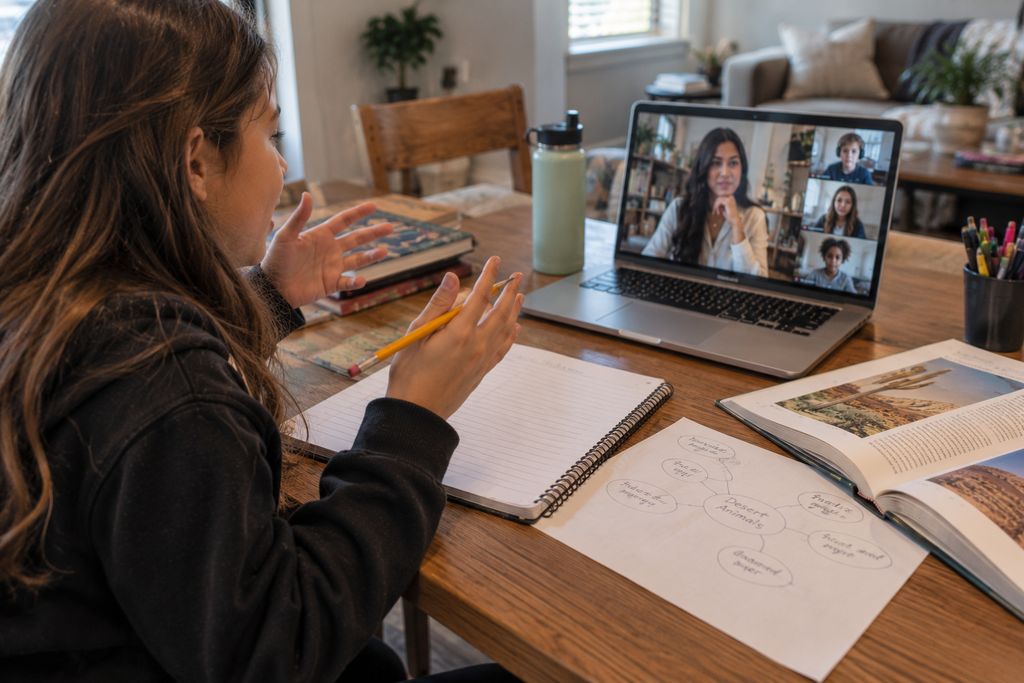
For these students, I may begin with conversation.
Tell me what happened.
What is the most important thing you want me to understand?
Which part surprised you?
What do you think?
Why?
Now we have language.
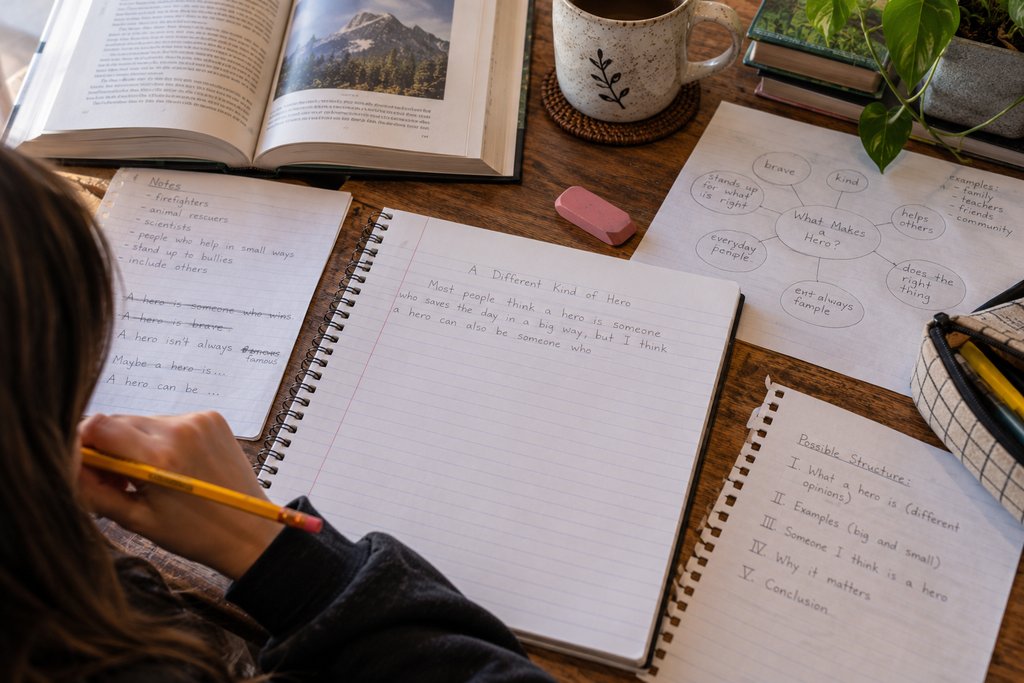
Sometimes I jot down a few words the student said and hand them back. Sometimes the child creates a quick web or outline. Sometimes we decide on the first sentence together and I stop helping immediately afterward.
The purpose is not for me to become the child’s writer.
I am helping the student recognize a process they can eventually initiate without me.
Over time, “Tell me what you want to say” becomes something the child can ask themselves.
Sometimes the Child Has Too Many Ideas
This child is almost the opposite.
Ask for a story and you receive an entire universe.
There are seventeen characters, three settings, a mysterious key, a dragon that may or may not actually be a dragon, someone’s missing brother, a portal, and a subplot that appeared halfway through the explanation.
Then the child starts writing.
Three pages later, we are still in the first scene.
These children may not need help generating ideas at all. They need help making decisions.
What is this piece actually about?
Which details matter?
What can wait?
What does the reader need to know now?
What belongs somewhere else?
Organization is not about suppressing creativity. It gives creativity a structure another person can follow.
That is an important distinction, especially for children who become frustrated when an adult responds to their imaginative writing by immediately correcting grammar.
Sometimes mechanics are not the most important thing happening on the page yet.
Sometimes Spelling Is Making the Child Write Smaller
This one can be easy to miss.
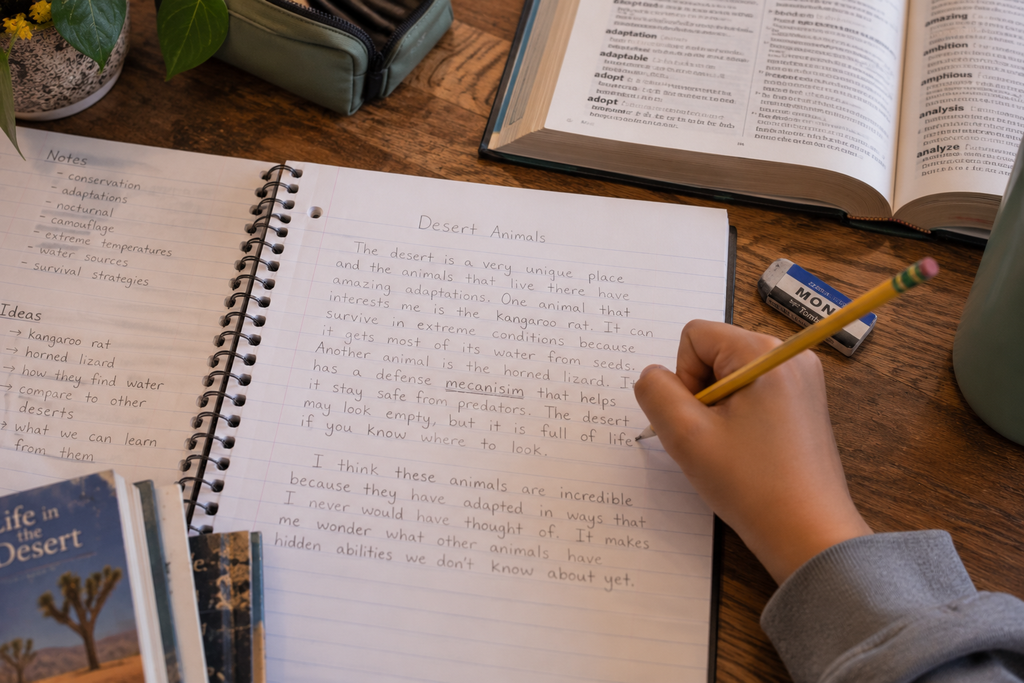
A child who is uncertain about spelling may begin avoiding words they cannot confidently spell.
Instead of writing the exact word they want, they choose a simpler one.
Instead of writing a detailed sentence, they shorten it.
Instead of taking a risk, they remain inside the vocabulary they know they can put on paper correctly.
Now spelling is affecting composition.
I want children to develop accurate spelling. I also do not want uncertainty about spelling to shrink their thinking.
During drafting, there are times when I would rather have a child attempt the word, underline it for later, and keep the idea moving. Editing gives us another opportunity to return to spelling.
The stage of the writing process matters.
If I interrupt every sentence to correct every error, I may end up with more accurate sentences and considerably less writing.

Sometimes “I Hate Writing” Means “I Don’t Know Enough About This”
We also have to consider the topic.
It is difficult to write thoughtfully about something you know almost nothing about.
Sometimes a child appears to have a writing problem when what they actually have is a knowledge problem.
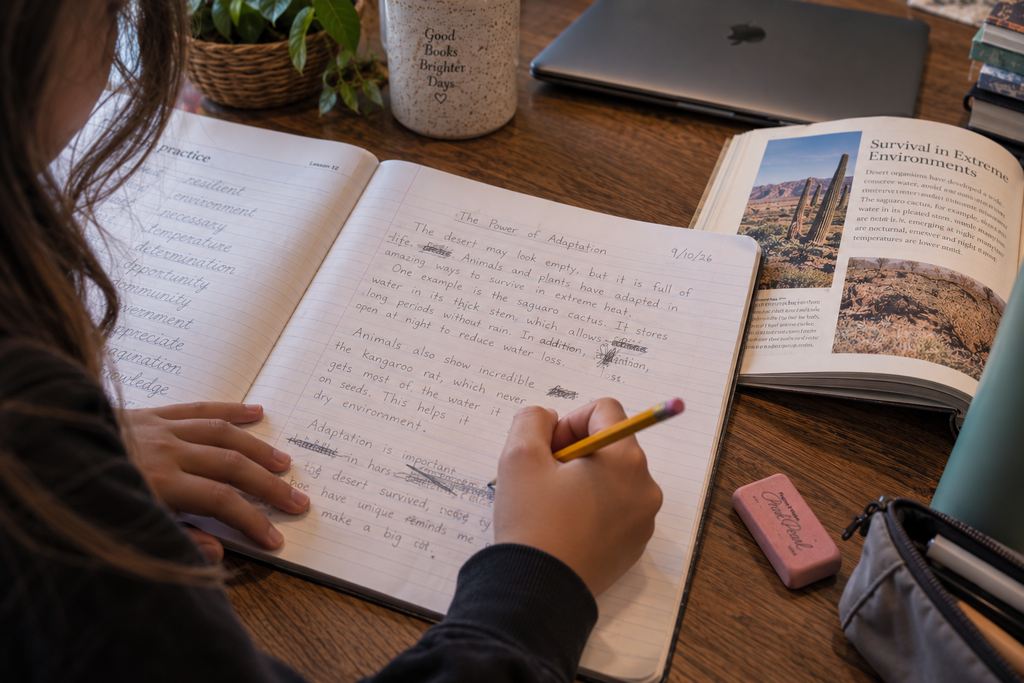
If I ask a student to explain how desert animals survive extreme temperatures without giving them enough opportunity to read, observe, discuss, research, and build background knowledge, I should not be surprised when the writing is thin.
Writing needs something to work with.
This is one reason reading and writing should not be treated as completely separate subjects. Science feeds writing. History feeds writing. Literature feeds writing. Research feeds writing. Conversation feeds writing. Experiences feed writing.
Children who know more have more available to say.
Writing Does Not Always Need to Begin With a Prompt
Children need to learn to respond to assigned topics. There will be times when the subject is not their choice, and being educated includes developing the ability to work thoughtfully even when every task is not personally fascinating.
But if nearly all writing begins with an adult-generated prompt, we miss important opportunities to see what a child does when they actually have something they want to communicate.
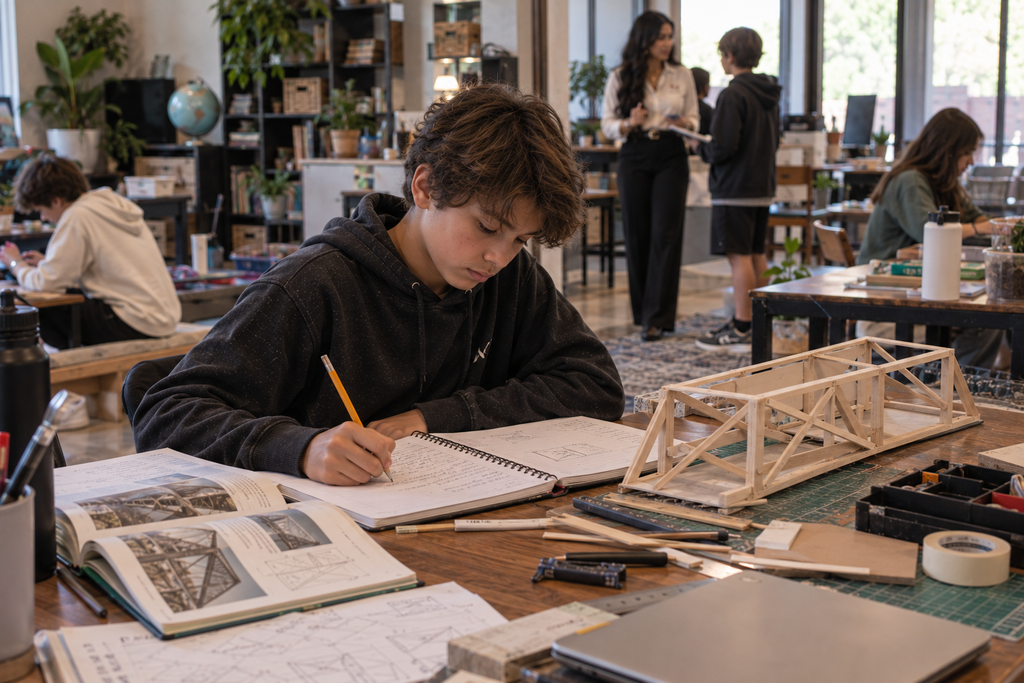
Project work gives us many of those opportunities.
A student who spent days constructing something may suddenly have quite a lot to say about why the first design failed.
A child who conducted an experiment has observations to record.
Someone who disagrees with a character’s decision in a novel has an argument.
A student planning a community project may need to write an email, instructions, a proposal, or a budget explanation.
Now writing has a job.
That matters.
I Still Teach Grammar, Spelling, Handwriting, and Structure
Meaningful writing does not mean mechanics no longer matter.
They matter very much.
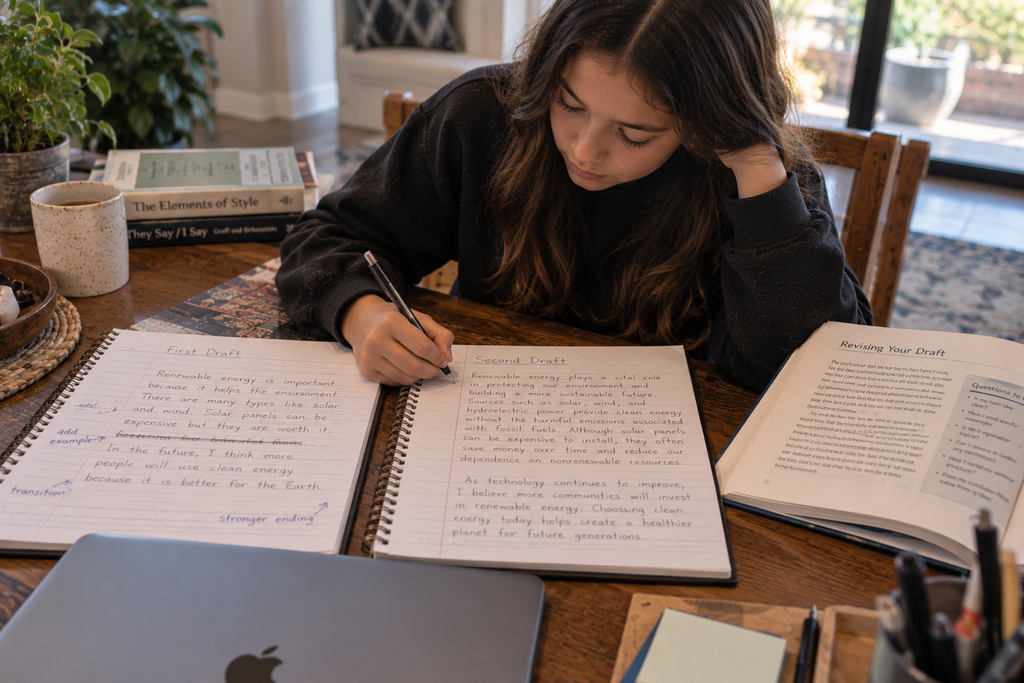
Children need grammar. They need spelling. They need punctuation. They need handwriting instruction. They need to understand paragraphs, sentence structure, organization, revision, and the conventions that allow another person to understand what they mean.
The difference is that I do not want mechanics to become the entire definition of writing.
A perfectly punctuated paragraph can be empty.
A fascinating idea can be almost unreadable.
Neither is where we want to stop.
We are developing both the writer and the writing.
Sometimes that means I teach a very explicit grammar lesson. Sometimes we practice handwriting. Sometimes I take a sentence from the student’s own draft and show how punctuation changes its meaning. Sometimes we study how an author constructed a paragraph. Sometimes we revise one section instead of correcting an entire paper.
And sometimes I simply let the child finish the thought before I teach anything at all.
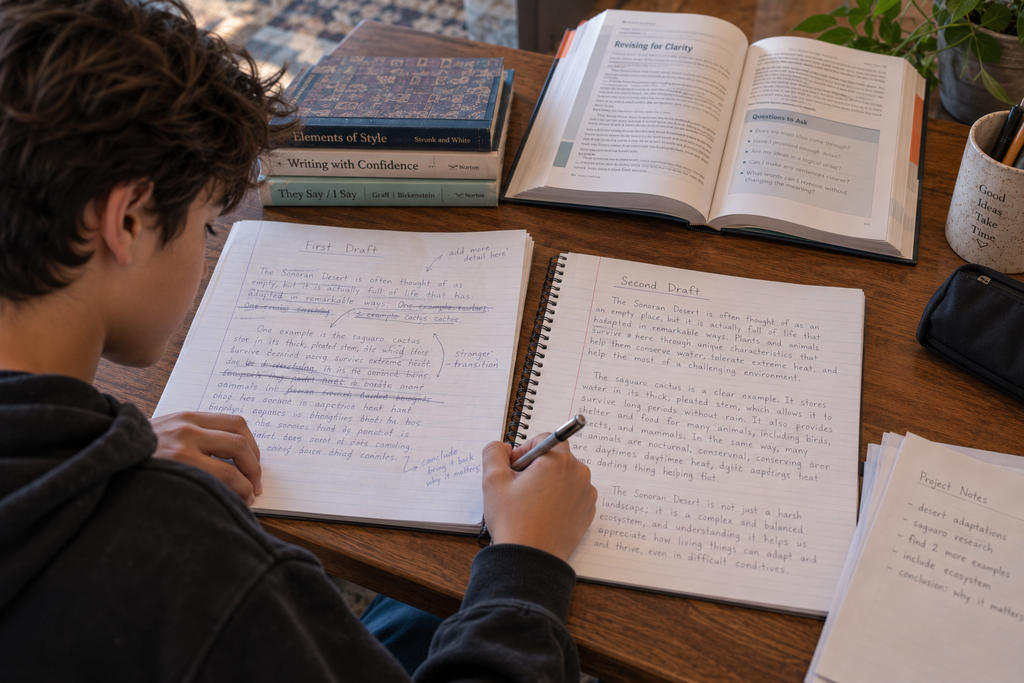
Watch What Happens Before the Child Says “I Hate Writing”
This is what I would ask homeschool parents to do.
Observe.
Not only the finished page.
Watch what happens before it.
Does your child begin easily and then tire?
Do they talk beautifully but freeze when the notebook opens?
Do they ask how to spell nearly every other word?
Do they write very slowly?
Do they have no idea what to say?
Do they have so many ideas that they cannot choose one?
Do they avoid rereading anything they have written?
Do they become frustrated when asked to organize?
Can they write extensively about one subject but almost nothing about another?
Does typing dramatically change the amount or quality of their composition?
Does conversation help?
Does a physical organizer help?
Does background reading help?
Does breaking a long assignment into several days change the experience?
Those observations give us something much more useful than the label reluctant writer.
They tell us where to teach.
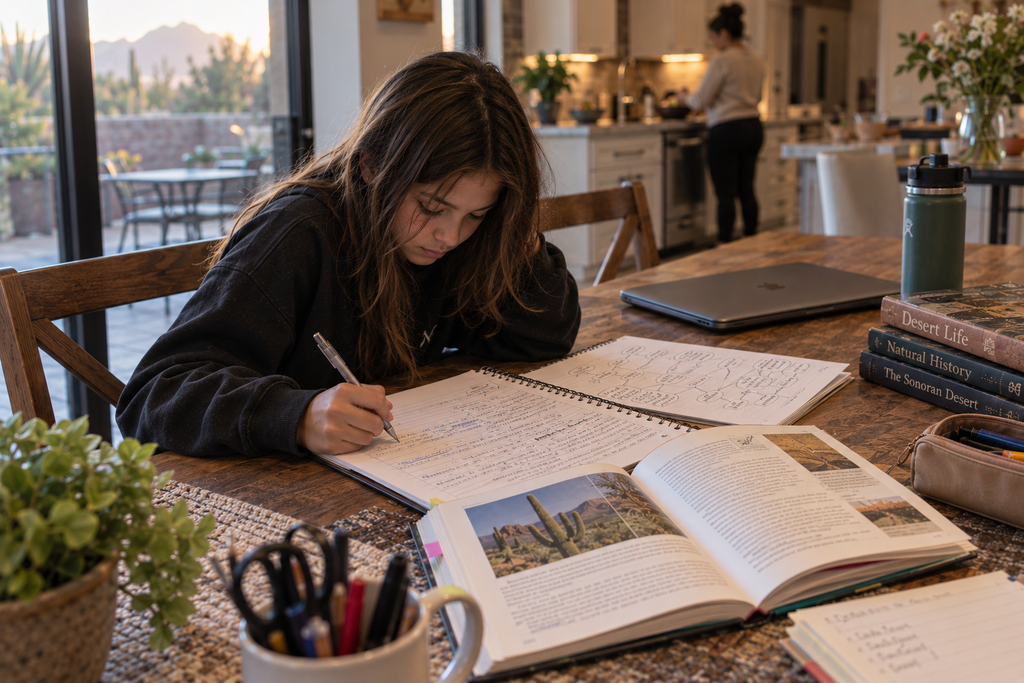
There May Be a Writer Underneath the Resistance
I am careful about telling a child who they are based on what is difficult for them right now.
A child who struggles to read is not necessarily “a bad reader.”
A child who needs help organizing work is not “lazy.”
And the child who groans every time the composition notebook appears may not actually hate writing.
They may hate not knowing how to begin.
They may hate how slowly their hand moves.
They may hate forgetting their sentence while trying to spell a word.
They may hate having an adult correct the first sentence before they have managed to write the second.
They may hate being asked to write about something they do not understand.
They may hate knowing exactly what they want to say and not yet having the skills to make the page sound like the person inside their head.
Those distinctions matter.
When I encounter a reluctant writer, my goal is not to convince the child that writing is secretly fun.
My first job is to observe carefully enough to find out where the process is breaking down.
Then we teach there.
We build handwriting.
We strengthen spelling.
We read more.
We talk.
We organize ideas.
We practice sentences.
We give children something worth writing about.
We teach revision without making every first draft feel like a collection of mistakes.
And little by little, the distance between what the child can think and what the child can put on paper begins to close.
Sometimes “I hate writing” eventually becomes, “Can I finish this?”
That is a very different sentence.
Leave a Reply