
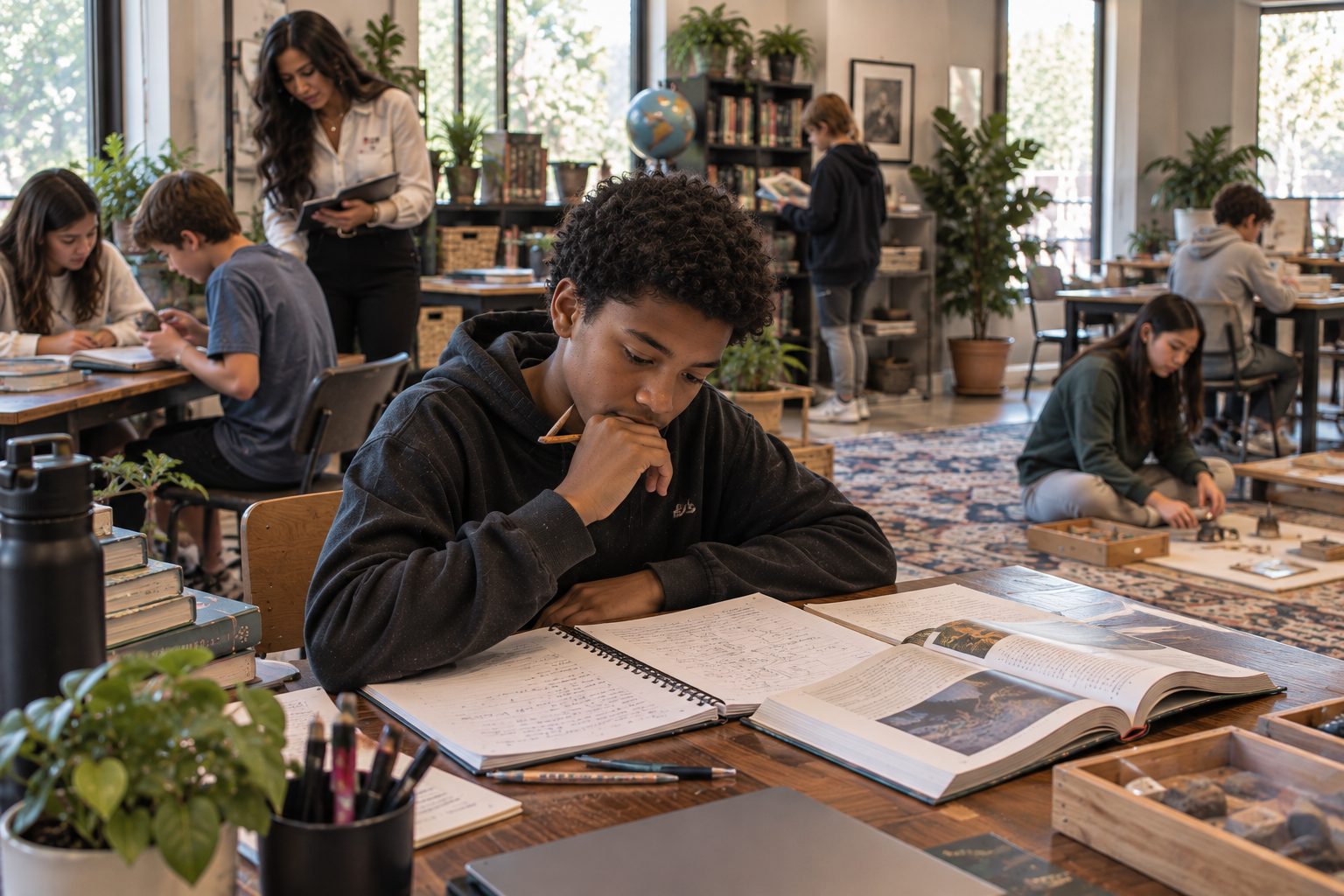
Why compliance, independence, and genuine engagement are not the same thing, and what homeschool parents can learn by observing what happens underneath the quiet
There is a kind of student who is very easy to teach.
At least, that is what it can look like from across the room.
The child is quiet. They have their materials. They do not interrupt. They attend the lesson without creating problems. When independent work begins, they sit down and appear to get started. They rarely ask for help. They are not wandering around the room, arguing about the assignment, or announcing that they would rather be doing literally anything else.
If you are homeschooling, this may be the child who disappears into their room with a work plan and emerges later saying everything is finished.
If the student attends classes online, they may log in on time, remain quiet throughout the lesson, and submit whatever was assigned afterward.
This child can look wonderfully independent.
Sometimes they are.
Sometimes they are completely lost.
Sometimes they are bored.
Sometimes they have discovered how to complete the minimum amount of work necessary without becoming intellectually involved in it.
And sometimes they have learned that being a “good student” means being easy for adults to manage.
Those possibilities are very different.
That is why engaged learning cannot be measured by how little disruption a child creates.
Quiet tells me something about the environment.
It does not automatically tell me what is happening inside the learner.
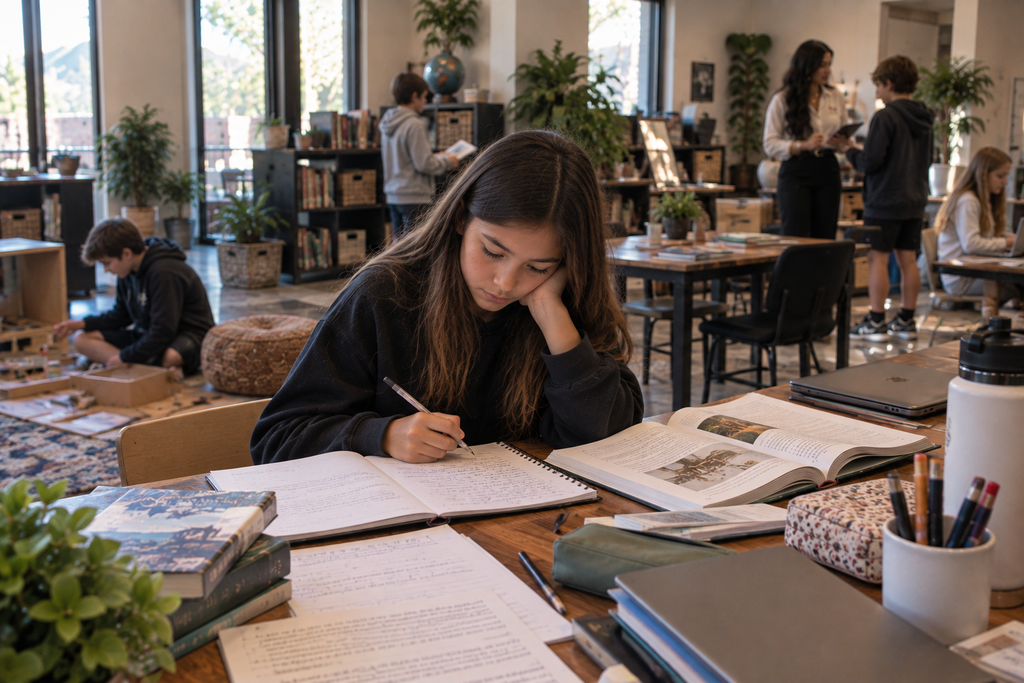
Concentration Has Substance
Montessori environments can be wonderfully quiet.
But the quiet I value is usually the result of concentration, not obedience.
There is a difference.
A child who is genuinely concentrated is mentally doing something. She is following an idea. He is trying a strategy. She is reading and making connections. He is constructing, calculating, comparing, researching, writing, questioning, testing, or revising.
The body may be still.
The mind is not.
That distinction becomes important because we can accidentally reward the appearance of concentration instead of the thing itself.
A child sitting silently over a worksheet for forty minutes may be deeply engaged.
Another child can sit in exactly the same position for forty minutes while understanding almost nothing.
Observation helps us tell the difference.
I may notice that the student keeps returning to the directions. Perhaps she has read the same paragraph several times without making a note. Maybe he is copying information without pausing to think about it. Perhaps the child has completed a surprising amount of work but cannot explain any of it.
None of these observations automatically means something is wrong.
They make me curious.
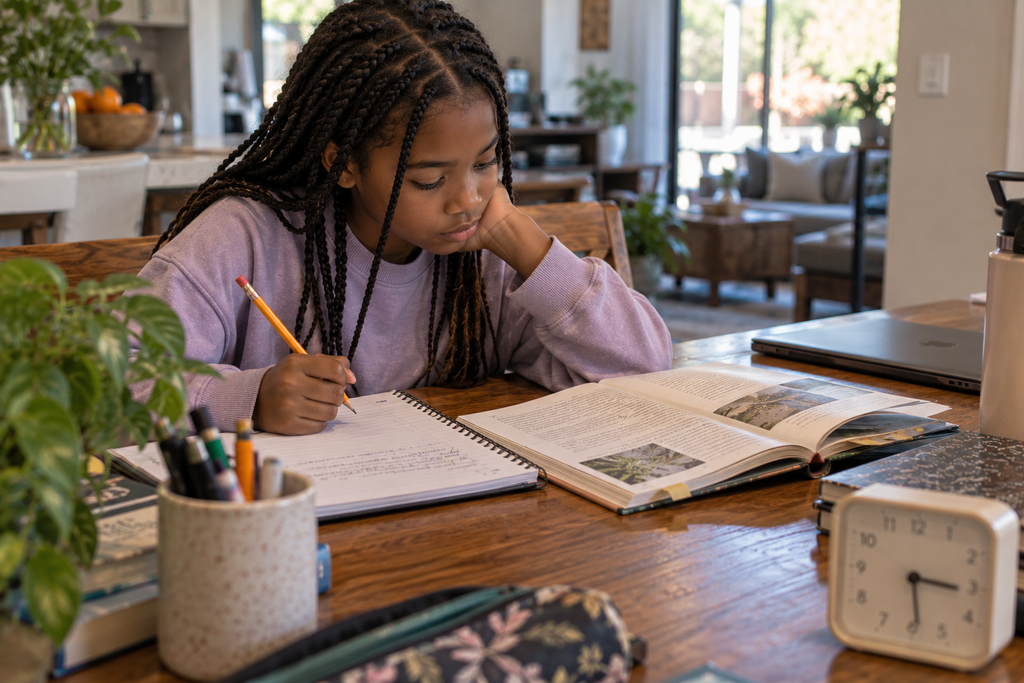
A Child Who Never Asks for Help May Still Need It
Parents sometimes tell me proudly that their child is very independent because they almost never ask for help.
That may be genuine independence.
I still want to know more.
Knowing when you need assistance is part of becoming independent.
So is knowing how to ask for it.
Some children are comfortable saying, “I don’t understand this.”
Others would rather spend twenty minutes attempting to hide that fact.
They may have learned that needing help means they were not paying attention. They may worry that the question is obvious. They may not know what they are confused about well enough to formulate a question. They may be accustomed to adults stepping in before they have to ask. Or they may simply have a temperament that makes speaking up difficult.
For those students, “Ask me if you need help” may not be enough.
I need to observe.
Sometimes instead of asking, “Do you need help?” I ask the child to show me where they are in the work.
That produces much better information.
A student who would immediately answer “no” to the first question may point to a page and say, “I understand this part, but I don’t know why they did this here.”
Now we have somewhere to begin.

Compliance Can Hide a Lot
Some children become extremely skilled at determining what an adult wants.
They complete the page.
They answer the question.
They submit the assignment.
They move on.
There are situations where that is completely appropriate. Not every assignment needs to become a profound intellectual experience. Children need practice. They need repetition. They need to complete necessary work even when it is not fascinating.
But I do not want a child’s entire education to become an exercise in figuring out what answer the adult is looking for.
I want to know what the student thinks.
That becomes difficult if we accidentally teach children that school is mostly about producing acceptable responses.
You can sometimes hear the difference in the questions they ask.
“What do you think happened here?”
“What am I supposed to say?”
Those are not the same question.
One asks about the subject.
The other asks about the adult’s expectations.
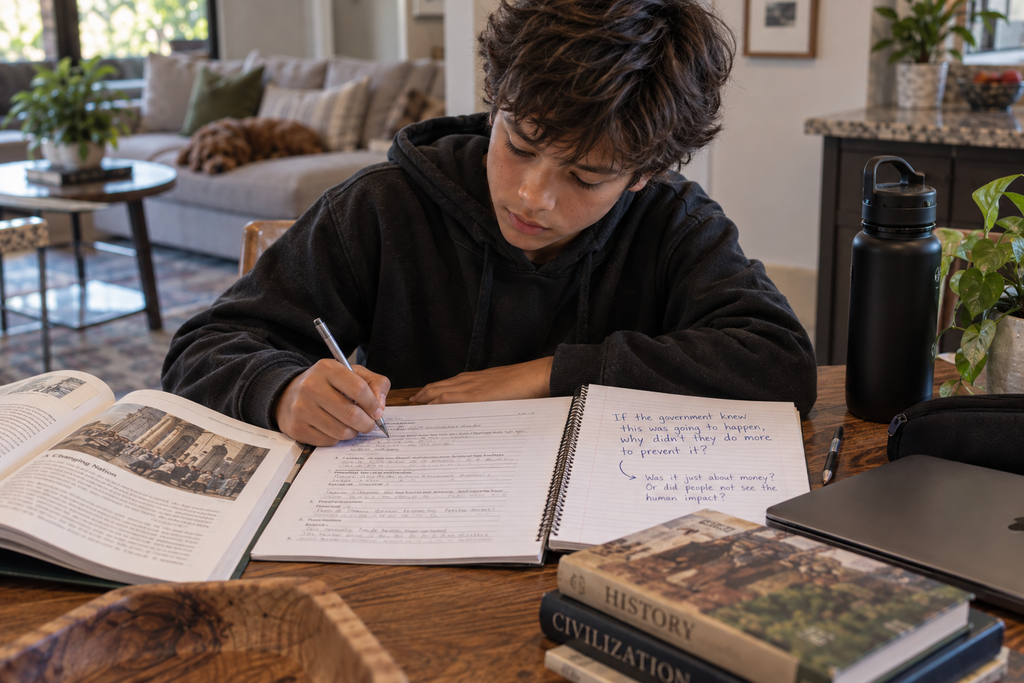
Engagement Does Not Always Look Quiet
This is the other side of the conversation.
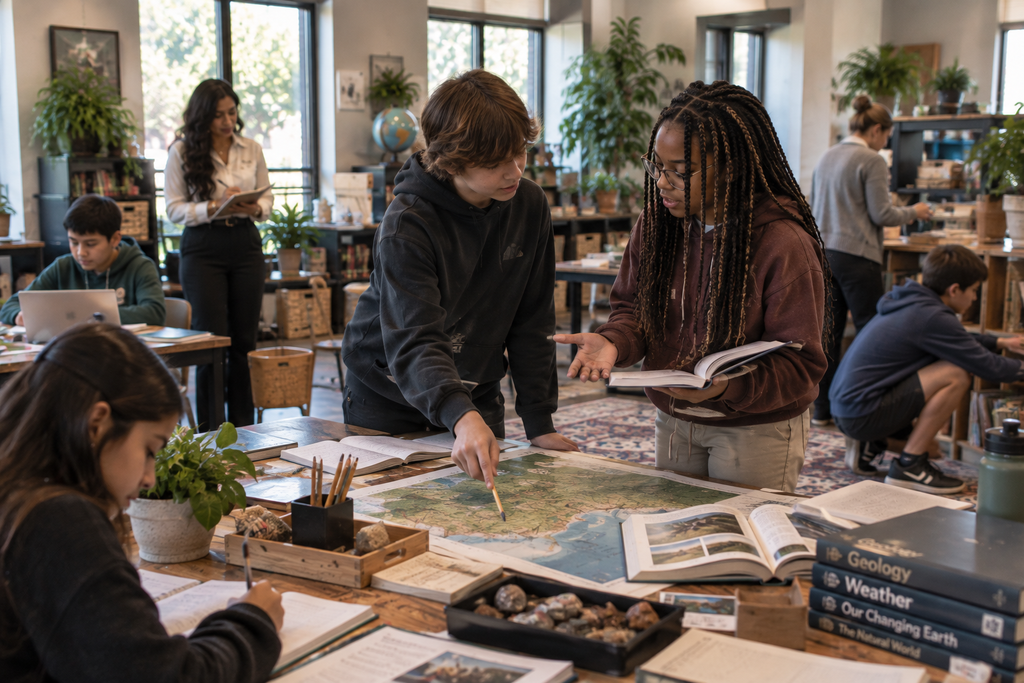
A genuinely engaged child can be inconveniently audible.
Sometimes learning sounds like two students disagreeing.
Sometimes someone gets up because they need a ruler.
Someone crosses the room to check a reference book.
A child says, “Wait, that doesn’t make sense.”
Another responds, “No, look at this.”
Someone begins measuring something that I did not specifically tell them to measure.
A student who was supposed to write a short explanation now has three books open because they found conflicting information.
This does not mean every noisy room is productive.
Chaos is not automatically engagement any more than silence is.
I am looking at the purpose underneath the movement and conversation.
Is the child moving because the work requires something?
Is the conversation about the work?
Are students exchanging ideas?
Is a disagreement forcing them to explain their reasoning?
Did the student leave the original task because something intellectually useful pulled them deeper into it, or because they are avoiding it?
Those are observation questions.
Online Engagement Is Especially Easy to Misread
This becomes even more complicated in online learning.
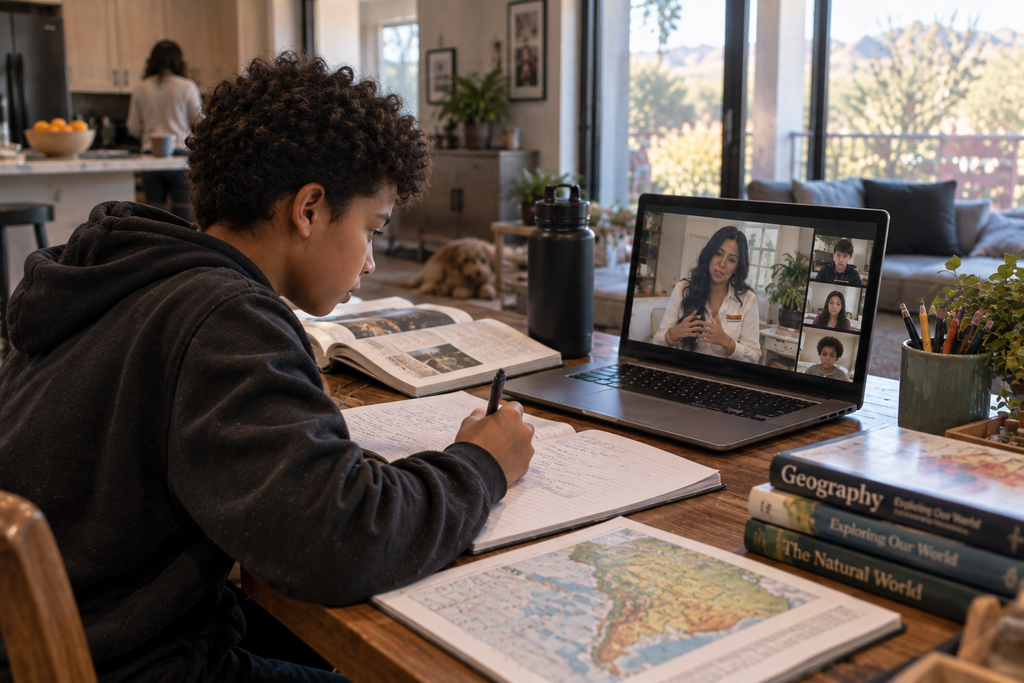
A student can appear on screen, remain there for the entire lesson, and absorb very little.
That is not unique to children.
Most adults have attended a virtual meeting while physically present and mentally somewhere around three browser tabs away.
Children can do the same thing.
This is why I do not want an online lesson built entirely around a child watching me talk.
I want students doing something.
They may need to write.
They may hold up a physical material.
They may solve something and explain how they got there.
We may stop and discuss a passage.
I may ask students to go find something.
They may sketch, calculate, read, build, compare, or make an observation away from the screen.
The computer gives us a place to meet.
Engaged learning has to happen on the student’s side of it.
Boredom Can Be Very Well Behaved
Not every bored child puts their head on the table and announces that school is boring.
Some bored children become extremely efficient.
They finish.
Fast.
Then they wait.
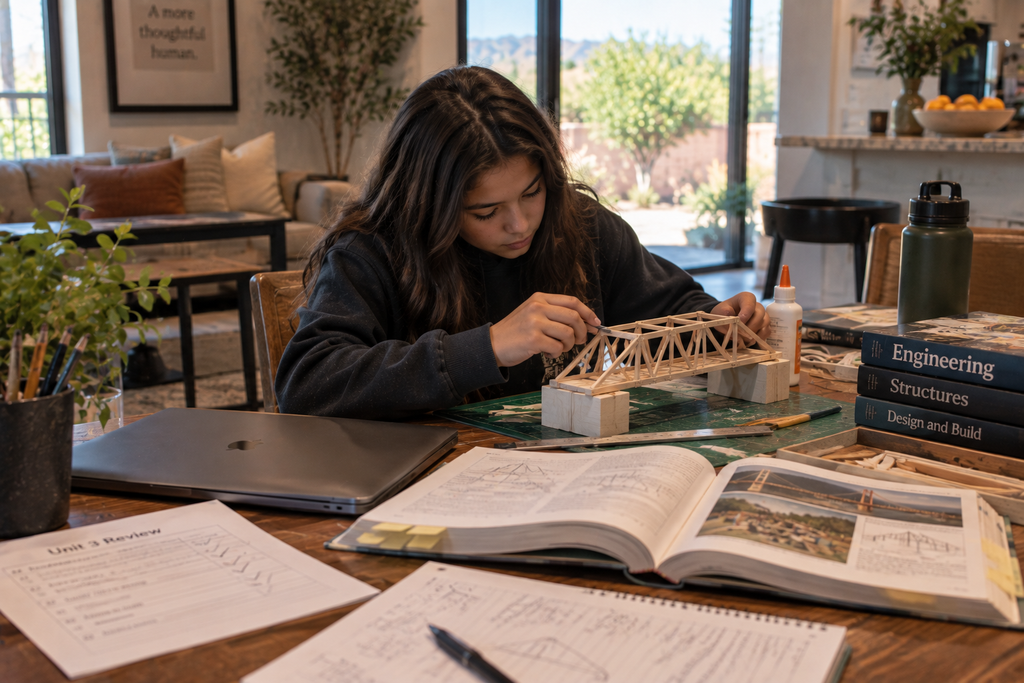
If the work consistently requires very little thought, a student may become excellent at completing it while becoming less and less intellectually invested.
That is another reason I do not evaluate progress solely by completion.
If a student is flying through work, I want to know why.
Is the child genuinely fluent in the skill?
Are they rushing?
Are they skipping something?
Is the work too easy?
Can they explain their reasoning?
Can they apply the same idea somewhere unfamiliar?
Sometimes a child who appears wonderfully independent simply needs something more substantial to do.
Confusion Can Be Quiet Too
There is another student I watch carefully.
The child who is quietly trying very hard.
They are not avoiding the work.
They are not bored.
They are not refusing to ask for help.
They genuinely believe that if they keep trying the same thing long enough, understanding will eventually appear.
Persistence is valuable.
Unproductive persistence is exhausting.
Part of teaching is recognizing when a child needs more time to work through difficulty and when continuing without additional instruction is no longer useful.
That is not always obvious.
If I intervene too quickly, I take away the opportunity for the student to solve the problem.
If I wait too long, productive struggle becomes frustration.
There is no timer that tells me the exact moment.
I have to know the learner.
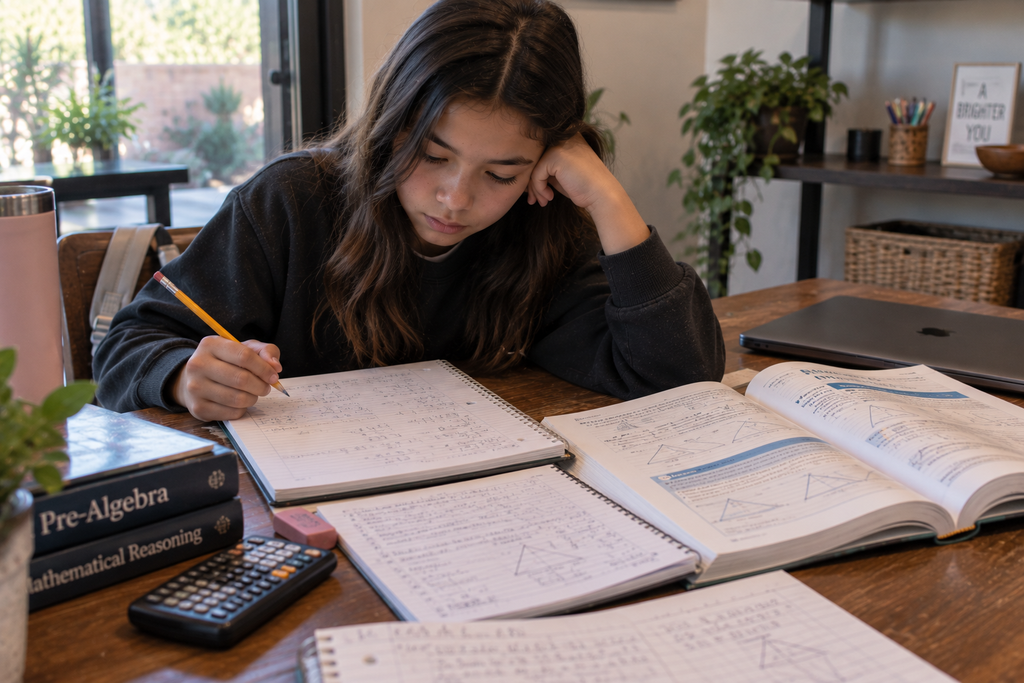
A quiet editorial photograph of a different upper elementary student at home with mathematics, writing, or science work. Several genuine attempts are visible. The child has not been sitting passively. There are calculations, erased sections, arrows, or alternate approaches.
The student has paused to compare the current attempt with a physical reference or earlier example. Keep the expression calm but concentrated. The scene should communicate effort without dramatizing struggle. A closed laptop can be nearby. No adult is present.
Sometimes the Quiet Child Has a Lot to Say Somewhere Else
A child who rarely speaks during a group lesson may write remarkable observations afterward.
Another may say very little in a large discussion and become animated in conversation with one other student.
Someone who almost never volunteers may ask sophisticated questions privately.
A student may need time to think before responding.
That matters because participation and engagement are not identical either.
I want children to learn how to contribute to discussions. I want them to develop confidence communicating their ideas. There will be times when I intentionally invite the quieter student into the conversation.
But I do not need every child to demonstrate engagement in exactly the same way.
Observation lets me discover where the thinking becomes visible.
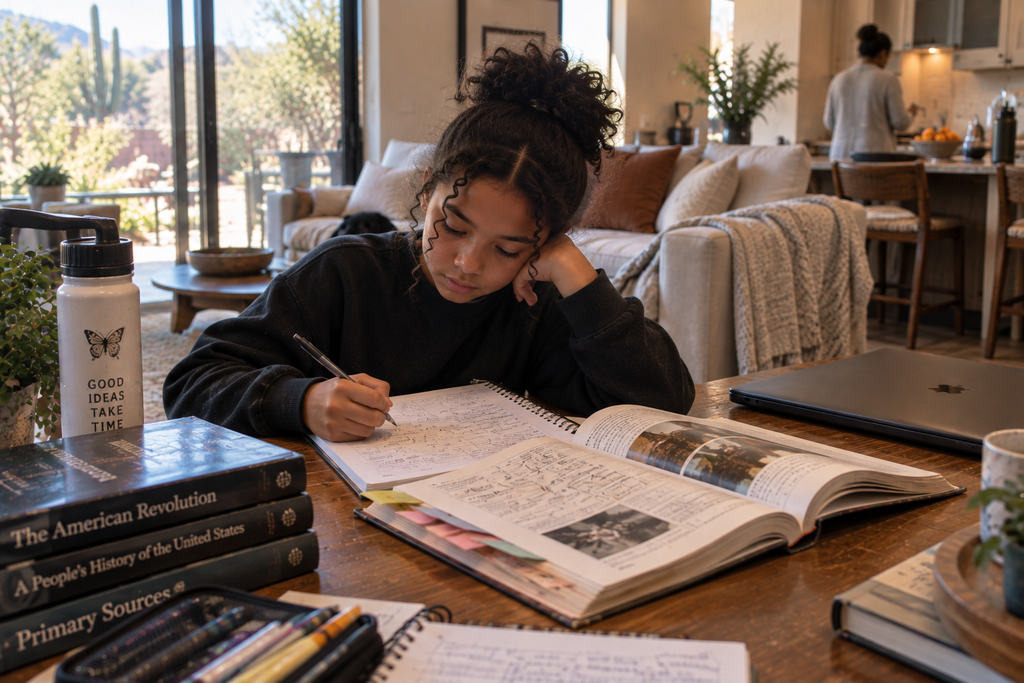
I Am Watching for More Than Good Behavior
There are things I appreciate in a learning environment.
Respect matters.
Self-control matters.
Children need to learn how to work around other people without constantly disrupting them. They need to listen. They need to care for shared materials. They need to understand that freedom exists within limits.
But those behaviors support education.
They are not the entire purpose of education.
A perfectly managed child who has learned not to question, not to take intellectual risks, not to admit confusion, and not to pursue an idea beyond the assignment is not my educational goal.
I want students who can concentrate.
I also want students who can interrupt their own thinking with a better question.
I want them to work independently.
I also want them to recognize when independence requires asking someone else for information.
I want them to follow directions.
I also want them to understand what they are doing well enough to notice when something does not make sense.
I want a peaceful learning environment.
I do not need intellectual silence.
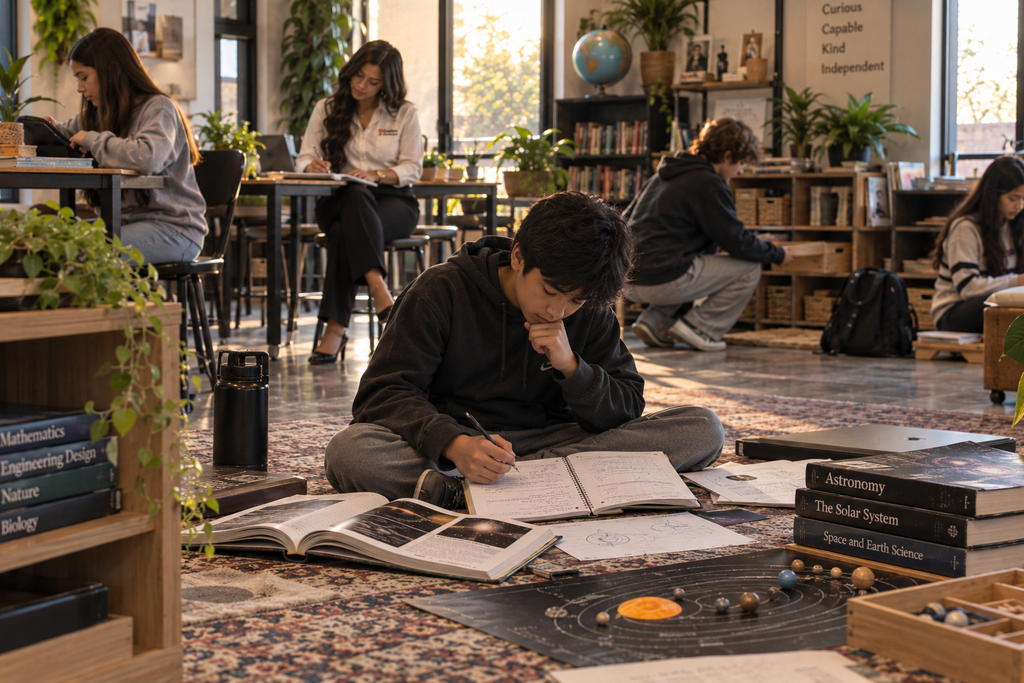
Watch the Child, Not Just the Volume
When a homeschool parent tells me, “She works so quietly by herself,” I am glad to hear it.
Then I want to know what happens next.
What does she do when she does not understand?
What does she do when the work is easy?
Can she explain what she has learned?
Does she ever become curious enough to go beyond what was assigned?
Does she ask questions?
Does she make connections?
Does she revise her thinking?
Can she tell you when something does not make sense?
Does she know when she needs help?
What happens when there is no adult nearby to tell her what to do next?
Those answers tell us much more about engaged learning than silence ever could.
Sometimes the quiet child is beautifully concentrated.
Sometimes the quiet child is thinking deeply and simply does not need to announce it.
Sometimes the quiet child needs a harder problem.
Sometimes they need another explanation.
Sometimes they need permission to ask the question they have been holding for twenty minutes.
And sometimes they need us to notice them precisely because they have become very good at not requiring our attention.
Montessori observation asks us to look beneath the behavior that is easiest to see.
Not, Is the child quiet?
Not even, Is the child working?
But something much more useful:
What is the child actually doing with their mind right now?
That is where I want to begin.
Leave a Reply