Practical Life does not disappear when children get older. It becomes more consequential, more complicated, and much more connected to the world they are preparing to enter.
From a Montessori Guide to Homeschool Parents
When people hear Montessori practical life, they often picture a very young child carefully pouring water from one small pitcher into another.
That is Practical Life. It is important work, too.
A young child who pours water independently is doing much more than learning how to pour. There is coordination involved. There is concentration, sequence, control of movement, care of the environment, and the growing realization that when something spills, the child is capable of getting a cloth and taking care of it. The activity communicates something important long before the child could put it into words: There are things I can do for myself.
But the child grows.
Eventually, transferring water between two small pitchers is no longer an appropriate challenge. What should not disappear with the little pitcher is the expectation that the child continues participating meaningfully in the world around them.
For older children, Practical Life has to grow up too.
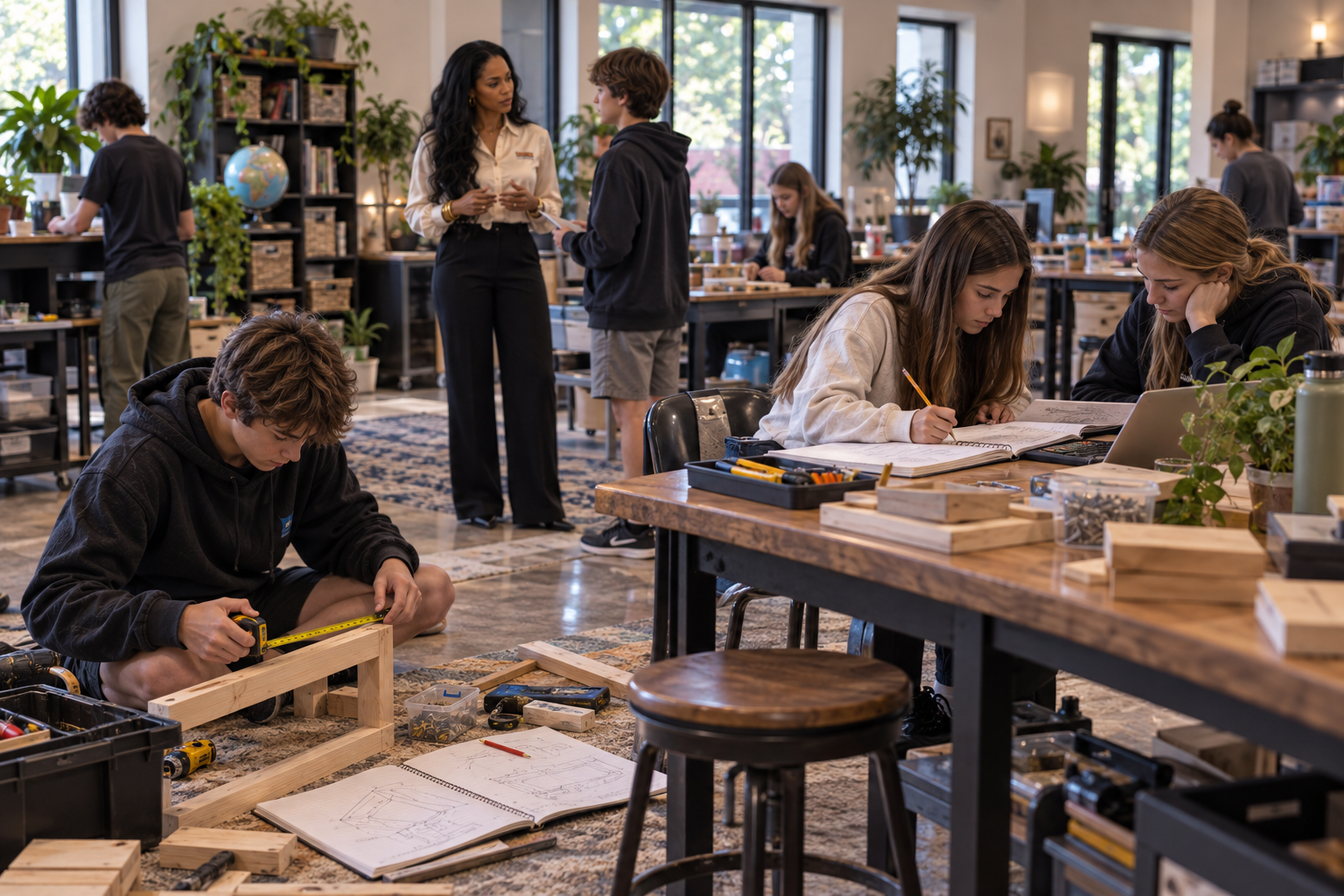
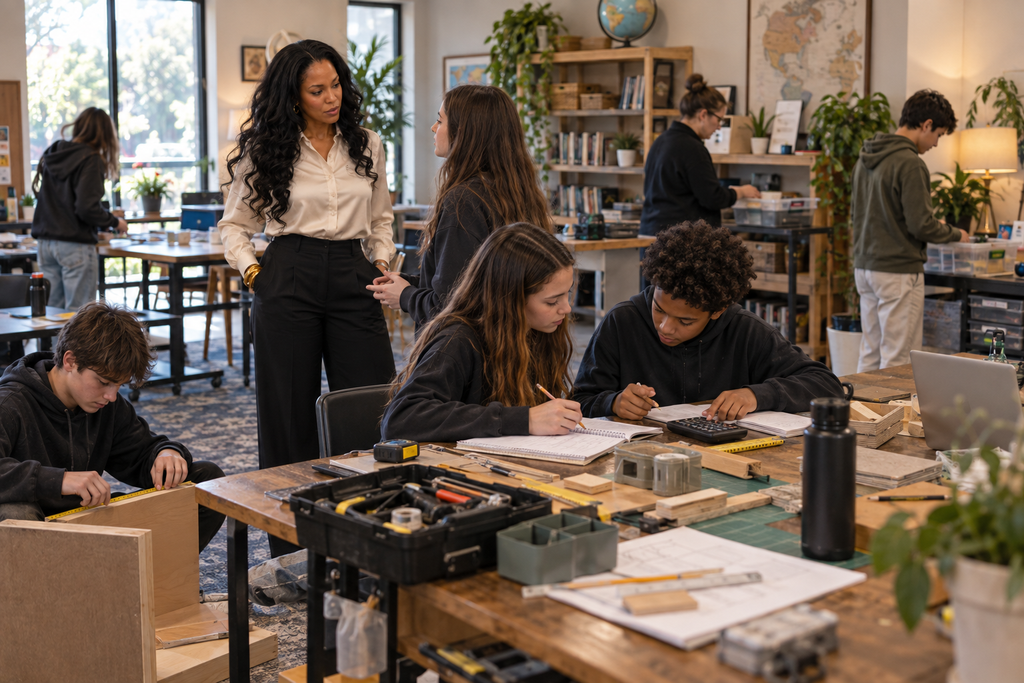
A twelve-year-old can plan and prepare a meal rather than simply helping stir something. An older student can learn to work within an actual budget, use tools to build something, organize materials other people depend on, communicate with adults outside the family, manage a longer-term responsibility, contribute to a community project, or discover halfway through a plan that something has gone wrong and figure out what to do about it.
The work becomes more complicated because the child is becoming more capable.
There comes a point when children need more than opportunities to practice responsibility.
They need some actual responsibility.
Practical Life Was Never Really About the Pitcher
The pitcher is the material. The development happening through the work is much larger.
When a young child learns to pour independently, we are not preparing them for an adulthood filled with transferring water between tiny ceramic containers. We are giving the child meaningful work that matches their developmental abilities at that moment.
The child discovers that work has a sequence. Their movements have consequences. Materials require care. A mistake does not necessarily require rescue because some mistakes can simply be cleaned up and tried again. The environment begins to communicate, quietly and repeatedly, You are capable of participating here.
Older children still need that message.
They also become increasingly good at recognizing when adults have created an artificial version of responsibility for them.
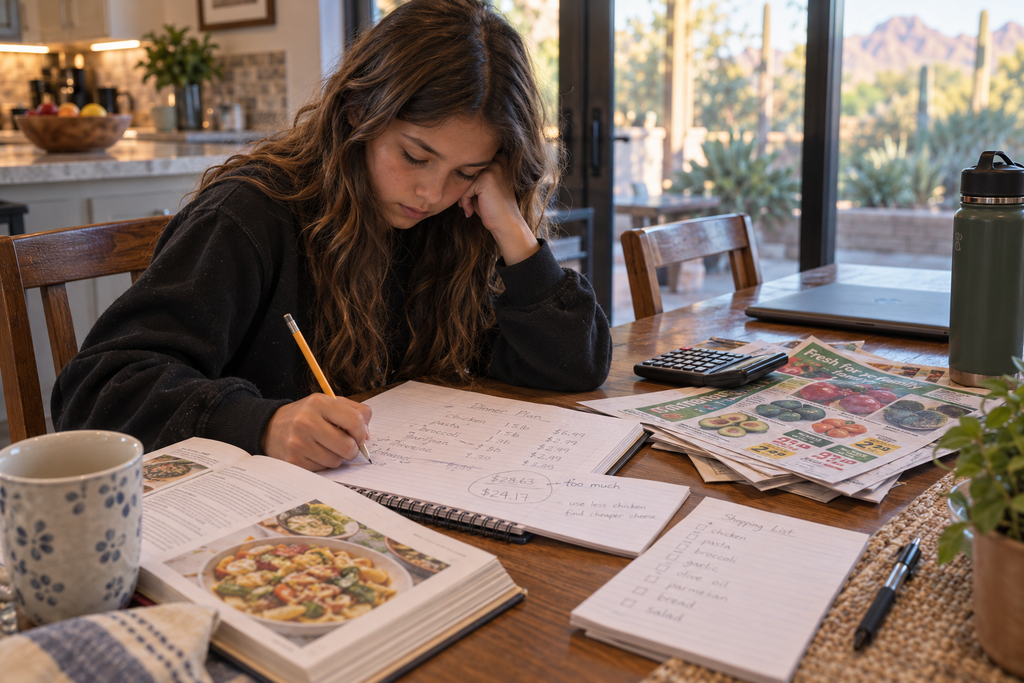
There is a difference between calculating imaginary grocery prices because the worksheet says to stay under $100 and discovering that the meal you planned actually costs more than the money available. There is a difference between cleaning a table because an adult needed to invent a chore and resetting a work area because other students need to use it. There is a difference between answering questions about responsibility and realizing that three other people are waiting for the part of a project you agreed to complete.
The academic skills may overlap, but the experience does not feel the same to the child.
Real work gives the skill a reason to exist.
Real Work Has Consequences, and That Is Part of the Lesson
One of the things that makes Practical Life powerful is that the work responds to the child.
A student can make a mistake on a worksheet and wait for an adult to circle it. Real work often provides its own feedback.
If the measurement is wrong, the pieces may not fit. If an ingredient is forgotten, the recipe changes. If the inventory is inaccurate, something the student expected to have is not there. If the work area is not cleaned when a project ends, the mess is still waiting when someone needs that space. If a student agrees to bring something to a group project and forgets it, the other students have to work around the missing piece.
I am not interested in creating stressful situations so children can “learn a lesson.” That is not the point.
I am interested in resisting the urge to remove every natural consequence before a child has an opportunity to experience it.
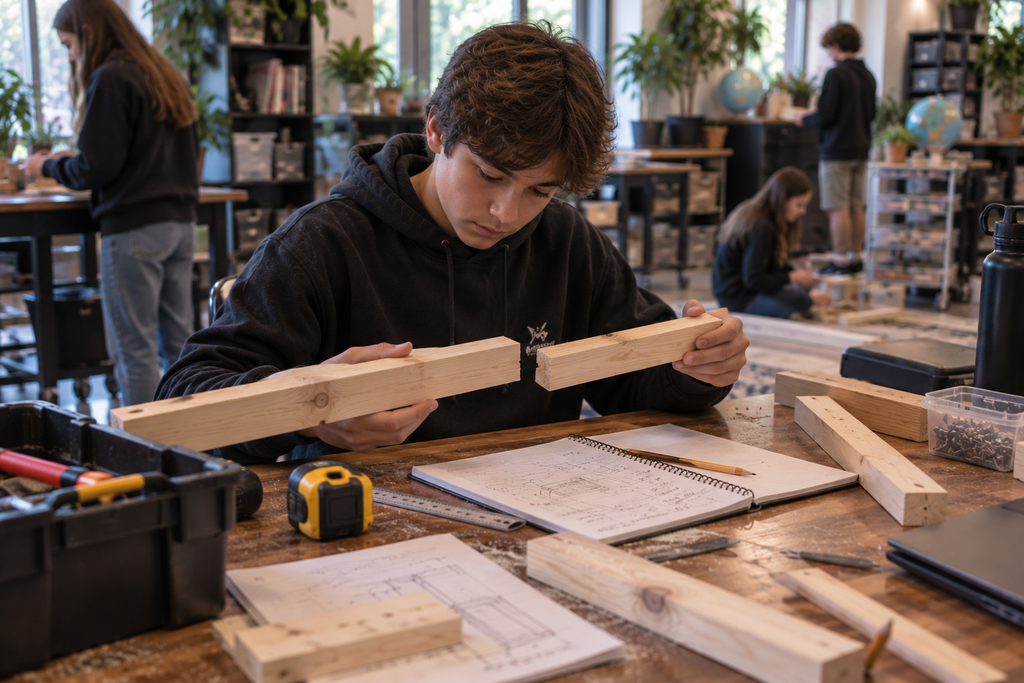
There is a moment in project work when a student measures something, makes a cut, and discovers that the piece is too short. I could have prevented that. I might even have seen it coming.
But if the student was working safely and had enough preparation to recognize and address the mistake, preventing it may not have been the most useful thing I could do.
The next time I may watch that same student measure, stop, measure again, and then make the cut.
I did not have to give a lecture about checking measurements.
The work taught it.
Cooking Becomes a Completely Different Lesson When Someone Is Actually Going to Eat
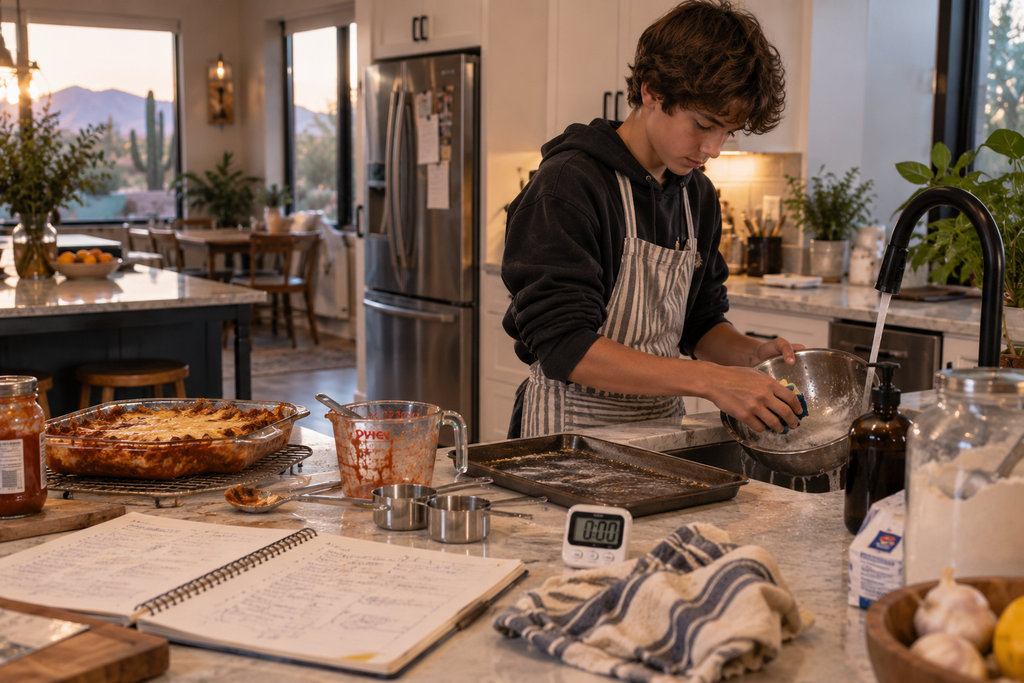
Cooking is one of my favorite examples of Practical Life because it is academically rich without needing us to force academics into it.
Reading matters because the recipe contains information the student needs. Fractions and measurement matter because quantities have to be correct. Multiplication becomes useful when a recipe needs to serve more people than originally intended. Time becomes important when several things need to be ready together. Science is present in heat, chemical reactions, texture, temperature, and the changes ingredients undergo as they are combined and cooked.
But the thing that gives all of those skills context is remarkably simple.
Someone is going to eat the food.
That changes the student’s relationship with the work.
If the recipe makes six servings and the student needs twelve, there is a reason to calculate. If an ingredient is missing, there is a reason to think about substitutions. If one part of the meal needs forty minutes and another needs fifteen, there is a reason to plan backward.
And when the food is finished, the work is not necessarily finished.
The measuring cups are still on the counter. The mixing bowl is in the sink. Ingredients need to be returned. The workspace has to be left ready for whatever happens in the kitchen next.
This is something I particularly appreciate about real Practical Life. The work has a complete cycle. The appealing part is only one portion of it.
Older Children Need Real Tools, Not Just Simulations of Real Work
As children grow, there is an understandable temptation to continue doing certain things for them because it is faster, cleaner, and considerably less nerve-racking.
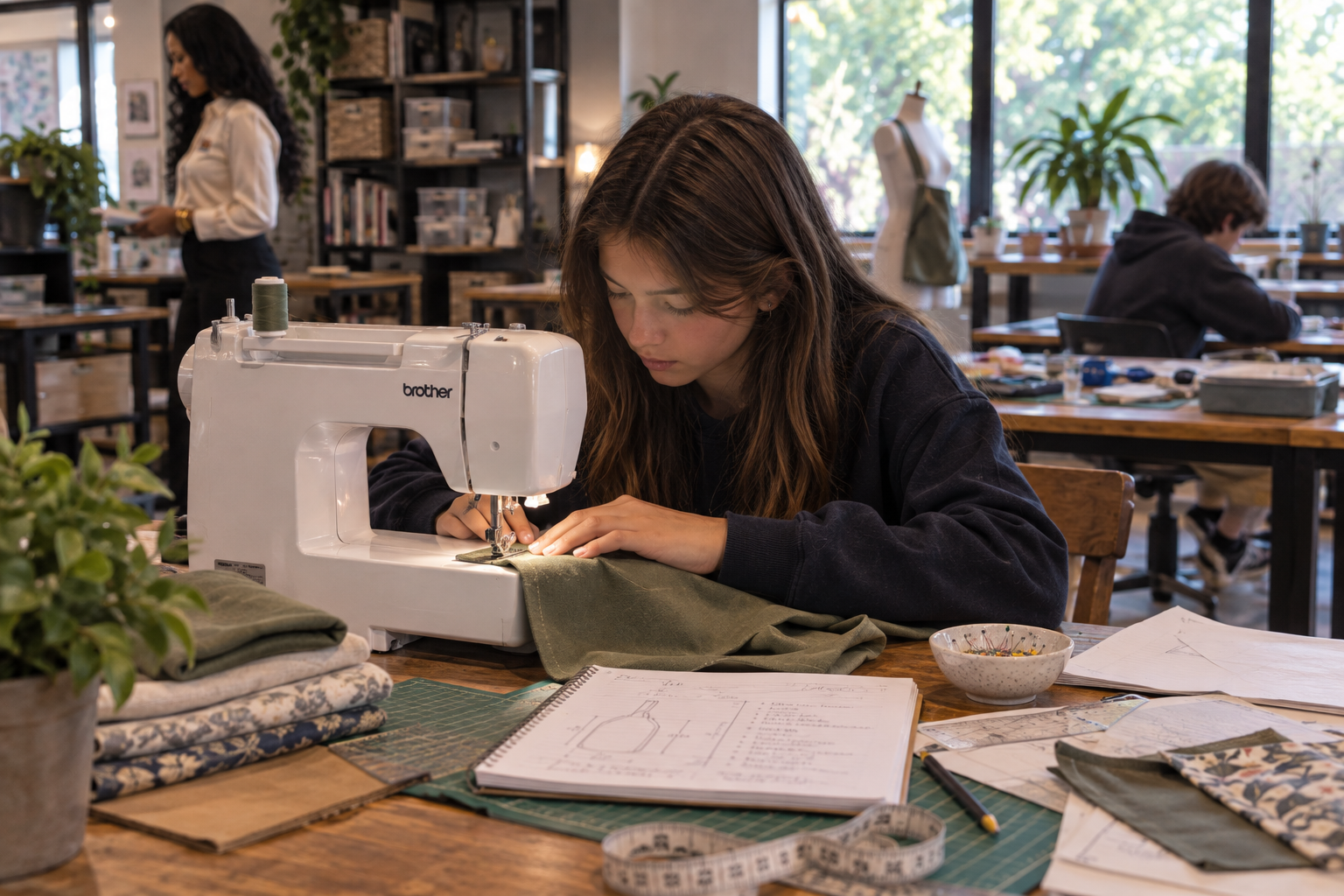
An adult can cut the material more accurately. We can operate the sewing machine faster. We know how to use the drill. We can chop the vegetables in half the time. We can probably assemble the shelf without needing to stop halfway through and watch the demonstration again.
If efficiency is the only goal, adults should do almost everything.
Education has a different goal.
Older children should gradually develop competence with the real tools required for the work they are ready to undertake. That may mean learning to use kitchen equipment, a sewing machine, basic hand tools, gardening equipment, measuring instruments, art tools, or other materials appropriate to the child’s age and preparation.
The important word is prepared.
Montessori independence is not handing a child a tool and walking away in the name of freedom. I demonstrate. We establish how the tool is used and what the safety expectations are. The student practices. I observe. As competence develops, my involvement changes.
At first, I may be right beside the student.
Later, I may simply be in the room.
Eventually, there are things the child no longer needs me for at all.
That gradual transfer of responsibility is what I am looking for.
Money Means Something Different When It Can Actually Run Out
Mathematics changes when the numbers represent decisions.
An older student working with a real budget eventually encounters something worksheets can only imitate: choosing one thing can mean giving up another.
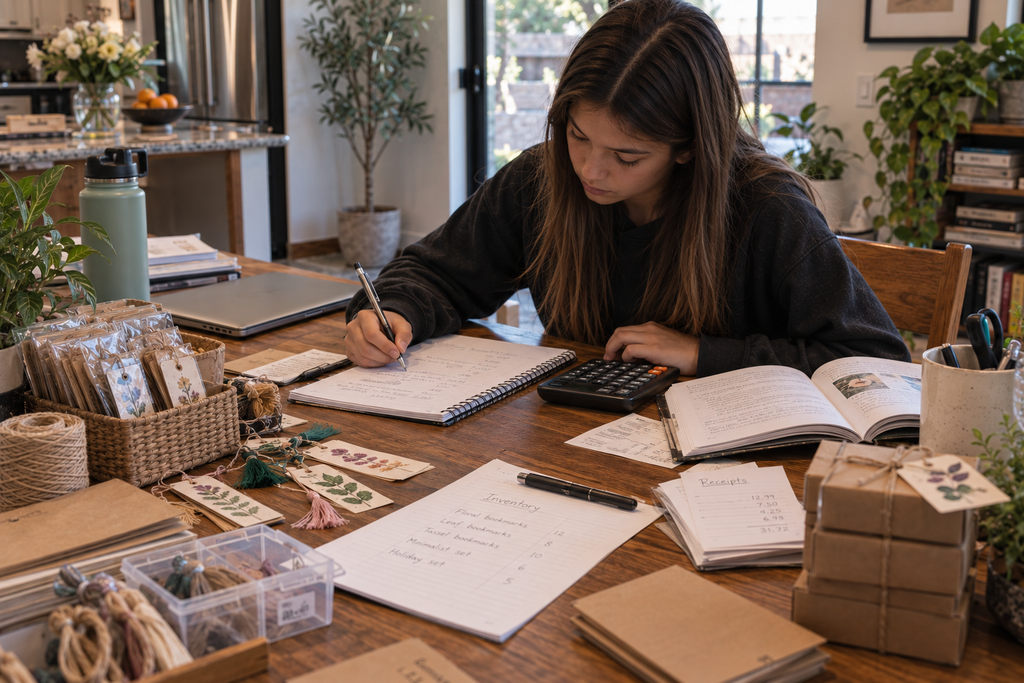
The student plans a project and discovers the materials cost more than expected. Now the original plan has to change. Perhaps the quantities can be adjusted. Maybe a different material will work. Maybe the budget itself was unrealistic. If the child is making something to sell, another layer appears because the amount of money collected does not tell us how much was actually earned after the materials are paid for.
These are mathematical ideas, but they are also lessons in judgment.
Entrepreneurship can be particularly rich Practical Life work for this reason. I am not interested in turning children into miniature executives or teaching them that every hobby needs to become a business. I am interested in what can happen when a child creates something another person values enough to purchase.
Suddenly the student has to think about materials, cost, quality, communication, recordkeeping, organization, and follow-through. If someone has paid for something, the promise to provide it matters. If supplies are running low, that matters. If the student made an error calculating the cost, the numbers have consequences beyond a grade.
The mathematics is no longer waiting patiently on a page for someone to solve it.
It is affecting what the student can actually do.
Sometimes Practical Life Is Simply Letting the Child Speak
One of the most useful things an older child can learn is how to communicate with people outside their immediate family.
Adults can unintentionally prevent a surprising amount of this learning because we are so accustomed to handling children’s interactions for them.
We ask the librarian where the book is. We explain the problem to the employee. We make the phone call. We place the order. We send the email. Someone asks the child a question, and before the child has time to answer, we answer for them.
Often we are simply being efficient.
But efficiency can quietly remove opportunities for children to develop competence.
There are situations where an older child is perfectly capable of asking the question themselves. They can learn how to introduce themselves, explain what they need, listen carefully to the answer, realize they did not understand part of it, and ask a follow-up question.
Those interactions may seem small to an adult who has performed them thousands of times.
They are not small when you are learning how to navigate the world without someone speaking for you.
I do not expect children to automatically know how to do this. Communication can be prepared just like any other Practical Life skill. We can talk about what information they need. A child can write down a question beforehand. We can discuss what to do if they do not understand the answer.
Then, when the moment comes, the adult can remain nearby without becoming the child’s voice.

Responsibility Becomes Most Interesting After the Excitement Is Gone
The beginning of a project is usually easy to love.
The ingredients are waiting on the counter. The new materials have arrived. The garden bed is empty. The design is still perfect because nobody has tried to build it yet. The idea feels exciting.
Responsibility becomes more revealing later.
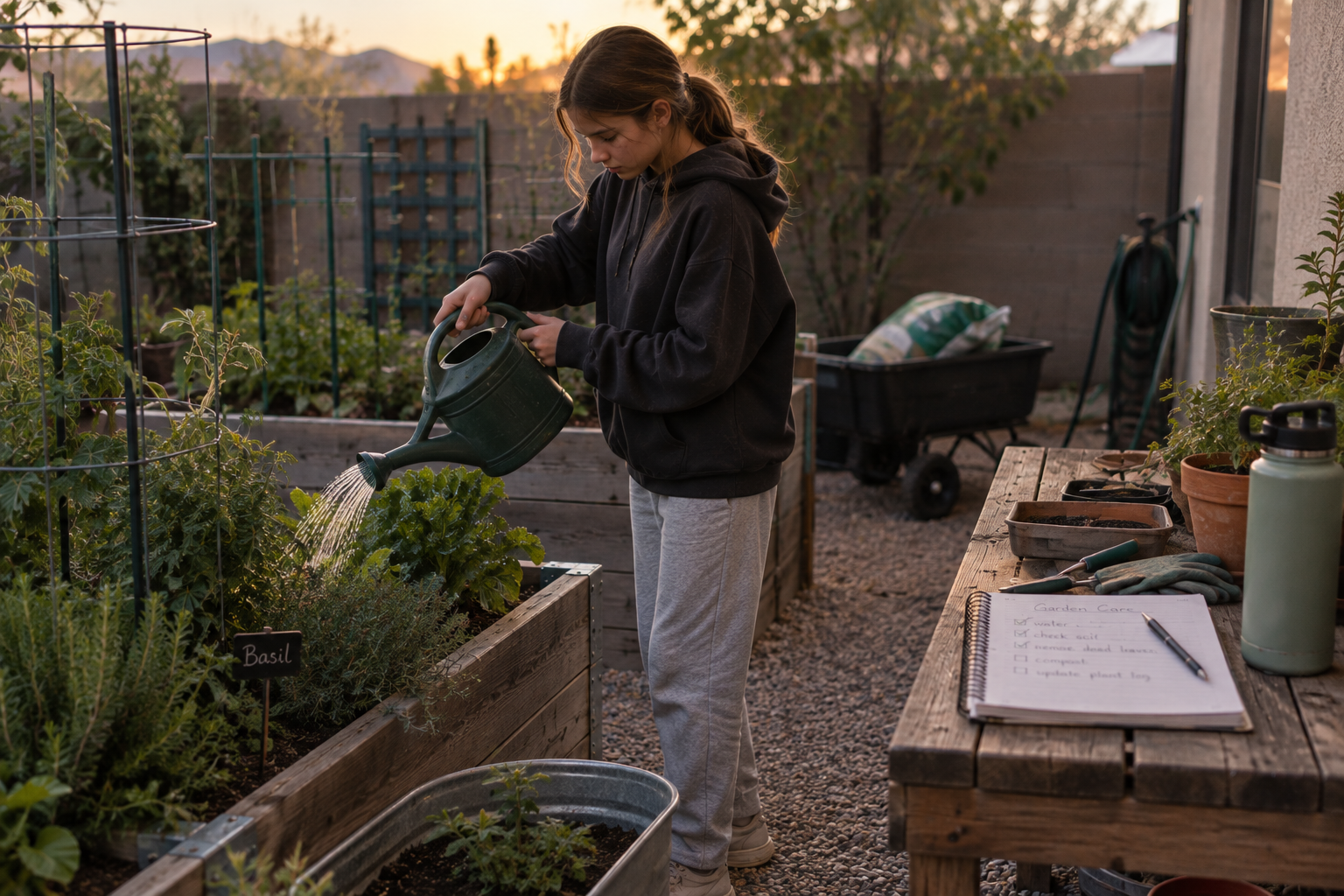
A garden still needs care after planting it is no longer interesting. Tools still need to be cleaned after the exciting part of construction is finished. Inventory still has to be updated. Something promised to another person still needs to be completed on the afternoon when the student would much rather move on to something new.
This is one reason I value Practical Life experiences that last longer than a single lesson.
Children need opportunities to discover what it feels like to remain responsible for something after novelty stops doing the motivational work for them.
I do not think the answer is to turn every interest into a long-term obligation. Children should absolutely be able to explore things and decide that an interest has run its course.
But a commitment is different.
When another person, a living thing, a shared environment, or a larger project is depending on the student, the child begins to experience responsibility as something more than a word adults use.
There is a quiet developmental shift in realizing, I said I would take care of this, so I need to take care of it.
The Work Becomes Larger Than the Child
As children move toward adolescence, their awareness of the larger community grows too.
Practical Life can expand with it.
A student can begin noticing that the question is no longer only, What can I do for myself? There is also, What can I contribute here?
That may happen inside a family, a learning pod, a neighborhood, or a larger community. The specific project matters less to me than whether the contribution is genuine.
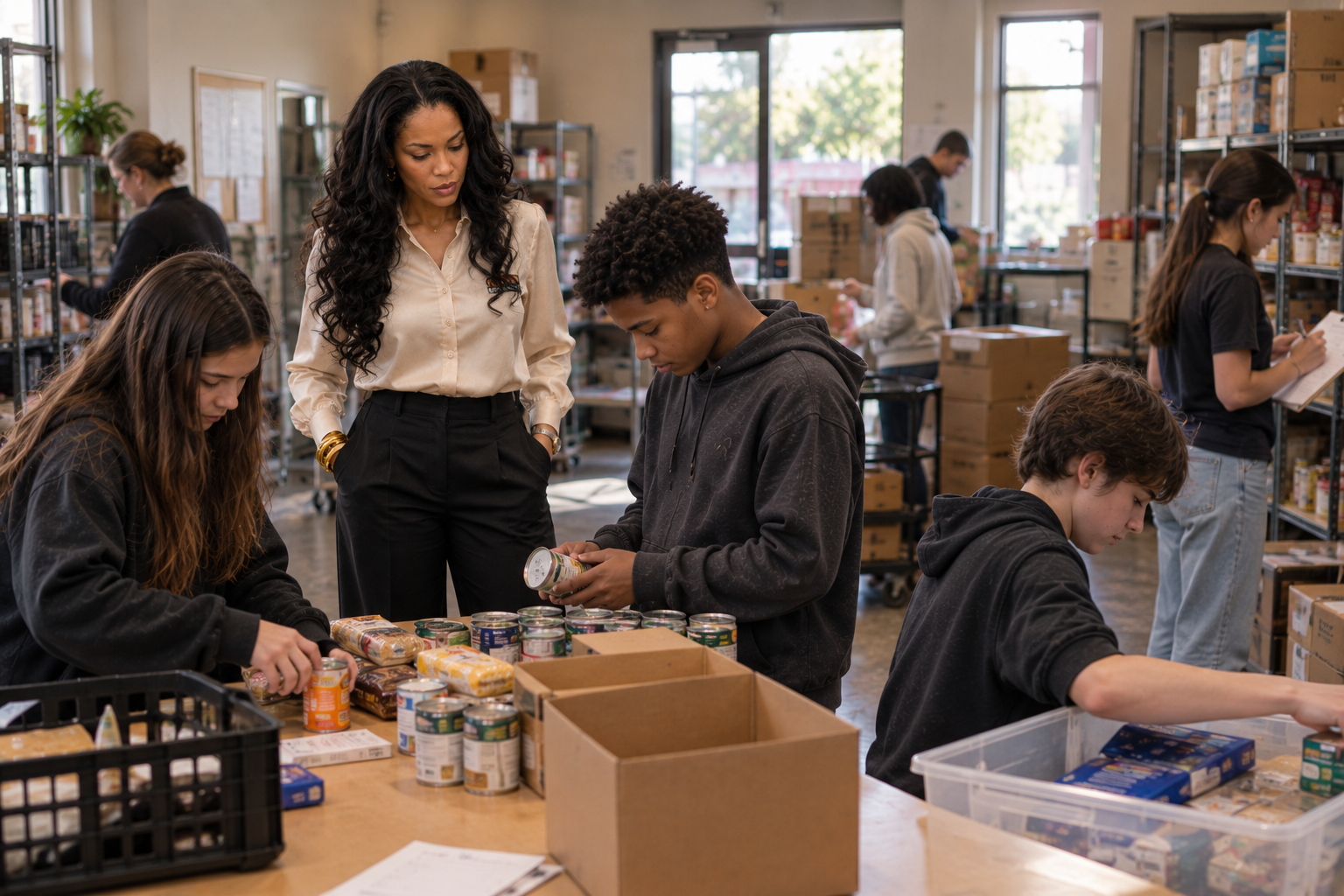
If students are participating in a community project, I want them involved in more than the final photogenic moment. There may be materials to organize before anyone arrives. Someone may need to communicate with another organization. Quantities have to be calculated. Supplies need to be transported. The original plan may turn out to be unrealistic. There will almost certainly be cleanup afterward.
That work may not produce the photograph people usually associate with community service.
It produces something better.
Children begin to understand that contributing to a community involves noticing what is needed and taking responsibility for some part of meeting that need.
I Want Older Children to Know That They Are Capable
There is a particular confidence that develops when a child realizes they can be genuinely useful in the world around them.
I do not mean useful in the sense that children should carry adult responsibilities or that every moment of childhood needs to become productive. Children deserve childhood. They deserve play, rest, exploration, ridiculous ideas, time that accomplishes nothing measurable, and adults who remain responsible for the things adults are supposed to carry.
I mean something quieter.
The confidence of knowing, I can handle this.
An older child can begin to notice that something needs to be done and know how to begin. They can prepare food without requiring an adult to manage every step. They can keep track of materials, communicate with another person, work within a budget, use tools they have been taught to use safely, and contribute something meaningful to a group.
When a problem appears, their first response does not always have to be looking for an adult to make it disappear.
That kind of independence develops gradually.
At first, I may demonstrate every step. Later, I might help the student make the plan but leave the execution to them. Eventually, I may simply observe from across the room while the student realizes something has gone wrong, considers the options, and decides what to do next.
The goal is not independence from adults.
Children still need us.
The goal is a relationship with adults that changes as the child’s competence changes.
I do not want to continue doing for a twelve-year-old what they are now fully capable of learning to do themselves simply because it is easier for me.
That would make my life more efficient.
It would not necessarily prepare theirs.
The Work Has to Grow With the Child
When children are small, we give them small, meaningful opportunities to participate in the life happening around them. They carry something manageable for their hands. They pour their own water. They wipe a spill. They return a material to its place. Through hundreds of ordinary experiences, they discover that there are things they can do for themselves and things they can contribute to the environment they share with other people.
Then the child grows.
We readily accept that their academic work should become more sophisticated. Their mathematics becomes more complex. Their books become longer. Their writing asks more of them. Their scientific questions become harder to answer. We would never expect a twelve-year-old’s intellectual work to remain exactly where it was when they were six.
Practical Life deserves the same progression.
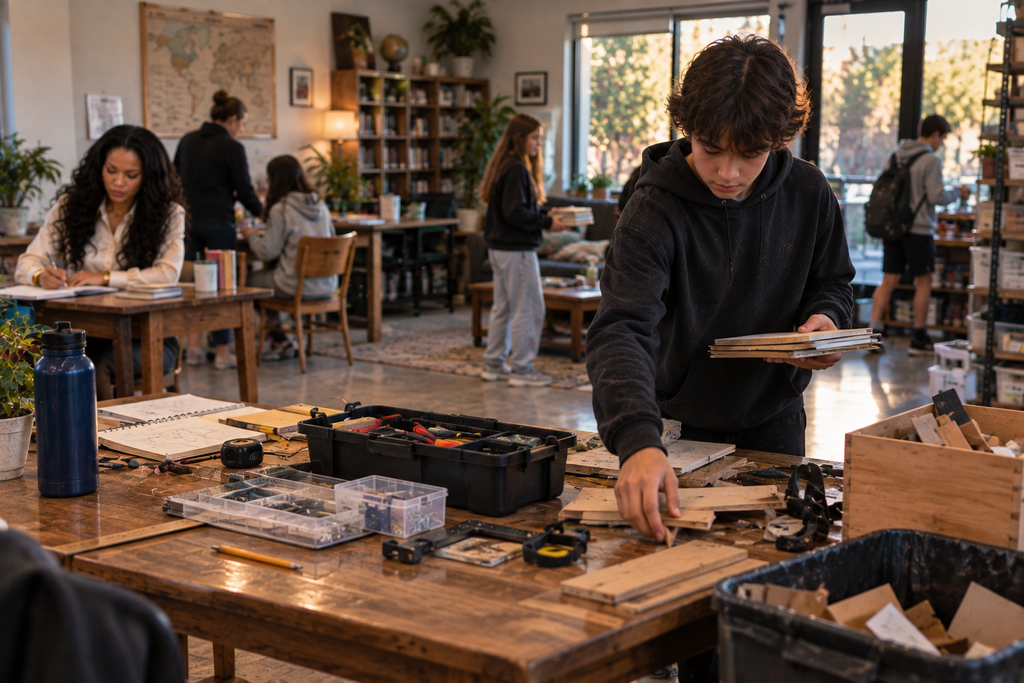
The older child can take responsibility for more of the planning instead of simply following an adult’s directions. A cooking experience can grow into planning the meal, adjusting quantities, working within a budget, managing time, preparing the food, and leaving the kitchen ready for the next person. A simple building activity can grow into designing something, calculating measurements, selecting materials, learning to use the necessary tools, discovering that the original plan does not quite work, and deciding what needs to change.
The same progression happens outside the home. Community participation can become more than accompanying an adult somewhere. The student can help identify what is needed, communicate with other people, organize part of the work, and take responsibility for following through.
The work becomes more real because the child is ready for more reality.
That is what I want parents to understand about Montessori practical life. It is not a collection of charming activities that children eventually outgrow. Practical Life is part of the larger work of helping a young person develop competence, judgment, independence, and an understanding that their actions affect the people and environments around them.
Eventually, I do not want an older student waiting for an adult to manufacture an exercise in responsibility.
I want them to begin noticing real life.
Maybe a measurement is wrong and the original plan needs to change. Maybe dinner still needs to be made. Maybe a commitment needs to be honored even though the exciting part is over. Maybe someone else in the group cannot continue until the student’s part is finished. Maybe the materials everyone used are still sitting out at the end of the day.
And increasingly, the child can encounter those ordinary moments without immediately waiting for an adult to tell them what happens next.
They look at the situation.
They think.
And somewhere along the way, a new thought begins to appear:
I know what to do.
That is Practical Life too.
Leave a Reply