

Quiet can mean concentration. It can also mean confusion, avoidance, uncertainty, or simply learning how to disappear inside a lesson. The difference matters.
From a Montessori Guide to Homeschool Parents
There is a kind of student adults tend to worry about less.
They are quiet.
They do not interrupt the lesson. They rarely need redirection. They are not wandering around the room, arguing about the assignment, talking over other students, or announcing that they have absolutely no intention of doing whatever comes next.
They may sit through an entire lesson without causing a single problem.
In a classroom, that can make them very easy to teach around.
At home, it can make them very easy to assume is doing fine.
I understand why. When a child is visibly struggling, the struggle demands our attention. A child who refuses the work, becomes frustrated, repeatedly asks for help, or disrupts everyone around them gives us information whether we were looking for it or not.
A quiet child may require us to look more carefully.
Sometimes quiet means exactly what we hope it means. The student is concentrating. They are listening. They are thinking before they speak. They may simply have a temperament that does not require them to process every thought out loud.
I do not want to turn quietness into a problem.
But I also do not want to confuse the absence of disruption with the presence of learning.
A quiet child in school can be deeply engaged.
A quiet child can also become remarkably skilled at sitting in the right place, looking in the right direction, and allowing an entire lesson to pass without anyone discovering that they are completely lost.
That distinction is why I observe.
Quiet Is a Behavior. Engagement Is Something Else.
If I walk into a room and see a student sitting silently with a book open, I know one thing for certain.
The student is sitting silently with a book open.
I do not yet know what they understand.
Perhaps they are completely absorbed in the chapter.
Perhaps they read the same paragraph four times because their mind keeps drifting somewhere else.
Perhaps the vocabulary has become difficult enough that they can decode the words but no longer follow the argument.
Perhaps they finished reading ten minutes ago and are thinking.
Perhaps they are waiting for someone to tell them what happens next.
Perhaps they have learned that looking busy is considerably easier than admitting they do not understand.
The behavior gives me a place to begin observing.
It does not give me the conclusion.
This is one reason Montessori observation matters so much to me. I am not only looking for whether the child complied with the assignment. I am watching what happens while the child works.
How do they begin?
What happens when the work becomes difficult?
Do they go back to the text?
Do they try another strategy?
Do they ask a question?
Do they remain with the work?
Do they know what to do when they finish?
And when I sit beside them and say, “Tell me what you’re thinking,” is there thinking there to tell me about?
Those moments reveal much more than quiet behavior ever could.

Some Children Learn How to Look Engaged
This becomes particularly important with older children because many of them have had years to learn what adults interpret as “good student” behavior.
Look toward the teacher.
Keep the book open.
Do not disturb anyone.
Write something occasionally.
If the teacher asks whether you understand, nod.
There are children who can do all of this while learning very little.
I do not think they are necessarily trying to deceive us. Sometimes they are protecting themselves.
Saying “I don’t understand” requires a child to know that they do not understand, find the language to explain what is confusing, interrupt whatever is happening, and trust that admitting confusion will not make them feel embarrassed.
That is a lot.
Remaining quiet can feel much safer.
This is especially easy to miss when a student is academically capable in other areas. We assume that because the child usually understands, they probably understand this too. The student may even assume the same thing and feel particularly uncomfortable when something suddenly does not make sense.
So they wait.
Sometimes someone notices.
Sometimes nobody does.
Online Learning Can Make Quiet Disengagement Even Easier to Miss
This is something I pay particular attention to in online learning.
A student can be physically present in a live class without being intellectually present in the lesson.
That does not mean I expect children to stare intensely into a webcam for an entire class period. I do not use constant eye contact with a screen as evidence of learning. Children look down to write. They look at their books. They think. They move. They may need to retrieve something.
I am interested in what happens when the student has to interact with the idea.
If we are discussing a text, can the student tell me what they noticed?
If we are solving a problem, can they explain where they became unsure?
If another student offers an answer, can they respond to the reasoning rather than simply saying they agree?
Sometimes I will ask a student a question and hear, “I don’t know.”
That is not automatically a problem either.
“I don’t know” can be an excellent place to begin.
Now I have information.
What I do not want is for a student to spend weeks quietly attending lessons while everyone assumes that presence and learning are the same thing.
I Do Not Need Every Child to Perform Participation
There is another side to this that matters just as much.
Once adults become concerned about quiet students, we can overcorrect.
Suddenly the quiet child is constantly being called on.
“Tell us what you think.”
“Why aren’t you participating?”
“Speak up.”
“Join the conversation.”
Now the child’s natural temperament has become something they are expected to fix for us.
That is not what I want.
Some children think internally before they speak. Some need a longer processing pause. Some are far more comfortable discussing an idea with one or two people than addressing an entire group. A student may have been deeply engaged in a discussion without contributing very many words to it.
My job is not to make every child equally talkative.
My job is to find ways to understand what the child is thinking.
Sometimes that happens during a group conversation. Sometimes I sit beside the student later. Sometimes I see it in their writing. Sometimes they show me through the questions they ask after everyone else has moved on.
Participation has more than one shape.
The Work Usually Tells Me More Than the Posture
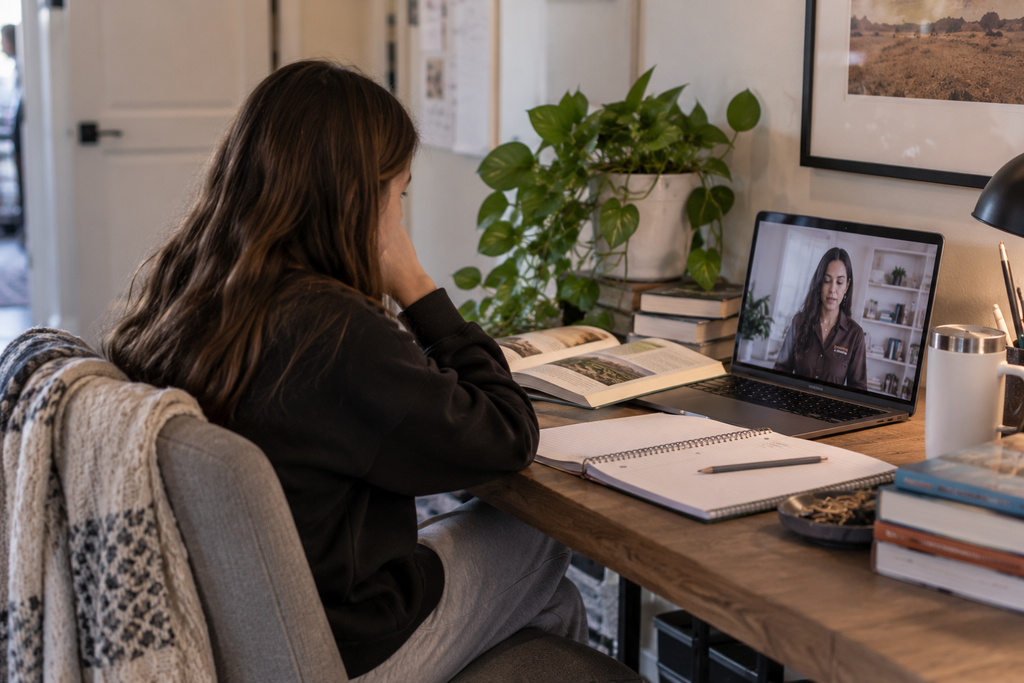
When I am uncertain about a student’s engagement, I look at the work.
Not simply whether something has been completed.
I want to see what happened.
A mathematics page can show me where the reasoning changed. A writing draft can reveal whether the child has ideas but is struggling to organize them. Notes from a reading can show whether the student is collecting words from the page or actually identifying relationships between ideas.
Project work can be especially revealing because it becomes difficult to remain passively compliant for very long.
Eventually the student has to make a decision.
Which source is useful?
What should I measure?
How will I organize this?
Why did this fail?
What am I trying to find out?
What happens next?
A child who has become accustomed to waiting quietly for directions may suddenly find that kind of work uncomfortable.
That discomfort is useful information too.
The goal is not to immediately remove it.
The student may need help learning how to make decisions about their own work.
A Child Can Be Quiet Because They Are Afraid to Be Wrong
Sometimes the silence changes when I ask a different kind of question.
If I ask, “What’s the answer?” I may get nothing.
If I ask, “What are you noticing?” I may suddenly hear quite a lot.
There is a difference.
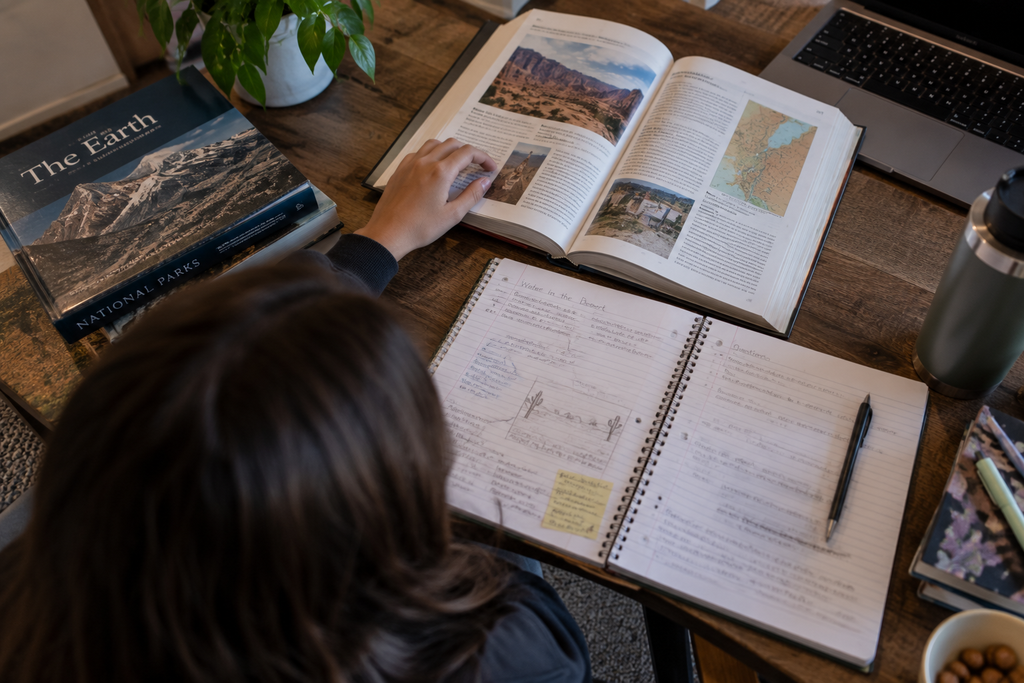
Children who are worried about being wrong can become extremely cautious. They may know far more than they are willing to risk saying.
This is why I care about the culture surrounding mistakes.
If every incorrect response immediately becomes a public correction, some students will decide that silence is the safest available strategy.
I would rather hear the unfinished thinking.
Tell me what you tried.
Show me where you got stuck.
What did you think this meant?
Which part are you sure about?
Those conversations give me something I can actually teach from.
Silence does not.
Homeschool Parents Can Miss This Too
This is not only a classroom issue.
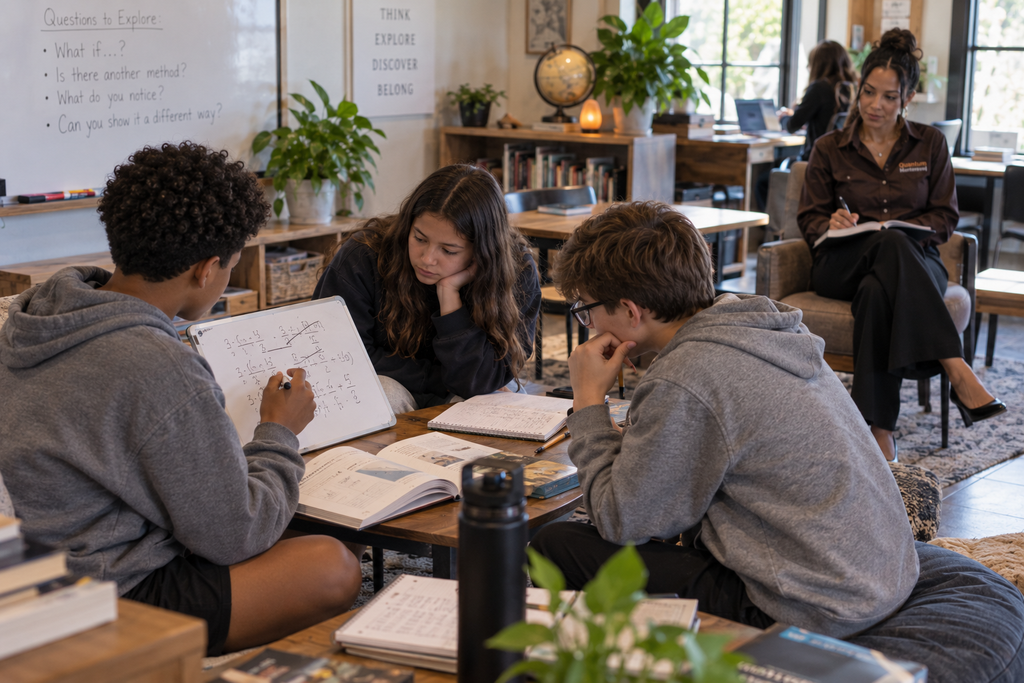
A quiet homeschooler can disappear into the day in a different way.
The child gets the materials. They sit down. They do not complain. The parent is working nearby, caring for another child, managing the house, or doing one of the countless things that have to happen during the day.
An hour later, the student still appears to be working.
That can look like wonderful independence.
Maybe it is.
But occasionally, sit down and look.
Ask the child to show you where they are.
Ask what they have figured out.
Ask what is still confusing.
Ask what they plan to do next.
Not as an interrogation and not because children need constant surveillance.
We check because independence should eventually produce evidence that the child is actually managing the work.
A student can sit independently for a very long time without knowing how to move forward.
Those are not the same skill.
Sometimes the Quiet Child Is Doing More Thinking Than Anyone Realizes
This is why observation keeps me from making quick assumptions in either direction.
I have seen quiet children who were completely lost.
I have also seen quiet children who were thinking far more deeply than their outward behavior suggested.
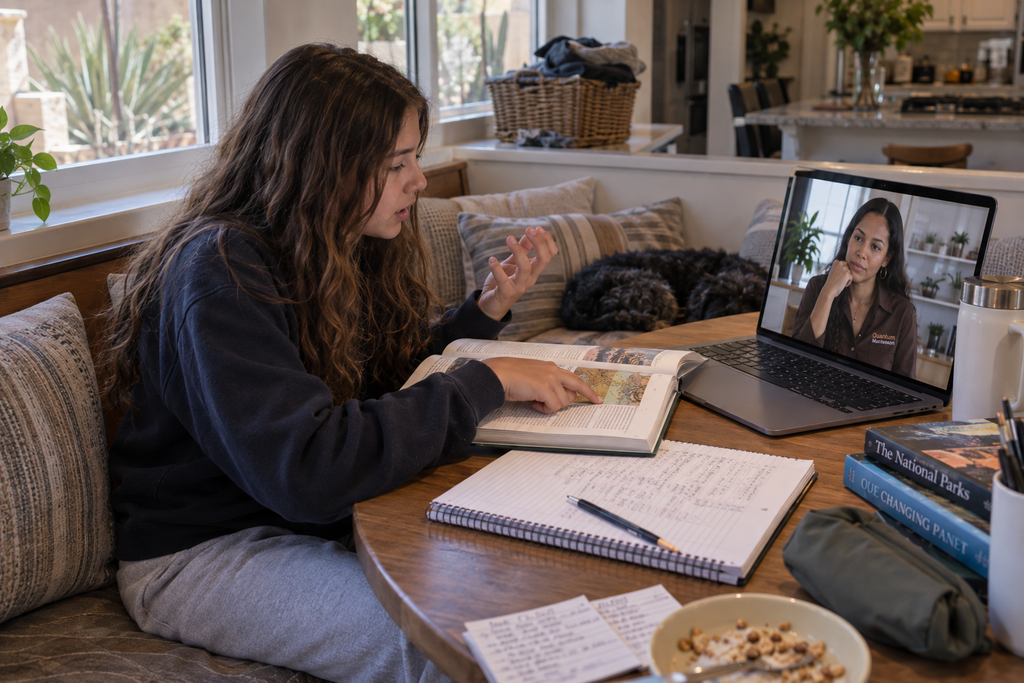
A student may listen to a long discussion without speaking and then ask the question that reveals they were following the entire conversation. A child may spend twenty minutes staring at a project before making a connection that changes the direction of the work. Another may need time alone with a book before they are ready to discuss it.
Silence itself does not tell me which child I am looking at.
The relationship does.
The work does.
Conversation does.
Observation over time does.
That is one of the advantages we have in a Montessori environment and in homeschooling. We are not limited to deciding whether a child is engaged based on how often their hand went up during a forty-five-minute class.
We can know the child more fully than that.
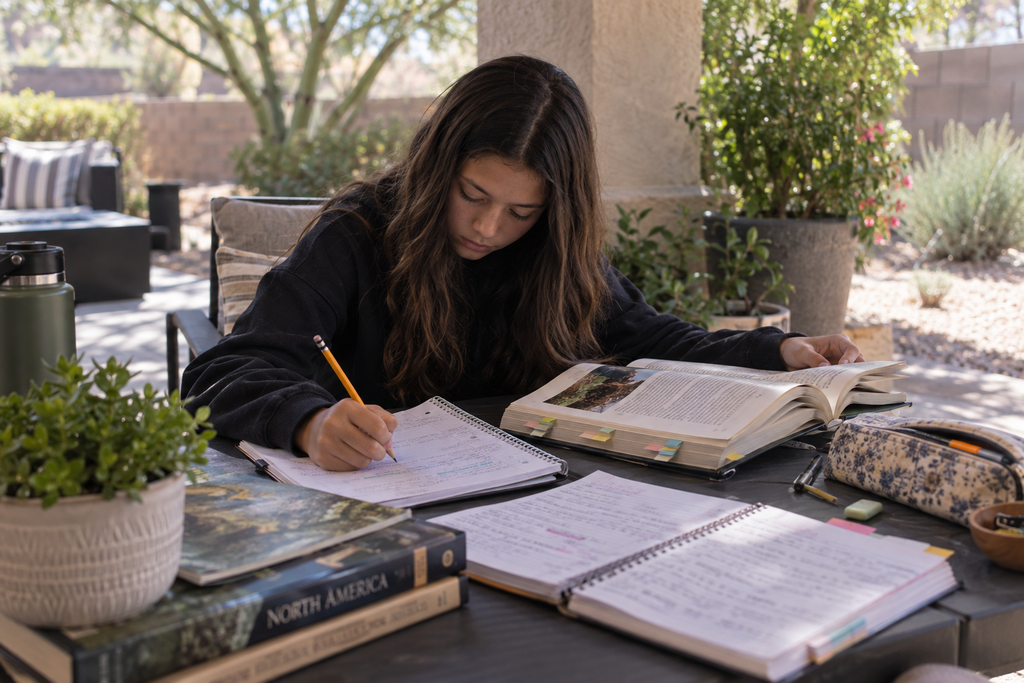
I Want to Know What Is Happening Behind the Quiet
There will always be children who are naturally quieter than others.
I do not want to change them.
I do not need the thoughtful child to become the loudest person in the room. I do not need every student volunteering an answer before I finish asking the question. I do not need constant visible enthusiasm as proof that learning is occurring.
What I need is a way into the child’s thinking.
Sometimes I find it in conversation.
Sometimes it appears in a notebook.
Sometimes it is in the way the child handles a problem when the first attempt fails.
Sometimes I discover that the student who appeared perfectly content has been confused for three days.
And sometimes I discover that the child everyone thought was “just sitting there” has been thinking about something much more complicated than any of us realized.
That is why I am careful with the quiet child in school.
Quiet is not a diagnosis.
It is not evidence of disengagement.
It is not evidence of engagement either.
It is simply something I can observe.
Then I have to do the more important work.
I have to get to know the child well enough to understand what the quiet is telling me.
Leave a Reply