Tag: #newblog

  • What Hybrid Homeschooling Should Actually Look Like

    What Hybrid Homeschooling Should Actually Look Like

    Hybrid Homeschooling: How Online Learning and Independent Work Can Work Together

    From a Montessori Guide to Homeschool Parents

    There is a version of hybrid homeschooling that sounds wonderful on paper. A child attends a few live classes, completes some work independently, and the family gets all the flexibility of homeschooling without having to carry the entire academic load alone. Then families actually try to live it, and the questions become much more practical. When should my child be online? What are they supposed to do when class ends? How much should I be helping? Does independent work mean they are teaching themselves? How do we fit lessons around appointments, activities, siblings, errands, and everything else happening in an actual home? And perhaps most importantly, how do we keep hybrid homeschooling from becoming conventional school delivered through a laptop?

    Those are better questions than simply asking how many hours a child should spend online. When we work with families at Quantum Montessori, the goal is not to reproduce a school building inside someone’s home or keep children connected to a screen for most of the day. The live lesson is one part of the child’s education. There is also reading, writing, mathematics worked out by hand, experiments, research, conversation, movement, Practical Life, projects, independent work, and the ordinary experiences of being at home. A good hybrid model connects those pieces so that the technology supports the education without becoming the education.

    Hybrid Homeschooling Is More Than Live Class Plus Homework

    At its simplest, hybrid homeschooling combines guided instruction with learning that happens independently. Some of that instruction may happen live online with a Guide and other students, while other work happens away from the live class. I prefer to think about the distinction as more than synchronous versus asynchronous learning, however, because “asynchronous” can easily become shorthand for sitting alone at a computer completing digital assignments. That is not what I want for children. Independent learning might mean reading a physical novel, writing a response by hand, completing mathematics on paper, conducting an experiment, researching a question, preparing a meal, working on a long-term project, going outside to collect observations, or continuing work that began during a live lesson.

    The live class gives us something important. It gives students access to direct instruction, discussion, questions, feedback, community, and a Guide who can observe what is happening and determine what may need to happen next. But I do not expect every meaningful part of a child’s education to occur while I am watching. One of the goals of Montessori education is to help children gradually develop the ability to work with increasing independence. Hybrid homeschooling can create a very natural environment for that development because the child moves regularly between guided instruction and responsibility for their own work.
    The Work Should Continue After the Screen Closes

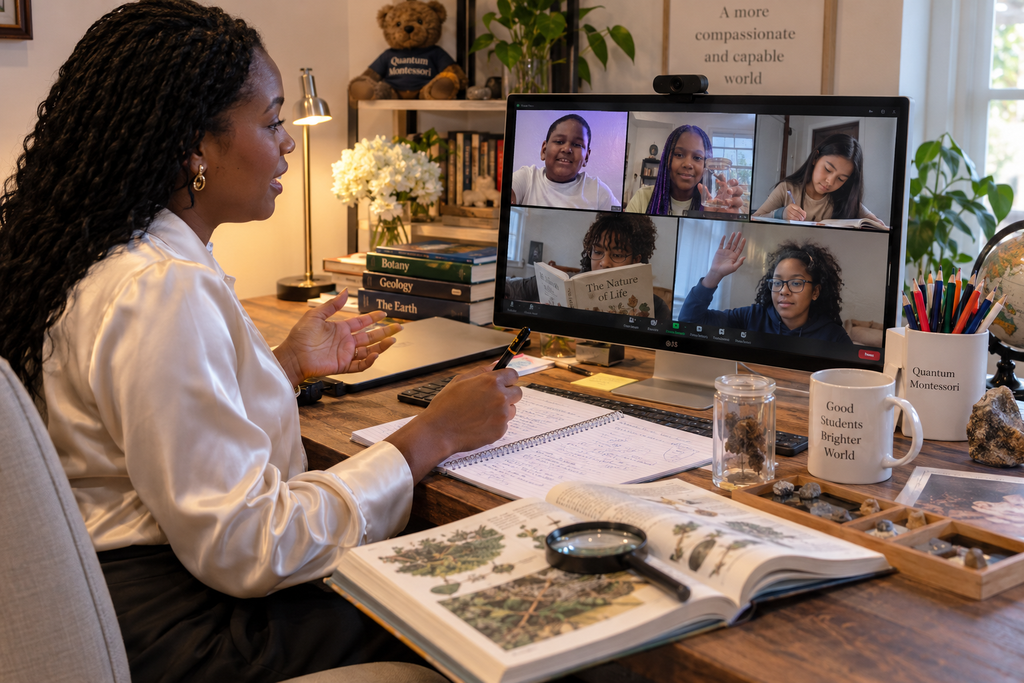
    One of the easiest mistakes to make with online education is assuming that because technology connects the student to the teacher, technology should also contain the student’s work. It does not have to. I may introduce a mathematical concept during a live lesson, but the student may then close the computer and continue solving problems with pencil and paper. We may begin discussing a novel together, but the reading happens in a physical book later that afternoon. I can introduce a science question online and send students away from the screen to test, observe, measure, record, and come back with evidence. A student may receive instructions digitally and spend the next hour creating something that never requires another click.

    That movement between instruction and application is important. Children need opportunities to do something with what they have learned before we assume they understand it. They also need to encounter the small problems that appear when an adult is not immediately directing every step. Where is the information I need? Which material should I use? What did the instructions say? Why didn’t this answer work? Should I reread the passage? Do I need to ask for help, or can I solve this myself? Those moments may look insignificant from the outside, but they are part of developing independence.
    A Montessori Work Cycle Can Still Exist at Home

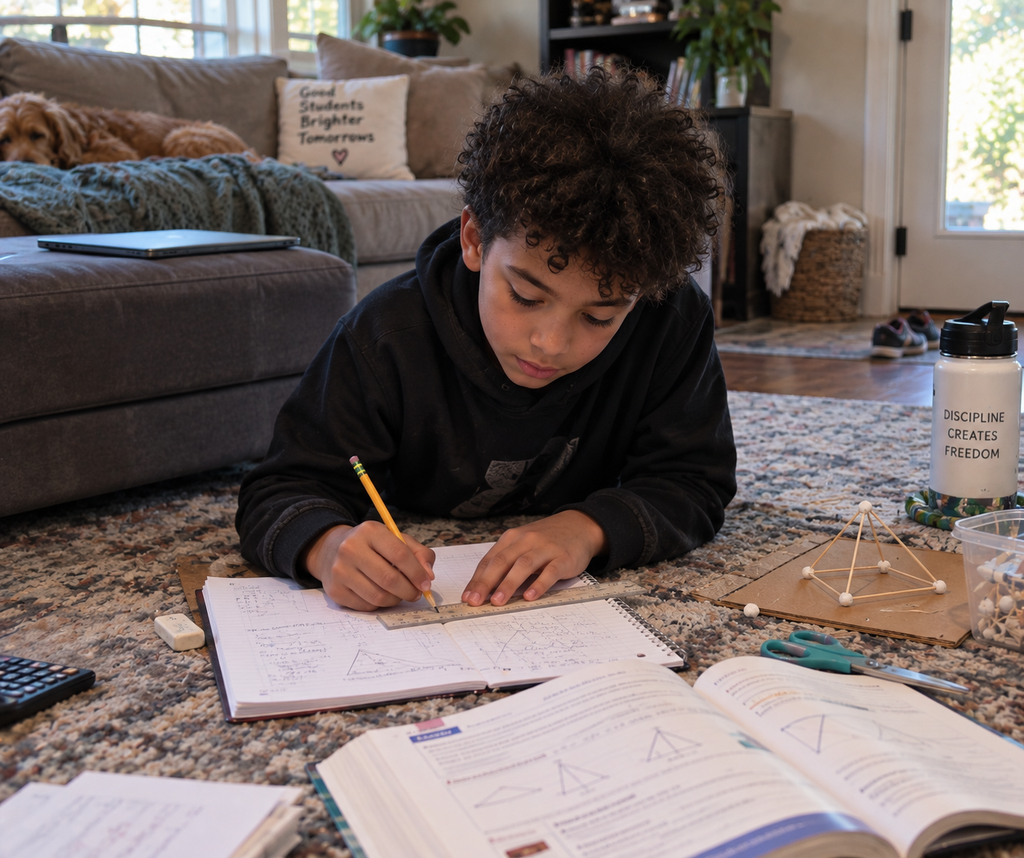
    Structure matters in hybrid homeschooling, but structure does not have to mean recreating bells, rigid class periods, or a school desk in the corner of the living room. Montessori gives us another way to think about the day. A work cycle provides enough uninterrupted time for children to settle into meaningful work, make choices within established expectations, move between activities, solve problems, and complete work without an adult constantly announcing what happens every twenty minutes.

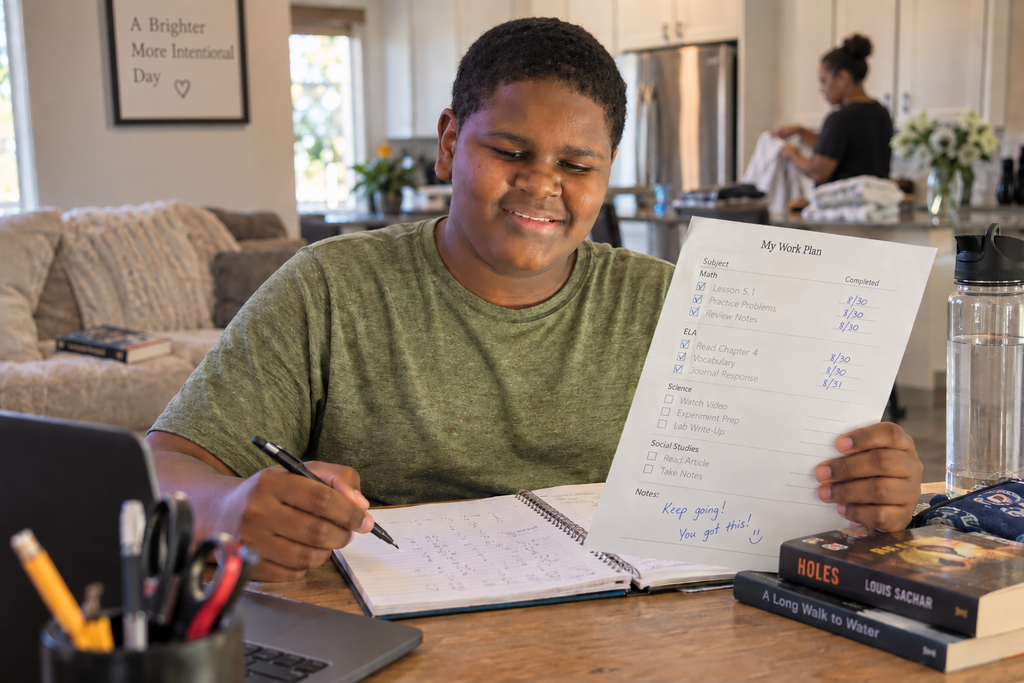
    At home, that work cycle will look different from one family to another. Live classes provide anchors in the schedule, and independent work can be organized around them. A child may know which work must be completed that day while having some choice about sequence. Another student may need more structure and a clearly ordered work plan. A younger child may require more parent support during transitions, while an older student may be increasingly responsible for checking the plan, gathering materials, attending class, completing follow-up work, and determining when help is necessary. Flexibility does not require us to remove expectations. It allows us to build expectations around the actual child rather than forcing every child into an identical day.
    Independence Does Not Mean Parents Disappear

    Parents sometimes hear “independent learning” and understandably wonder what their role is supposed to be. Montessori independence has never meant leaving a child alone with work they do not understand and hoping they eventually figure it out. Independence develops through preparation. We teach. We model. We organize the environment. We establish expectations. We observe. We provide help when it is actually needed. Then, as competence develops, we gradually stop doing the parts the child can now do.

    That distinction is especially important at home because it is incredibly easy to help too much. You see your child struggling to find something, so you find it. They hesitate over an instruction, so you explain it before they reread it. They make a mistake, and you point it out before they notice. They cannot remember what comes next, and you become the schedule. None of those moments seems significant individually, and sometimes stepping in is exactly what the child needs. But if we routinely do the remembering, organizing, noticing, interpreting, and problem solving, the child has fewer opportunities to develop those abilities.

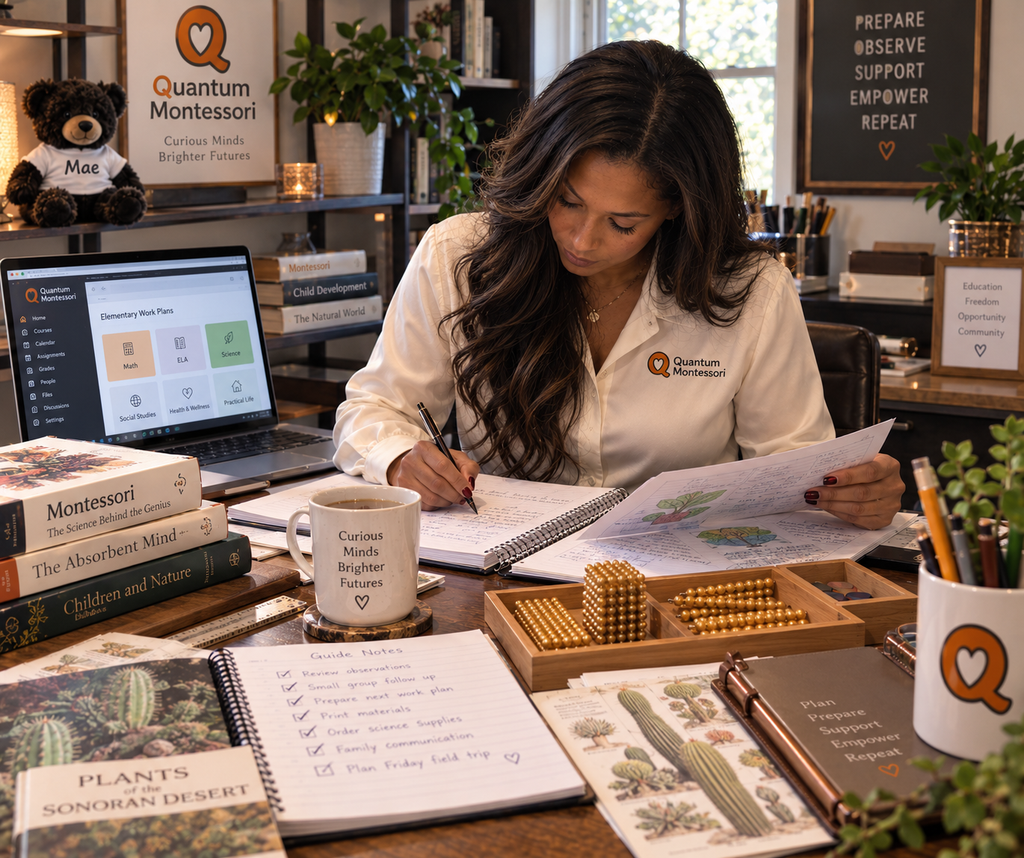
    A parent’s role in hybrid homeschooling is therefore not to become the child’s full-time classroom teacher while simultaneously supervising every assignment. Parents help create the conditions in which learning can happen. They communicate with the Guide. They help establish routines and maintain the learning environment. They make sure children have the necessary materials and support. They notice when something is consistently going wrong. For younger students, that involvement will naturally be greater. As students mature and demonstrate readiness, responsibility should increasingly move toward them.

    Different Children May Need Different Versions of the Same Lesson

    One of the reasons I value this model is that it gives us room to differentiate. Two children can attend the same lesson and need very different follow-up work. Grade level gives us useful information, but it does not tell me everything I need to know about a student. I also want to know what the child already understands, where there are gaps, how independently they work, what kind of challenge is appropriate, what interests them, and what I have observed while they are actually trying to learn.

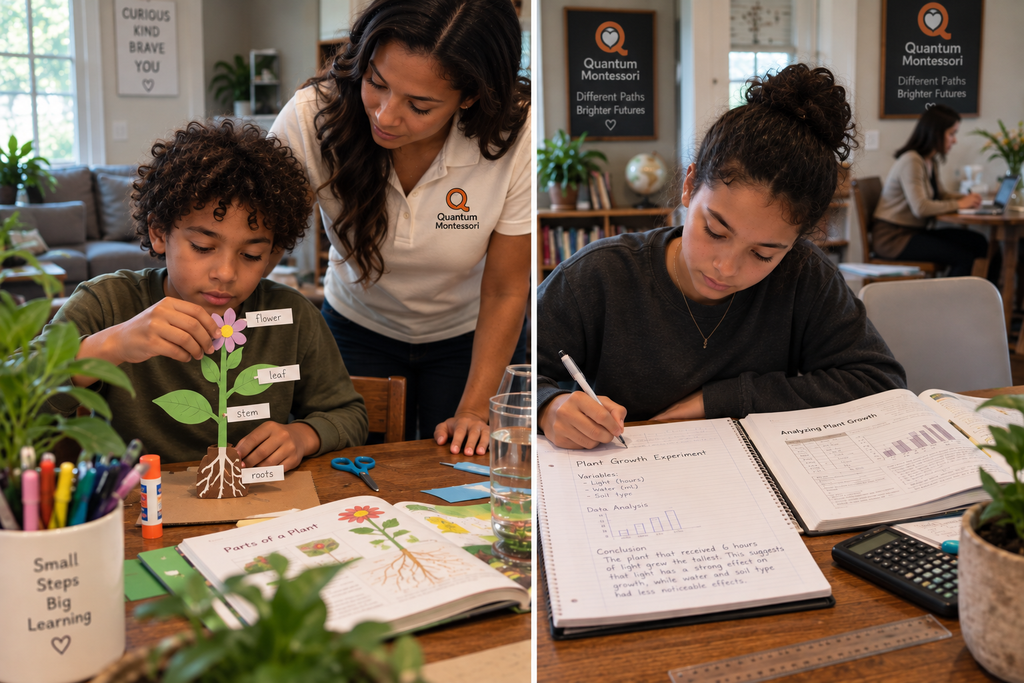
    The same topic can therefore lead to different work. A younger student studying a science concept might create a labeled diagram and record a few careful observations. An older student may research the same phenomenon, compare data, write an explanation, or design an investigation. One student may need a concrete material before moving into abstraction. Another may be ready to apply the concept to a more complex problem. Individualization does not mean inventing an entirely different curriculum for every child every day. It means recognizing that equal access to learning does not always require identical work.
    Home Is Part of the Learning Environment

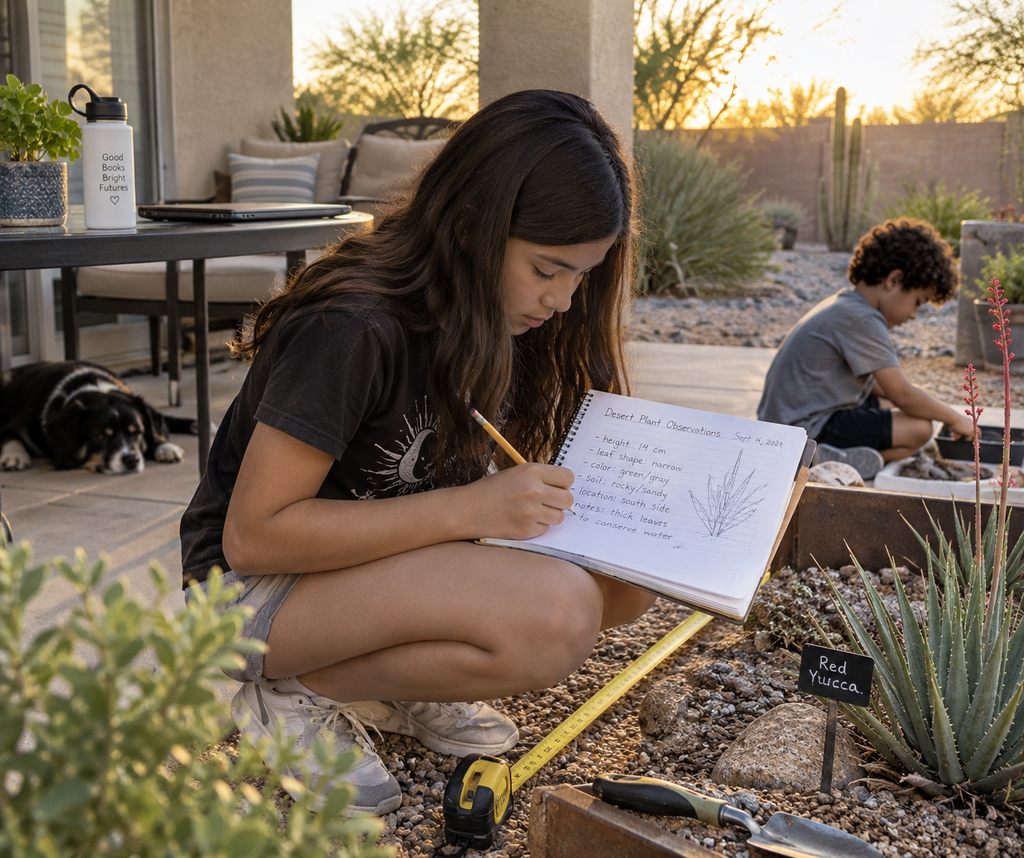
    There is another advantage to hybrid homeschooling that I think is easy to underestimate: children are learning in a place where life is already happening. A kitchen contains mathematics, chemistry, sequencing, reading, responsibility, and Practical Life. A backyard can become a place for biology, weather observations, measurement, art, and writing. A trip to the grocery store involves budgeting, comparison, estimation, planning, and decision making. Libraries, museums, parks, community organizations, family projects, hobbies, and ordinary responsibilities can all become part of a child’s education without requiring us to label every experience as an assignment.

    This does not mean children learn everything they need simply by living life. There is academic knowledge that deserves systematic, intentional instruction. There are skills that need practice even when they are not the child’s favorite thing to do. Montessori education is not an excuse to wait indefinitely for a child to become interested in every essential skill. But homeschooling gives us the freedom to connect formal instruction to a much larger world, and hybrid learning gives families access to educational support without requiring that the child’s entire education move outside the home.
    Community Still Matters

    Homeschooling should not require children to learn in isolation. Live classes give students opportunities to hear perspectives other than their own, ask questions, explain their thinking, disagree respectfully, work through ideas with peers, and become part of a learning community. Learning pods can provide another form of community through in-person work, projects, Practical Life, discussion, and collaboration. Independent homeschool students can also build community through field trips, extracurricular activities, libraries, clubs, sports, service organizations, neighborhood relationships, and the many other places children naturally encounter people.

    The important thing is not to reproduce the social structure of a conventional school simply because it is familiar. Children need meaningful relationships and opportunities to participate in a community. They do not necessarily need thirty same-aged children in one room for seven hours a day in order to have them.

    At Quantum Montessori, our broader goal is to support families across different learning environments rather than pretending there is one arrangement that works for every child. Some students benefit from regular live instruction. Some families want greater responsibility for directing homeschool at home while receiving planning and support. Some children thrive with opportunities to participate in a small learning pod. The educational environment can change while the Montessori principles underneath it remain recognizable: observation, meaningful work, independence, appropriate challenge, respect for development, and an environment prepared for the child who is actually in front of us.
    The Goal Is Not to Create a Perfect Homeschool Day

    A successful hybrid homeschool day does not need to look beautiful from beginning to end. Someone will occasionally forget a pencil. A child will take much longer than expected to complete something. Technology will misbehave. A lesson may reveal a gap that changes the rest of the week’s plan. A student may need more support than we expected, or surprise us by being ready to do something independently. A family appointment may rearrange the afternoon. Sometimes the experiment works. Sometimes it absolutely does not.

    That is not evidence that homeschooling is failing. Education involves people, and people are not perfectly predictable.

    What matters more is whether the structure is helping the child gradually become a stronger learner. Can they engage meaningfully during live instruction? Can they continue working when the teacher is no longer on the screen? Are they learning how to read instructions, manage materials, ask useful questions, persist through difficulty, communicate with others, and take increasing responsibility for their work? Are we observing enough to know when they need challenge and when they need support?

    That is the potential I see in hybrid homeschooling. It can give families structure without requiring rigidity, professional instruction without making the computer the center of the child’s education, community without requiring every child to learn in the same physical space, and independence without expecting children to teach themselves.

    The computer can connect us. The Guide can teach, observe, plan, and support. Parents can create an environment where learning has a place in family life. Children can read real books, write on real paper, conduct real experiments, solve real problems, participate in real conversations, and gradually take ownership of increasingly meaningful work.

    When those pieces work together, hybrid homeschooling is not half of one kind of education and half of another.

    It becomes an education designed to move naturally between instruction, independence, home, community, and the real world.

  • How To Practice Mindfulness And Meditation To Enhance Your Well-Being And Academic Performance?

    How To Practice Mindfulness And Meditation To Enhance Your Well-Being And Academic Performance?

    How To Practice Mindfulness And Meditation To Enhance Your Well-Being And Academic Performance?

    In a world full of stressors, triggers, and hustle, it is virtually impossible not to feel overwhelmed, anxious, and inadequate. From time to time, it is crucial to tune out that external noise and become more aware of your present rather than regretting the past or worrying about the future. This is where mindfulness and meditation come in.

    What is Mindfulness?

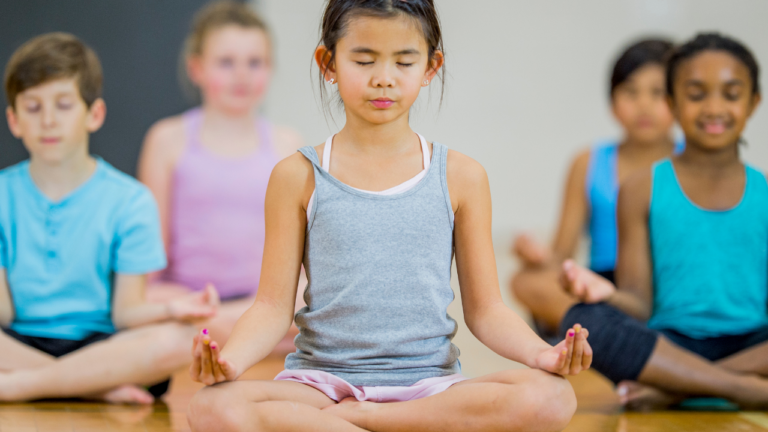
    Mindfulness is a form of meditation where you focus on being intensely aware of what you are feeling and sensing in the present moment without any judgment or interpretation. Practicing mindfulness involves guided imagery, breathing exercises, and other practices designed to relax the mind and body and help minimize stress. 

    Mindfulness is a natural quality that we all have at all times. When we practice it, we are practicing the art of creating space for ourselves – space to breathe, think, and examine our emotions and reactions in their raw form. 

    Benefits of Mindfulness and Meditation

    Mindfulness and meditation are gaining a lot of traction lately, especially after research confirmed their science-backed benefits for the mind and body. Here we will be looking at the top 5 advantages of practicing mindfulness.  

    1. Lowers Anxiety 

    Reduced anxiety is perhaps one of the most notable benefits of practicing mindfulness, which not only positively influences our academic performance but also our overall well-being. A Massachusetts General Hospital study published in 2013 shows that 93 individuals with diagnosed anxiety were randomly assigned to either an 8-week mindfulness-based stress reduction program (MSBR) or a stress management education (SME) group. The people who were part of the mindfulness group showed a drastic reduction in anxiety.  

    2. Decreases Cognitive Decline  

    People, especially older adults, tend to lose some of their cognitive abilities and short-term memory with age. However, mindfulness may help slow down that cognitive decline, even in Alzheimer’s patients. A 2016 study shows that people with Alzheimer’s disease who were engaged in mindfulness meditation experienced a robust improvement in their cognitive scores compared to other control groups.  

    Another study published in 2017 shows that mindfulness and breath training significantly improved the attention span of the participants. This implies that regularly practicing mindfulness may help sharpen memory and increase attention span, both of which are fundamental qualities for excelling academically.  

    3. Improves Immune Response

    When disease-causing organisms and viruses attack us, our bodies release groups of immune cells that circulate in the bloodstream. These cells, including anti- and pro-inflammatory proteins, T-cells, neutrophils, immunoglobulins, and natural killer cells, allow our bodies to fight infections and diseases in numerous ways. Meditation and mindfulness may affect these immune cells.  

    Studies show that practicing mindfulness meditation seemed to increase the levels of T-cells in HIV and breast cancer patients. This shows that doing mindfulness exercises could potentially play a role in battling cancer and other various diseases that require immune cells.  

    4. Prevents Cell Aging 

    Cell aging is a natural and inevitable phenomenon triggered by stress or other medical conditions. Telomeres, a form of protein found at the end of chromosomes that protect the cell from aging, were seemingly affected by mindfulness and meditation. Research shows that people doing mindfulness for many years may have longer telomeres.  

    5. Reduces Psychological Pain  

    Mindfulness is very effective at improving our psychological well-being, which ultimately impacts our psychological health. Several studies suggest that mindfulness can help people cope better with anxiety, depression, stress, and pain that might accompany an illness, specifically chronic conditions.  

    For instance, substance abuse revolves around psychological cravings for a drug or alcohol temporarily relieving people from mental suffering. Mindfulness can be a fantastic tool for addiction treatment by helping people better understand and fight their cravings. This may even help them avoid relapse after they have been safely discouraged from substance use.  

    How to Practice Mindfulness and Meditation Correctly for Best Results? 

    Some people confuse mindfulness meditation with completely blocking all thoughts and emotions, which may be more difficult than it sounds. But it’s more than that. How you practice mindfulness will differ based on your desires and goals. However, if you are trying to improve your well-being and academic performance, here are some general rules and tips to keep in mind.  

    • Mindfulness is nothing without intention. You need to choose to be self-aware, disciplined, and mindful. It may not be easy at the start, but you will get there with some practice. 
    • Be clear about your desires. If you want to excel in your studies and improve your well-being, you need to practice being in the present moment. Take a minute to quietly focus on transitioning from your regular surroundings to your academic content.   
    • Surround yourself with things that promote feelings of mindfulness. These could include calming music, incense, a scented candle, a burning sage, relaxing ASMR sounds, etc.  

    Once you have set the intention, identified your goals, and created the right environment, you can go ahead and follow the steps below.  

    Find a Quiet Space

    Using a comfortable chair or cushion, sit up straight but not too stiff. Next, allow your muscles to relax from head to toe. Roll back your shoulders and let your body loose.

    Keep a Timer 

    If you are a beginner, minutes may feel like hours, which is why it’s best to set an achievable target. Start a short 5-minute session and then gradually work your way up to 10 or 15 minutes until you are comfortable meditating for longer periods.  

    Focus On Breathing and Pay Attention to Your Senses

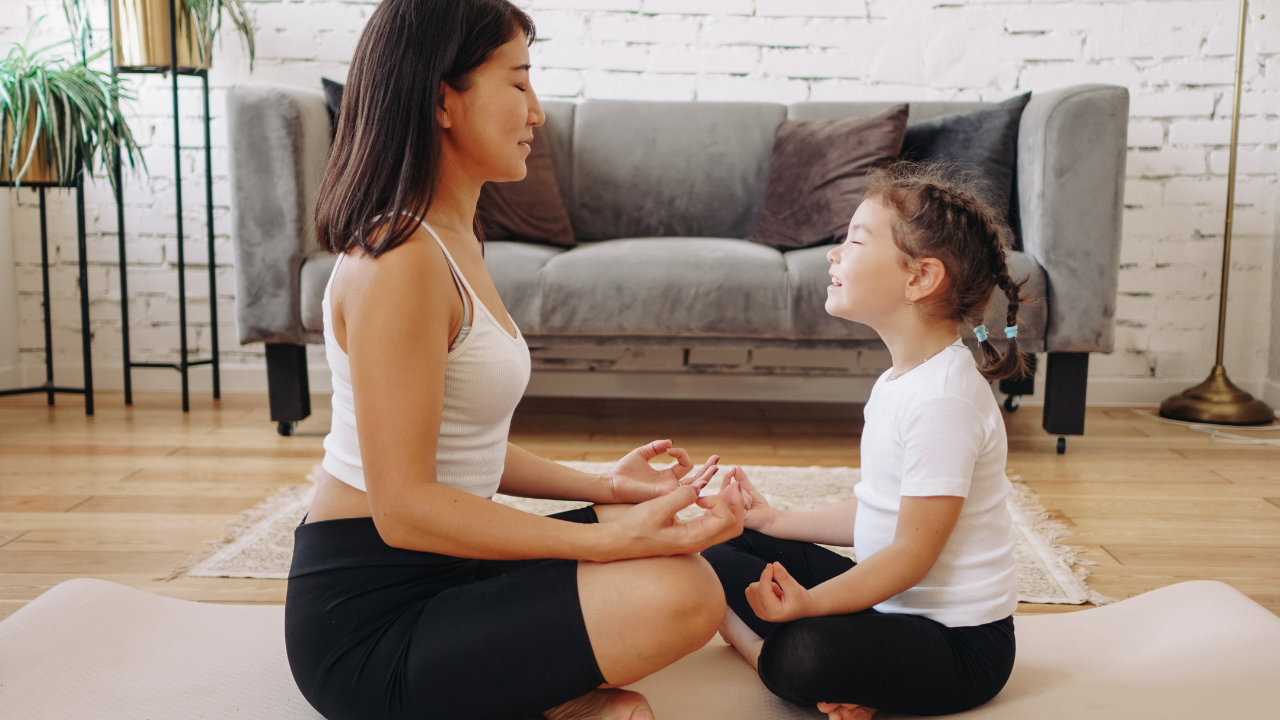
    Become fully aware of your breath, and attune to the feeling of air flowing in and out of your body as you breathe. Feel your chest rise and fall, fully synchronized with the air as it enters and leaves your nostrils. Pay attention to your senses, including touch, sound, sight, and smell.

    For example, if you have music playing or a candle in the background while you meditate, take time to smell the scent and enjoy the music.

    Keep Track Of Your Thoughts

    The goal here is not to block your thoughts completely but to get more comfortable becoming a “witness” to them. When thoughts pop up in your head, do not try to suppress or ignore them. Instead, note them, stay calm, and use your breathwork to keep yourself grounded. Imagine your thoughts as clouds pass by while you watch them as they change and shift. Repeat this action as many times as you can.

    Don’t Be Too Hard On Yourself

    If you find yourself getting overwhelmed with too many emotions – whether with fear, anxiety, self-loathing, hope, or depression – observe the pathway your mind took without any interruption or judgment. Don’t be hard on yourself, and quickly return to your breathing and refocus your thoughts.  

    Take The Help Of An App

    If you find it difficult to practice mindfulness by yourself, you can always take the help of guided meditation. There is a sea of YouTube tutorials and applications to choose from that provide free meditations and teach you the exact steps on how to be more mindful.  

    Conclusion

    Mindfulness and meditation can be life-changing, provided that you do them with the correct intention and remain consistent. Not only do they help improve academic performance and overall well-being, but they also bring an array of other physical and mental benefits, such as decreased depression, anxiety, and psychological pain, reduced cell aging, and improved immunity.  


    Simple mindfulness exercises can be practiced anywhere and at any time and require no props or equipment. However, studies show that practicing mindfulness outdoors may more effectively engage your senses. Aim to indulge in mindfulness meditation every day for around six months, and soon you will find the exercise to be effortless.

    To learn more about our academics or to contact a member of our admissions staff, click here.  Follow us on Facebook, Instagram, YouTube and LinkedIn.

    Sources
    • Can mindfulness exercises help me? (n.d.). Mayo Clinic. https://www.mayoclinic.org/healthy-lifestyle/consumer-health/in-depth/mindfulness-exercises/art-20046356#:~:text=Sit%20comfortably%20with%20your%20back

    • Wong, C. (2021, April 8). Mindfulness Meditation. Verywell Mind; Verywellmind. https://www.verywellmind.com/mindfulness-meditation-88369

    • How to Practice Mindfulness and Find Peace From Within. (n.d.). Www.betterup.com. https://www.betterup.com/blog/how-to-practice-mindfulness

    • Mineo, L. (2018, April 17). Less stress, clearer thoughts with mindfulness meditation. Harvard Gazette. https://news.harvard.edu/gazette/story/2018/04/less-stress-clearer-thoughts-with-mindfulness-meditation/

  • The Difference between Authoritative and Authoritarian Parenting Styles and How They Affect Your Child’s Development

    The Difference between Authoritative and Authoritarian Parenting Styles and How They Affect Your Child’s Development

    The Difference between Authoritative and Authoritarian Parenting Styles and How They Affect Your Child’s Development

    Parenting styles–as suggested- are various strategies many parents try to incorporate to raise their children. From parental behavior, personal preferences, and choices to the emotional atmosphere kids are raised in, parenting style includes everything. 

    Interestingly, individual parenting style has long been a subject of study for many developmental psychologists. The purpose is to find the effects of “parenting style” on the development and growth of children.   However, there is no denying that finding the specific effect of a parent’s action that produces a specific action or behavior in children is a daunting task.  

    We say this because certain individuals who have experienced contrasting upbringings as children can eventually develop strikingly similar characteristics. On the other hand, siblings residing in the same household and exposed to identical environments may exhibit notable differences in their personalities as they mature. 

    Despite these difficulties, researchers have proposed connections between various parenting styles and their impact on children, with some suggesting that these effects can persist into adulthood. 

    Authoritative and authoritarian are two popular and significant parenting styles scientists believe are common in parents and can impact children’s behavior.  

    Whether you’re already a parent or going to embrace parenthood soon, learning about these two prominent parenting styles can help you unleash the potential within your children, enabling them to become confident, resilient, and well-adjusted individuals. 

    Impact of Parenting Styles

    Parenting styles, like constellations in the night sky, hold immense power in shaping your children’s lives. They influence children’s behavior, self-esteem, emotional intelligence, and cognitive development. Therefore, it is crucial to understand the nuances of different parenting styles to create a nurturing environment that supports their growth. 

    Therefore, it is crucial to understand the nuances of different parenting styles to create a nurturing environment that supports their growth.

    Like constellations in the night sky, parenting approaches significantly influence how your kids turn out. Children’s behavior, self-worth, emotional intelligence, and general cognitive development are all influenced by the parenting style you choose for your children.

    Therefore, it is essential to comprehend the subtleties of various parenting philosophies to foster a supportive environment that promotes their development.

    Authoritative Parenting Style

    Leading with compassion and love, the authoritative parenting style is a shining example of good parenting. Typically, warmth, communication, and understanding define this strategy. While offering emotional support and encouragement, parents who employ an authoritarian manner establish clear boundaries and expectations. They work to establish a solid parent-child bond based on trust and candid communication.

    In an authoritative parenting style, parents serve as mentors, offering a supportive environment in which their kids can explore and develop. They recognize the value of enabling their kids to make decisions within appropriate bounds while maintaining a healthy balance between independence and discipline. This parenting approach encourages independence and self-assurance, empowering kids to think critically and make appropriate decisions.

    For instance, if you’re an authoritative parent, you will more likely engage with your child when facing a challenging scenario. You use constructive dialogue with them to explore various perspectives and encourage them to weigh the consequences of their actions.

    You try to involve them in decision-making to empower them and help them develop problem-solving skills and a sense of accountability.

    Authoritarian Parenting

    In contrast, the authoritarian parenting style is the constellation of control that casts a different light on the parent-child relationship.

    Authoritarian parents prioritize strict rules and discipline, enforcing their expectations without opportunity for compromise. Remember that in this type of leadership, conformity and obedience are prioritized above uniqueness and independence.

    Parents who establish a hierarchy ensure that their power is unchallenged. They ignore the viewpoint or feelings of the child as they impose rules through punishment and control. Though the parenting styles work in some situations, this approach may restrict a child’s individuality and impair their capacity for decision-making and critical thought, even though structure and discipline are vital.

    For instance, in an authoritarian environment, if your child doesn’t match your expectations, you won’t allow them to share their opinion and punish them severely. Although this strategy might result in obedience, it might also lack the understanding and emotional support essential for a child’s healthy development.

    Here are the key features of both parenting approaches to help you understand better.

    Authoritative Parenting
    Authoritarian Parenting

    Emphasizes building a strong connection with the child while setting limits 

    Emphasizes parental authority 

    Utilizes reasoning and explanations to establish limits 

    Expects children to obey without questioning 

    Provides warmth and nurturing support 

    Lacks warmth and may be less nurturing 

    Encourages independence within the boundaries set 

    Discourages independence and discourages questioning 

    The Effect of Parenting Styles on the Development of Your Child

    You can impact the growth and development of the child by choosing an authoritative or authoritarian parenting style. Let’s find out how these methods affect important growth areas:

    Emotional Health

    You can develop a good awareness and understanding of emotions in your children through an authoritative parenting style. It promotes emotional intelligence and empathy. Keep in mind that authoritative parents encourage open communication and accept their children’s feelings by creating a nurturing environment, enabling them to face obstacles with resiliency.

    On the other hand, authoritarian parenting may result in emotional repression or problems with appropriate emotion management since children may feel hesitant or afraid to communicate their genuine sentiments.

    Sense of Independence

    An authoritative approach encourages children to make choices within predetermined limits, which fosters independence. You inculcate a sense of self-determination in your children and value their perspectives when you’re an authoritative parent.

    As an authoritative parent, giving autonomy provides opportunities for development and education, enabling your kids to gain decision-making abilities and a sense of accountability.

    On the other hand, by choosing authoritarian parenting, you may foster a reliance on outside authority, obstructing the development of autonomy and impeding your child’s capacity for independent thought.

    Honest Communication

    The authoritative parenting style of open and encouraging communication fosters trust wholesome relationships, and efficient problem-solving abilities in children. By actively listening to your kids, you can use this approach to establish a culture of open communication.

    Parents in charge of the conversation teach their kids how to express themselves and handle disputes healthily. On the other hand, children may be afraid to voice their opinions or worries owing to the severe and rigid character of the parent-child interaction, leading to communication hurdles and strained relationships.

    Self-esteem

    Did you know children gain a strong feeling of self-worth, confidence, and resilience with the guidance and support of authoritative parenting?

    These parents encourage their children’s efforts and offer constructive criticism, helping them develop positive self-images. As an authoritative parent, you can cultivate a sense of self-worth in your children by praising their accomplishments and highlighting their qualities.

    On the other hand, authoritarian parenting may promote poor self-esteem and feelings of inadequacy because of continual criticism and strict demands, which can undermine a child’s sense of self-worth and confidence in general.

    Let’s Sum It Up

    The decisions you make about your parenting style can significantly impact the growth of your kids in the cosmic tapestry of parenting. Understanding the distinctions between authoritative and authoritarian parenting techniques will help you create an atmosphere promoting development, self-assurance, and well-being.

    Let’s set off on this magnificent journey, led by love and compassion, to nurture our kids’ futures and bring forth their limitless potential. Keep in mind that by adopting an authoritative parenting style, we awaken the star within each child, empowering them to shine brilliantly and forge their path on this enchanted adventure called life.

    To learn more about Quantum Montessori and our programs or to contact a member of our admissions staff, email us. 

    Follow us on Facebook, Instagram and LinkedIn.

    References
    • Cherry, K. (2022, December 1). How Different Styles of Parenting Impact Children. Verywell Mind.
    • Witmer, E. H., Jaclyn Lopez. (n.d.). Why experts consider authoritative parenting the best approach, and how it differs from authoritarian parenting. Insider.
    • Ghosh, O. (n.d.). Effect of Authoritarian Parenting Style on Psychopathology. https://doi.org/10.35629/7722-1009023745
    • Dewar, G. (2017, July 2). The authoritative parenting style: An evidence-based guide. PARENTING SCIENCE. https://parentingscience.com/authoritative-parenting-style/

    What are your thoughts? We’d love to hear them!

  • Unlocking the Power of Quantum Learning for Early Childhood and Elementary-Aged Kids

    Unlocking the Power of Quantum Learning for Early Childhood and Elementary-Aged Kids

    Unlocking the Power of Quantum Learning for Early Childhood and Elementary-Aged Kids

    Are you looking for ways to unlock the power of quantum learning for early childhood and elementary–aged kids? Quantum learning is a revolutionary approach to education that can help to maximize the cognitive development of young students. Through the use of proven educational strategies, quantum learning helps to create an environment that fosters brain development and encourages learning strategies that will benefit young children for the rest of their lives.

    Quantum learning is an educational approach designed to help children maximize their cognitive, social, and emotional development. It is based on the principles of neuroplasticity, which is the ability of the brain to change and adapt in response to experience. Quantum learning is an effective method of teaching that can help children develop not only academic skills but also important life skills such as problem solving, critical thinking, and effective communication.

    Quantum learning is based on four core principles.

    The first is “active learning” which encourages children to engage in hands-on activities, experiments, and problem-solving tasks. This type of learning helps children develop their critical thinking skills as well as their ability to apply their knowledge to different situations.

    The second principle is “self-discovery” which encourages children to explore their own interests, ideas, and talents. Self-discovery helps children develop their self-confidence and autonomy.

    The third principle is “collaborative learning” which encourages children to work together in groups to solve problems and explore new ideas. This type of learning helps children develop their social skills as well as their ability to work as part of a team. 

    The fourth and final principle is “reflection” which encourages children to reflect upon their learning experiences and how they can use what they have learned in the future.

    Quantums Goal

    The goal of quantum learning is to foster a lifelong love of learning through a holistic approach that emphasizes the development of the whole child. It focuses on the development of the “whole brain” by incorporating activities that involve both hemispheres of the brain. Quantum learning also helps children develop the ability to transfer their learning from one situation to another. This type of learning is especially beneficial for early childhood and elementary aged children who are just beginning to learn and explore the world around them.

    What’s The Key?

    The key to unlocking the power of quantum learning for early childhood and elementary–aged kids is to help them understand how their brains work. By teaching kids about the basic structure and function of their brains, they can learn to identify and use the most effective learning strategies to maximize their potential. Through the use of visual, audio, and tactile activities, quantum learning can help kids to better understand the physical and emotional aspects of learning and to develop the skills necessary to succeed.

    In addition to teaching kids about their brains and how to use effective learning strategies, quantum learning can also be used to help kids develop their cognitive abilities. Through the use of cognitive development activities, kids can learn to think logically, problem-solve, and make decisions. By helping kids to understand their abilities and how to use them, quantum learning can help them to reach their full potential.

    Finally, quantum learning can also help to foster a positive learning environment everywhere, through the use of strategies such as cooperative learning, group work, and student–led projects, quantum learning can help create an atmosphere of collaboration, creativity, and mutual respect. This type of learning environment can help to foster a long–term commitment to learning and can help kids to develop into well–rounded and successful adults.

    Here at Quantum Montessori School, we believe that the best way to learn is through doing. That’s why our curriculum includes activities such as gardening, cooking, and engineering. We also offer plenty of outdoor time to explore and play, helping children develop healthy habits and relationships with nature.

    If you’re looking for an innovative and engaging learning experience for your child, look no further than Quantum Montessori School. Visit our website to learn more or schedule a time to speak with admissions to find out for yourself why Quantum Montessori School is the perfect place for your child’s education. Contact us today to take the first step in giving your child the best start in life!

  • How do I successfully homeschool my middle schooler?

    How do I successfully homeschool my middle schooler?

    How do I successfully homeschool my middle schooler?

    Are you currently struggling with finding the best homeschooling programs and learning materials for your middle school-aged (6th-8th grade) students? The truth is homeschooling is easy once you decide on the curriculum, be consistent and committed to the process.

    middle school homeschool assistance

    The middle school group is a critical stage for your child. At this stage, people may say children need to be in the classrooms to socialize to learn effectively.

    Trusting Montessori with the success of your Middle School student from home will be easy because of how engaged and occupied the programs are outlined; your child won’t miss out on the public classroom journey.

    This blog post will take you on a journey to explore the day in the life of a Secondary Aged Montessori Student within the homeschooling setting.

    middle school homeschool

    The Aim of Montessori

    Montessori understands that the secondary age is more of bridging the gap and creating the perfect balance between student-centered academic studies with work driven by purpose. The aim is to develop confident adolescents to become hard-working adults who make positive and purpose-filled contributions to society. 

    Our homeschool assistance program was carefully designed to weave the mysteries and wonders intertwined in adolescence. Montessori adolescent students receive a good education and learn how to function in the real world as educational development is always coupled with the construction of a growing self daily. 

    This concept makes Montessori learning perfect for homeschooling the secondary age – the practicality of education and growing – the two are an inseparable pair.

    A Day in the life of a Montessori Secondary Age Student

    The structure is the order of the day for a Montessori student. The day begins with a meeting led by the student to model responsibility and leadership.

    Modern Montessori at the Secondary Age understands that it is pertinent that different educational needs are met to achieve full lifestyles as an individual. In the homeschooling setting, Montessori implores parents to lead an environment that seeks to garner the needs of the adolescent physically, emotionally, socially, and cognitively. 


    This is the aim of Montessori homeschooling.  Homeschool families may opt to join a part-time learning pod or meet-up with other homeschool families to further enhance the learning experience for their 6th-8th graders.

    7th grade learning pod

    It’s more than mastering academics, but its understanding at this the most crucial stage of development that learning and personal development must co-exist to model the example for what being an adult in the real world will entail. The development of independence in self-management is the key to unlocking success in education and adulthood.

    The middle school Montessori student in the homeschool setting learns the beauty of choice, organization, and self-regulation in the presence of their parents through distant learning.  A day in the life of a Montessori student is colored with problem-solving, the application of a scientific method, activities that encourage diversity in thought, learning style, and perspective.

    kids scientific method

    In Montessori Math, every step is practical, and students learn through a somewhat tangible and practical approach. This ensures that learning never feels forced or strained with only getting it right but rather in truly understanding and grasping the concepts and how these math problems can be solved quite similar to situations in everyday life.

    What makes Montessori a successful homeschooling approach for the Secondary Age?

    Success lies in the ability to structure and plan activities based on your child’s learning style. Parents quickly begin to love our Montessori method because it never separates learning from living. This is the true sweet spot of raising a whole child. Montessori being implemented in the home factors in the importance and joy of learning in all aspects and realizing that all the elements of life are interconnected and display a big school. Life is the school. Montessori always believes in the child and understands that learning only happens through a hands-on and experiential approach. 

    7th grade

    Secondary age students are taught the importance of schedule and uninterrupted work, which is practiced in structured work periods of two hours. Students also benefit from a spiral curriculum that exposes them to a myriad of interrelated topics, which pushes them to master skills, meet deadlines, and advance in time management. 


    In the secondary age group, subjects such as mathematics, language arts, sciences, and social studies are readily exposed.  Students learn to appreciate hard work, cultures and develop empathy which are all critical aspects of being a caring citizen in the world

    8th graders

    Montessori does not believe in waiting till the child is older to expose them to explore how a business works. At this age, they become exposed to starting a business, developing a business plan, and locate funding. 


    Is there a subject your child loves? Your child will get the opportunity to become exposed to work with other experts. Students are also taught the importance of completing major projects. This teaches them the need for extensive research, planning, studying, and decision-making.

    Does Montessori focus too much on developing the adolescent? YES! But it never loses the balance of play and experiences in nature, creating respect and love for the environment. 

    Just Start!

    Montessori Middle School

    A lot of information to digest? Don’t be discouraged; instead, become excited and convinced to get on board with Montessori for your secondary-aged child. Focus on the following:

    • The main concept Montessori and other notable, guided learning programs like ours here at Quantum Montessori School want you to grasp while homeschooling your child are that learning and life should always coincide. This makes growing practical and the transition into adulthood less taxing and overwhelming.
    • Listen to the needs of your child and carefully watch their learning patterns. 
    • As you watch the preferred learning patterns of your child, match it with our Quantum Montessori approach to structure and guide the learning experience.
    • What if I miss a day? You may fear the ability to stay consistent, but this shouldn’t stop you from moving forward with giving your child the blessing of a guided distance learning. Treat it as everyday life; if you miss a day, you pick up where you left off and keep going!
    6th grade montessori

    Montessori is a concept more than it is a specific plan. This means that as the parent, once you master the essence of Montessori (cultivating curiosity and harboring growth through academics and everyday life skills to grow a whole adult – you are on your way to creating your own Montessori homeschool curriculum. Feeling inspired, aren’t you? You can do it, and if you need guidance, Quantum Montessori School is happy to help. 

    What we offer homeschooling families

    • We have planned and titled lessons, which stipulate the task at hand.
    • We have outlined the requirements. This aspect highlights your child’s readiness for receiving new information. This section should pose the prerequisite skills that should be attained at this level. It should pose questions that they will ask themselves as they go through the learning period. These questions will expose where there are and where they need to be.
    • We will provide customized Montessori lesson plans to ensure that students meet specific requirements before the lessons are considered “mastered”. 
    • Quantum Montessori School believes in the bonus objective of every lesson and make learning multi-dimensional.
    • Quantum has organized and listed materials so that everything is ready to use so that your days are structured and more manageable. 
    montessori lesson plans

    Final thoughts

    Are you concerned about how the Modern Montessori will fit into the life of your secondary-aged child and your family? Don’t worry; Montessori in the form of distance learning with the help of the our team here at Quantum is beyond doable.

    Your child’s pace guides the nature of Montessori, and similarly, the same goes for online learning. This means that there will be the ability to steer and advance through the lessons independently and pick up the needed skills along the way.

    middle school distance learning

    Seeing that Montessori believes that students perform best when given the freedom to learn concepts in a less restrictive environment, you can rest assured your child will excel and feel a sense of ease as they learn.

    Quantum’s modern Montessori approach gives the child the responsibility to take their learning seriously, thus creating responsible adults for the future.

    Thanks for reading!

    More Reading