Montessori Education
The Kitchen Is a Classroom
Measuring, pouring, timing, planning, cleaning up. Few places in a home offer as much real learning as the kitchen.
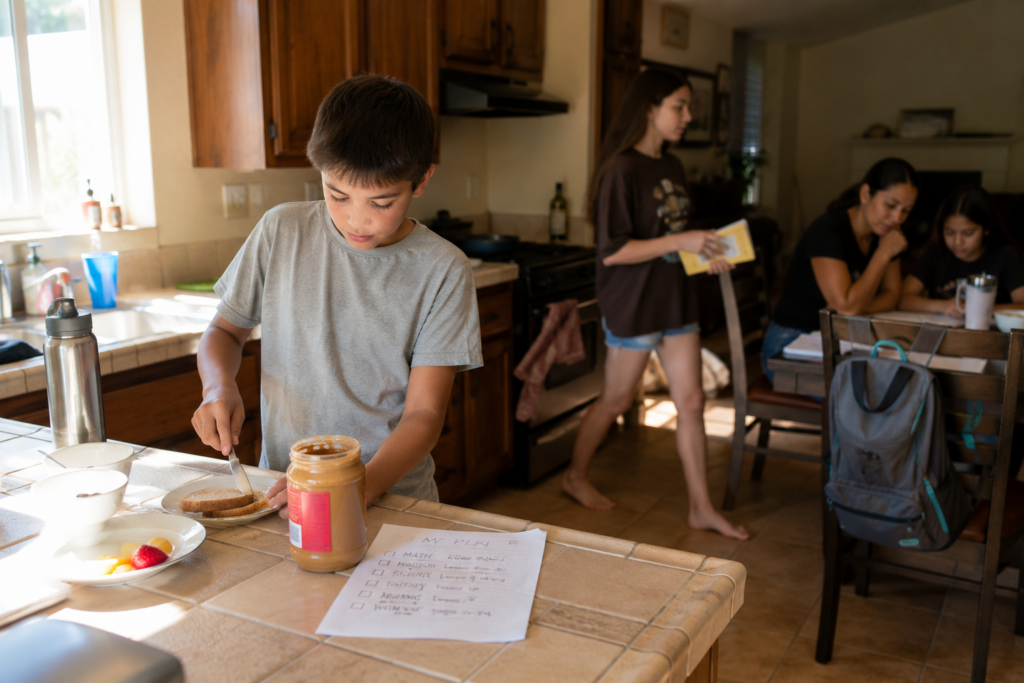
In many homeschool families, the kitchen table is where lessons happen. But the kitchen itself, the counters, the stove, the sink, may be one of the richest learning environments in the house.
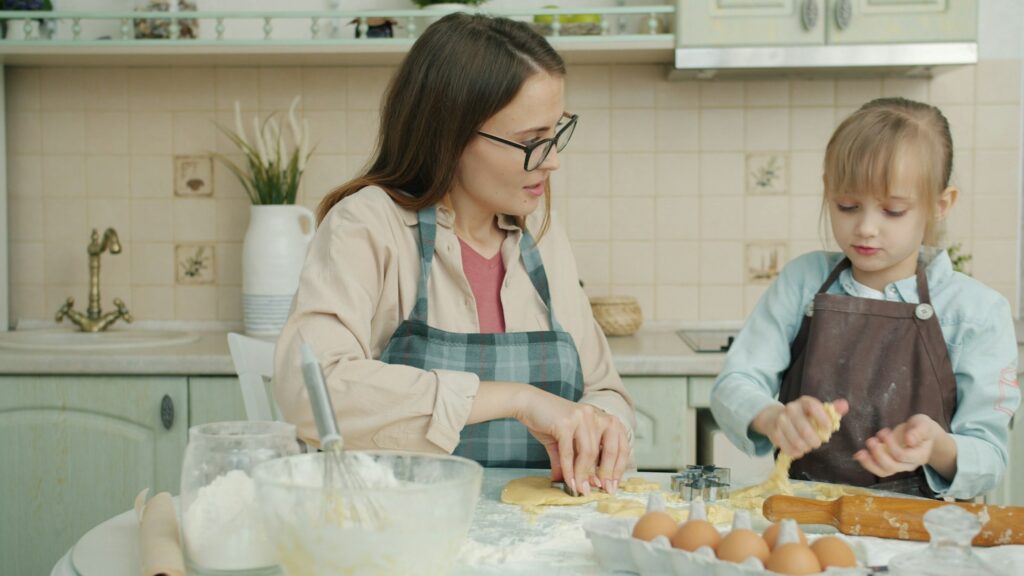
Cooking with children takes longer and makes more mess. It is also full of mathematics, science, reading, planning, sensory experience, and the deep satisfaction of doing real work for people you love.
Practical Life in its fullest form
In Montessori classrooms, young children spend a great deal of time on Practical Life work: pouring water, spooning beans, washing dishes, preparing snacks. These activities build coordination, concentration, independence, and a sense of order.
The kitchen is where Practical Life becomes completely real. The water is not poured for practice. It is poured into a pot to make soup that the family will eat.
Children notice the difference. Real work with real purpose tends to be more engaging than practice activities, and the sense of contribution is powerful.
What children learn in a kitchen
Mathematics. Measuring cups and spoons teach fractions. Doubling or halving a recipe requires multiplication and division. Setting oven temperatures, timing bake cycles, and calculating how many cookies per person all involve real calculation.
Science. Yeast makes bread rise. Heat changes the texture of eggs. Oil and water separate. Sugar dissolves faster in warm liquid. The kitchen is full of chemistry and physics.
Reading. Recipes require careful reading and following multi-step instructions in sequence. Ingredient labels offer practice with nonfiction text.
Planning. Cooking a meal means thinking ahead. What needs to start first? What takes longest? How do you get everything ready at the same time?
Motor skills. Cutting, stirring, kneading, pouring, cracking eggs. These build hand strength and coordination that support writing and other fine motor work.
Responsibility and care. Cooking for others teaches children to think about other people’s needs and preferences. Cleaning up teaches that work is not finished until the space is ready for the next person.
Setting children up for success
Children can do far more in the kitchen than many adults expect, but they need the right setup.
A safe way to reach. A sturdy step stool or learning tower lets young children work at counter height.
Child-sized tools. A small pitcher, a child-safe knife for soft foods, a small cutting board, a whisk that fits their hand. Real tools, sized appropriately.
Clear presentations. Show children how to do each task slowly and carefully before asking them to do it. How to hold the knife. How to crack an egg. How to wipe a counter.
Time. Cooking with children takes longer. Plan for this. Choose a day when you are not rushed.
Tolerance for mess. Spills will happen. Have sponges and towels within reach so children can clean up their own messes. That is part of the learning, too.
What children can do at different ages
Every child is different, but some general guidelines can help.
Toddlers can wash vegetables, tear lettuce, stir batter, and pour from a small pitcher.
Preschoolers can cut soft foods with a child-safe knife, measure ingredients with help, spread butter, peel bananas and oranges, and set the table.
Early elementary children can follow simple recipes with support, crack eggs, measure accurately, use a grater carefully, and help plan meals.
Upper elementary children can follow full recipes independently, use the stove with supervision, plan and shop for a meal, and adjust recipes.
Adolescents can plan and cook complete meals, manage a grocery budget, and take on regular cooking responsibility for the family.
Making it part of the week
You do not need to cook with your children every day. A regular rhythm works well. Perhaps one child helps with dinner on Tuesdays. Perhaps weekend breakfast is cooked by the kids. Perhaps Friday is baking day.
For older children, consider giving them full responsibility for one family meal per week. They plan the menu, make the shopping list, prepare the food, and clean up. This is a serious project, and many older children rise to it with great pride.
The table, too
The learning does not end when the food is ready. Setting the table, serving others, practicing table manners, and sharing conversation over a meal are part of the experience.
In Montessori, we call this Grace and Courtesy. Mealtimes offer daily practice in caring for others, waiting your turn, listening, and contributing to a shared experience.
A first recipe for young cooks
Fruit salad is a wonderful first recipe for children around three to six years old. It involves washing, peeling, cutting, mixing, serving and cleaning up, with very little risk.
- Wash the fruit at the sink.
- Peel bananas and clementines by hand.
- Cut soft fruits like bananas, strawberries and melon with a child-safe knife on a small cutting board.
- Place the pieces in a bowl and stir gently.
- Serve into small bowls for each family member.
- Wipe the cutting board and counter.
Older children can be given more complex recipes and more independence. A ten-year-old might plan a full lunch. A teenager might cook a family dinner start to finish.
Whatever the recipe, the experience is the same: real work, real tools and a real contribution to the people they love.
Worth the mess
Cooking with children is not always efficient. It is often messy, slow, and imperfect. Some meals will be strange. Some will need rescuing.
But children who learn to cook learn to care for themselves and others. They learn mathematics, science, and planning in a context that makes sense. And they learn that their contributions matter to the people they live with.
That is a lot to learn from a single meal.

Written by the Guides of Quantum Montessori, who teach students from preschool through high school in our homeschool, hybrid, distance learning and Learning Pod programs. Explore our programs.