The Great Lessons Reimagined · Course 04 · Course 4
Language: From Gesture to Writing to Artificial Intelligence
How did humans develop systems for sharing meaning across time and distance?
In development · K–12 · Online in Canvas · Waitlist families hear first, with founding-family pricing and a sample lesson.
Why this course
Language may be one of the most powerful technologies humans ever created.
Before printing presses, computers, or artificial intelligence, human beings were already building systems for sharing ideas beyond one moment and one person.
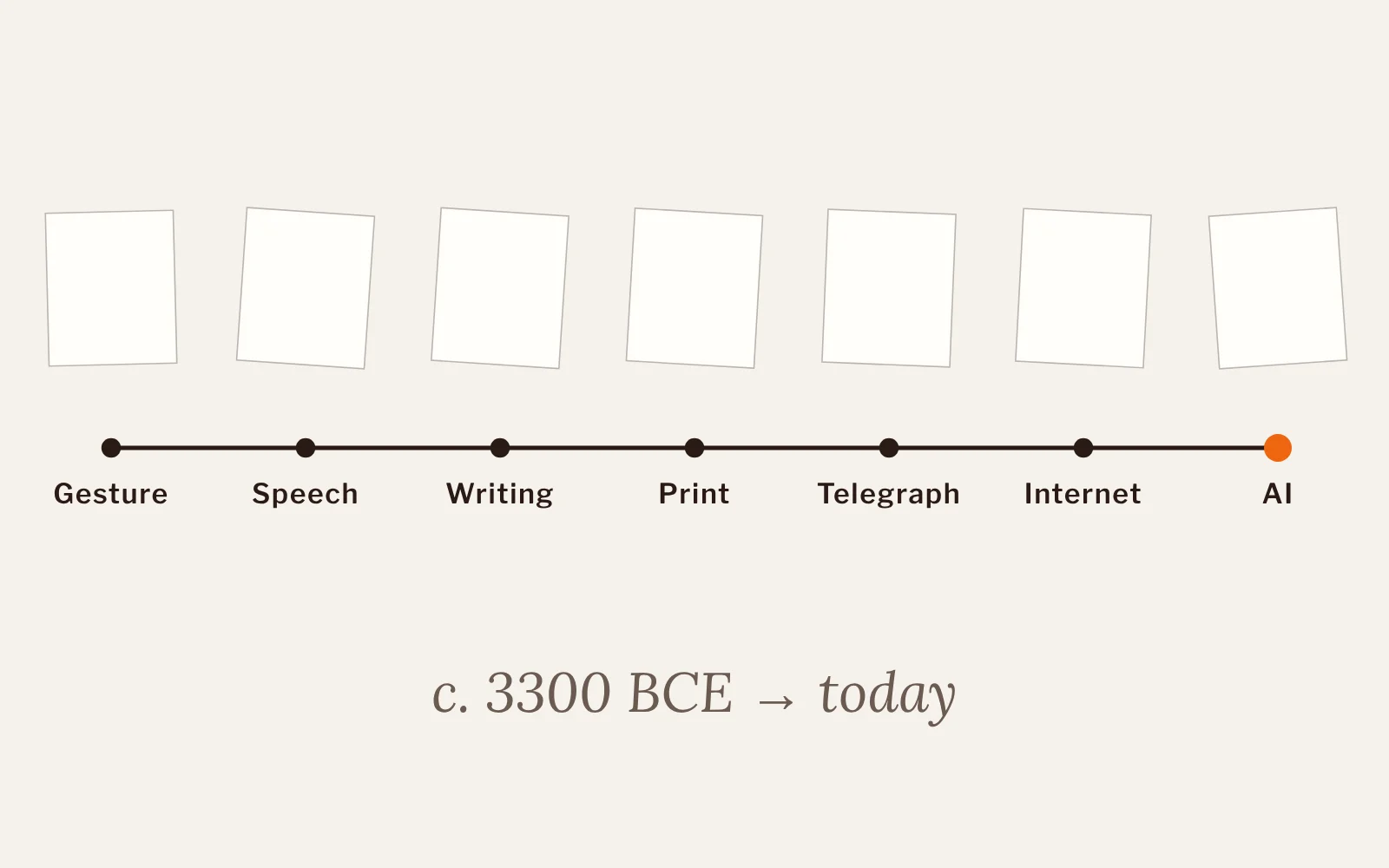
Language: From Gesture to Writing to Artificial Intelligence will explore spoken language, gesture, symbols, writing systems, alphabets, printing, literacy, translation, telecommunications, computing, the internet, digital media, and machine-generated language.
Students will study how language changes what humans can remember, coordinate, teach, govern, invent, and preserve.
They will also ask modern questions.
What changes when machines can generate language?
What is authorship?
How do we evaluate information?
What is lost when a language disappears?
The fourth Great Lesson has entered a very different world.
Speech, gesture, oral tradition, sign languages, writing systems, printing, telecommunications, coding, internet communication, media literacy, AI.
How did humans develop systems for sharing meaning across time and distance?
Classic connection: Great Lesson 4 · The Story of Communication in Signs
The modern science layer
- The biological origin of spoken language as an open research question rather than a single date or event.
- Gesture, speech, oral tradition, storytelling, sign languages, symbolism, memory, and how language supports cooperation.
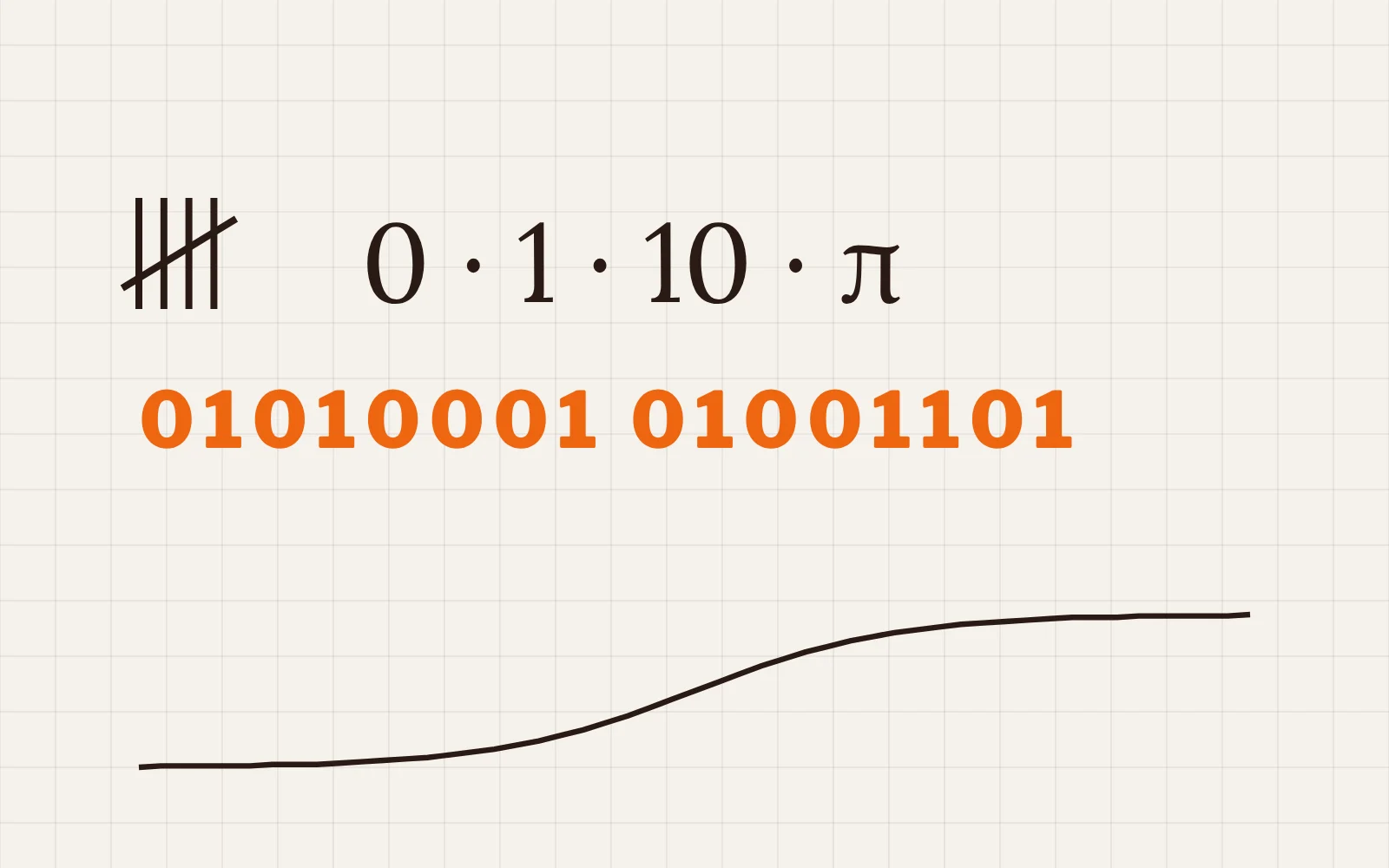
- Writing developed independently in more than one part of the world; proto-cuneiform in southern Mesopotamia, around 3300 BCE, is one important early tradition.
- Logographic, syllabic, alphabetic, and mixed writing systems compared, without treating any one as the inevitable endpoint.
- Paper, printing, postal systems, telegraph, telephone, radio, film, television, computers, the internet, social media, coding, and artificial intelligence.
- Media literacy, misinformation, translation technology, accessibility, speech recognition, text generation, digital citizenship, and endangered-language preservation.
One question. Room to grow.
Wonder + concrete experience
Storytelling, objects, classification, art, movement, simple timelines, observation, oral narration, nature work and basic models.
Foundation + investigation
Montessori charts, experiments, timelines, mapping, research cards, classification, paragraph writing, models, measurement and short presentations.
Systems + evidence
Source analysis, datasets, lab work, systems maps, scientific models, structured research, argument writing and interdisciplinary projects.
Research + interpretation
Primary-literature excerpts, competing hypotheses, quantitative analysis, long-form research, data visualization, seminars, ethics and capstone projects.
The weekly rhythm
From a story to something they understand.
About four new Work Plans each month, released in sequence in Canvas.
- WonderA dramatic question, story, phenomenon, image, object, dataset or demonstration opens the week.
- What we knowThe strongest current evidence and the core scientific or historical explanation.
- Work with itMontessori concrete work, an experiment, model, map, timeline, classification, computation or design challenge.
- What is still open?Uncertainty, competing explanations, the limits of the evidence, and questions researchers are still pursuing.
- Human connectionBiography, invention, culture, ethics, Practical Life, technology, community or environmental implications.
- ExplainWriting, discussion, a diagram, presentation, data analysis or portfolio product.
- Mastery + reflectionWhat I can now explain, the evidence that supports it, and the question I would investigate next.
- K–12 developmental pathways, with age-appropriate depth rather than identical work at every grade.
- A Canvas course sequence with weekly Work Plans released progressively while enrollment is active.
- Authentic sources and real data: maps, timelines, artifacts, primary documents, scientific images and verified archival materials.
- Montessori in every unit: concrete experience, Practical Life, independent work, control of error, mastery statements, reflection and portfolio evidence.
- Interdisciplinary work across ELA, math, science, social studies, art, technology and research.
- A clear line between established evidence, current interpretation, open questions, and cultural or philosophical perspectives.
Independent study
Individual Canvas access, weekly Work Plans, videos and curated sources, with mastery and portfolio guidance.
Live small group
Weekly live classes with discussion, hands-on project guidance, writing support and Guide feedback.
Private 1:1
One-on-one lessons with a Quantum Montessori Guide, paced to your learner.
Educator group
One educator and up to 10 named students, each with their own course access and implementation guidance.
Schools & organizations
We teach the class, or provide Canvas and lessons for your educator-led class.
Join the founding waitlist
Be first in line.
We’ll email you when enrollment opens for Language: From Gesture to Writing to Artificial Intelligence, with founding-family pricing and a sample lesson. No commitment.
Already looking for a course you can start now? Black American History & Heritage is enrolling.