Montessori Education
Freedom Within Limits, Explained for Parents
Montessori is sometimes misunderstood as "children do whatever they want." The real principle is more balanced, and more useful for families.

When some parents hear that Montessori children choose their own work, they imagine a classroom without rules. Children wandering. Nobody learning math because nobody wants to. Chaos.
That is not what Montessori looks like. The principle is not freedom alone. It is freedom within limits.
Understanding this balance can help families at home, whether or not they follow Montessori closely.
What freedom means
In a Montessori environment, children have real freedom in several areas.
Freedom to choose work. Children select from materials that have been presented to them.
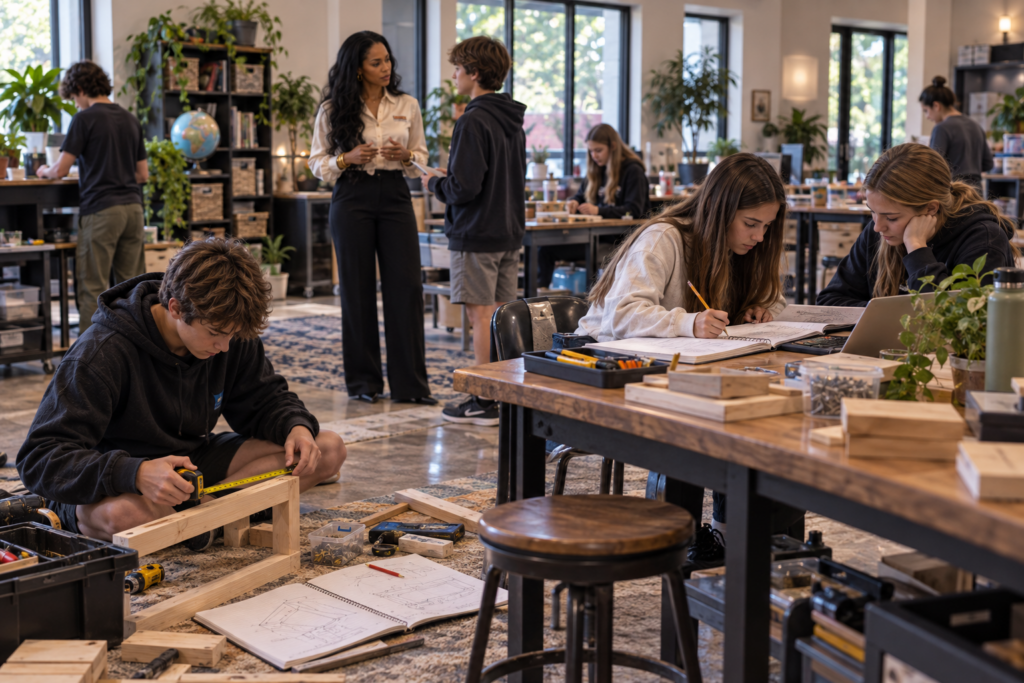
Freedom of movement. Children can move around the room, work at a table or on a rug, and change positions.
Freedom of time. Children can stay with an activity as long as they are engaged, without being interrupted by a bell.
Freedom to repeat. Children can repeat an activity as many times as they want. Repetition is how mastery develops.
Freedom to communicate. Children can talk with one another, work together, and help each other.
These freedoms support concentration, independence, and intrinsic motivation. Children who choose their work tend to engage with it more deeply.
What limits mean
These freedoms exist inside clear boundaries.
Respect for others. Children cannot disturb someone else’s work, hurt others, or use unkind words.
Respect for the environment. Materials are used for their intended purpose, handled carefully, and returned to their place when finished.
Respect for oneself. Children are expected to take care of their bodies and their work.
Choices among prepared options. Children choose from work that has been presented and prepared by the adult. Not from everything imaginable.
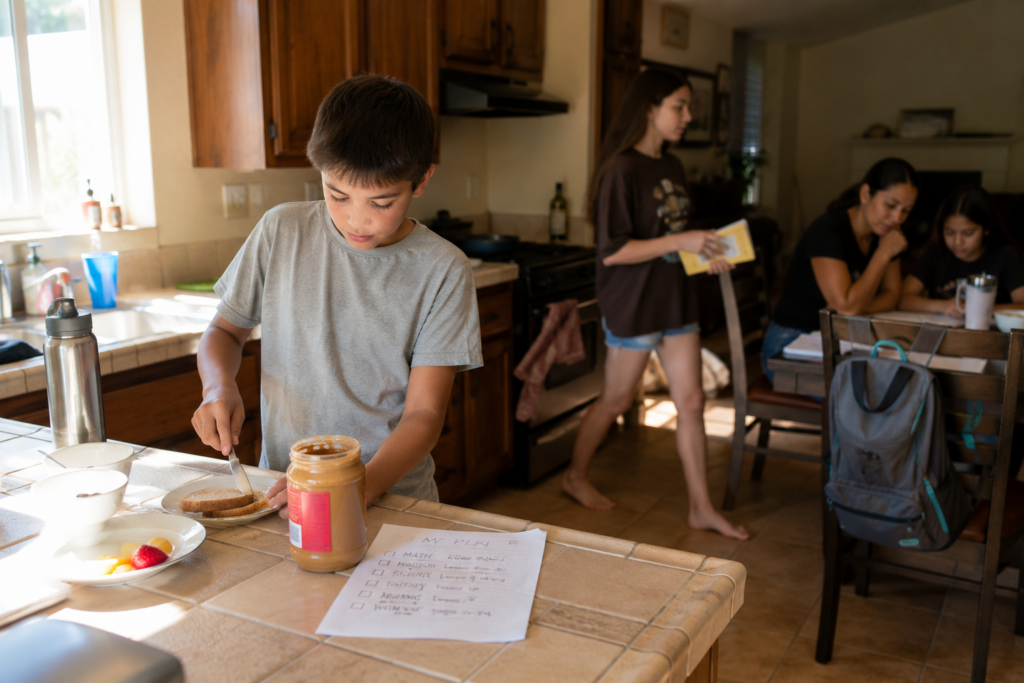
Expectations for progress. Especially in elementary and beyond, children have work plans and are expected to complete required work, even as they choose when and how.
Why both matter
Freedom without limits can leave children anxious and unfocused. Too many choices and no structure can be overwhelming. Children often feel safer when they know where the boundaries are.
Limits without freedom can make children passive and dependent. When every decision is made for them, children do not learn to make decisions themselves.
The combination allows children to develop self-direction within a safe, predictable structure. Over time, as children show more capability, the freedoms expand.
Applying this at home
Freedom within limits translates naturally to family life.
Offer real choices within a structure. “It’s time for reading. Would you like to read on the couch or at the table?” “You need to finish your math and writing today. Which would you like to start with?”
Keep the number of choices manageable. Two or three options are often better than ten, especially for younger children.
Be clear about non-negotiables. Some things are not choices. Safety, kindness, and certain responsibilities are expected regardless.
Let natural consequences teach. If a child chooses to leave the hard work for last and runs out of time, that is useful information for them.
Expand freedom as responsibility grows. A child who consistently completes their work may earn more choice over their schedule. A child who struggles may need more structure for a while.
Limits are kind
Some parents feel uncomfortable setting limits because it feels controlling. But limits, held calmly and consistently, are a form of care.
Children need to know that adults will keep them safe, maintain order, and hold expectations. That predictability allows them to relax and focus on learning.
The key is how limits are held. Calm, clear, and respectful works far better than harsh or inconsistent.
“You may not use the paint on the wall. Paint goes on paper. If you want to keep painting, choose paper.”
“I won’t let you hit your brother. You can tell him you’re angry with words.”
A shifting balance
The balance between freedom and limits is not fixed. It changes with the child’s age, maturity, and readiness.
A toddler needs many limits and carefully chosen freedoms. A twelve-year-old can handle much more freedom. A teenager may need freedom in most areas but firm limits around safety.
Part of the adult’s job is to keep adjusting that balance, observing what the child can handle and extending trust as they show they are ready.
Freedom within limits at different ages
Toddlers. Choices are small and concrete. “Do you want the red cup or the blue cup?” Limits are firm and frequent, especially around safety. The environment does much of the work: only safe, appropriate options are within reach.
Preschoolers. Children choose their work from a prepared shelf, decide how long to work and where to sit. Limits focus on respect for people and materials. Adults step in calmly when a limit is crossed.
Elementary children. Children receive a work plan with required elements and choose the order and timing. They may also choose topics for research and projects. Limits include completing required work and meeting standards of quality.
Adolescents. Freedom expands significantly. Teens may manage their own schedules, choose major projects and take on real responsibilities. Limits are fewer but clearer, especially around safety, honesty and commitments to others.
At every stage, the principle is the same. Freedom grows as a child shows they can use it well.
The goal is self-discipline
Ultimately, freedom within limits aims at something deeper than good behavior. It aims at self-discipline: the ability to direct oneself, make good choices, and respect others without needing constant external control.
That capacity develops slowly, through years of practicing choice inside supportive structure. It is one of the most important things a child can learn.

Written by the Guides of Quantum Montessori, who teach students from preschool through high school in our homeschool, hybrid, distance learning and Learning Pod programs. Explore our programs.