Montessori Education
Why We Don’t Rush to Correct Every Mistake
Correcting a child's error is fast. Helping a child find it themselves takes longer, and it teaches something far more valuable.
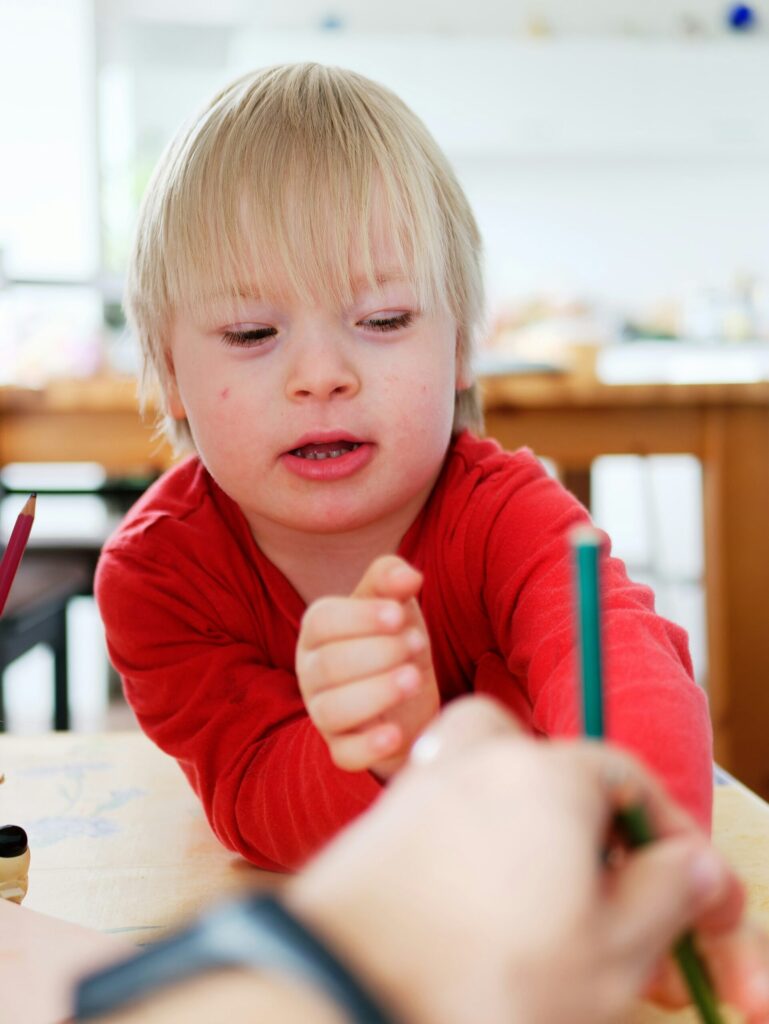
A child is working on a subtraction problem. She has borrowed incorrectly, and the answer is off by ten. You see it immediately.
What do you do?
Most of us want to point it out. It is efficient, it is kind in its way, and it prevents her from practicing the mistake. But in a Montessori environment, we often wait. Not forever, and not in a way that leaves a child stuck and miserable. We wait long enough to give her a chance to find it herself.
This is one of the more counterintuitive parts of how we teach, and it is worth explaining why.
Who owns the mistake?
When an adult points out an error, the adult becomes the person who knows what is right. The child’s job becomes waiting for the adult’s verdict.
Over time, children who are always corrected learn to look outward for judgment. They finish a page and look up at you. They hand in work and wait to hear whether it was good. They become less likely to check their own thinking, because checking is someone else’s job.
When a child finds her own mistake, she owns it. She also owns the fix. That experience builds something we care about deeply: the habit of examining your own work.
Control of error
Dr. Montessori designed many of her materials with what she called a “control of error.” The material itself shows the child when something has gone wrong.
The knobbed cylinders only fit one way. If a child places them incorrectly, the last cylinder will not fit, and the child can see the problem without anyone saying a word. The pink tower looks wrong if the cubes are stacked out of order. The math materials let a child count beads to check a written answer.
The principle behind these materials applies far beyond the classroom shelf. Whenever possible, we want children to have a way to check their own work that does not depend on an adult.
How to build in self-checking
At home, you can create the same kind of independence in a few ways.
Provide answer keys, and teach children to use them honestly. For math practice, a simple answer key lets children check their work as they go. Older children can do this independently. Younger children may need you to show them how, and to talk about why checking matters more than getting it right the first time.
Ask them to explain their thinking. “Walk me through how you got that” often leads a child to their own mistake mid-sentence. You did not correct anything. You simply asked them to slow down.
Use the materials. If a child is unsure of an answer, can they prove it with manipulatives? Count it out? Draw it? Measure it?
Teach a rereading habit. For writing, children can learn to read their work aloud before calling it finished. They will catch many of their own missing words and confusing sentences this way.
When to step in
Waiting does not mean never helping. There are times when stepping in is the right choice.
If a child is practicing a mistake repeatedly, they may be learning it. If frustration is rising toward tears, they may need support before they can think clearly. If the error reveals that a foundational concept is missing, the issue is not the mistake but the lesson that needs to come before it.
The question to ask is: will this child benefit more from finding this themselves, or from my help right now? Sometimes the answer is help. The point is to make that a choice rather than a reflex.
When you do help, try to help as little as possible. Instead of “the answer is 34,” try “check the tens column again.” Instead of “you spelled that wrong,” try “one word in this sentence has a spelling you might want to look at.” Give the smallest nudge that lets them continue.
Making mistakes safe
Children will not look for their own mistakes if mistakes feel dangerous.
If errors lead to sighs, disappointment, or a sense that they have let you down, children learn to hide them. They rush, they guess, they avoid checking because checking might reveal something bad.
We want the opposite. We want children to see mistakes as information. “Oh, that one didn’t work. Let me see why.” That attitude has to be modeled.
Talk about your own mistakes. Let children see you misread a recipe and fix it, measure wrong and measure again, start a sentence and rewrite it. Treat errors as ordinary, because they are.
Words that leave room to think
When a child makes a mistake, a few phrases can help them find it without taking over.
- “Take another look at this part.”
- “Can you prove that one with the materials?”
- “Read me what you wrote here.”
- “Something in this problem might be worth checking.”
- “What did you get when you checked it?”
Each one points the child toward the error without naming it, and leaves the discovery to them.
The long view
Correcting every mistake produces neater work in the short term. Teaching children to find and fix their own mistakes produces people who can think critically about their own work for the rest of their lives.
That is a slower process. It requires patience from the adult, especially when the error is obvious and the fix would take two seconds.
But a child who learns to say “wait, that doesn’t look right” has learned something no worksheet can teach. They have learned to trust their own judgment, and to use it.

Written by the Guides of Quantum Montessori, who teach students from preschool through high school in our homeschool, hybrid, distance learning and Learning Pod programs. Explore our programs.