Why the mess, revisions, strange ideas, unfinished models, and unexpected directions are often where the most meaningful project-based learning happens
From a Montessori Guide to Homeschool Parents
There is a particular moment in almost every good project when it looks terrible.
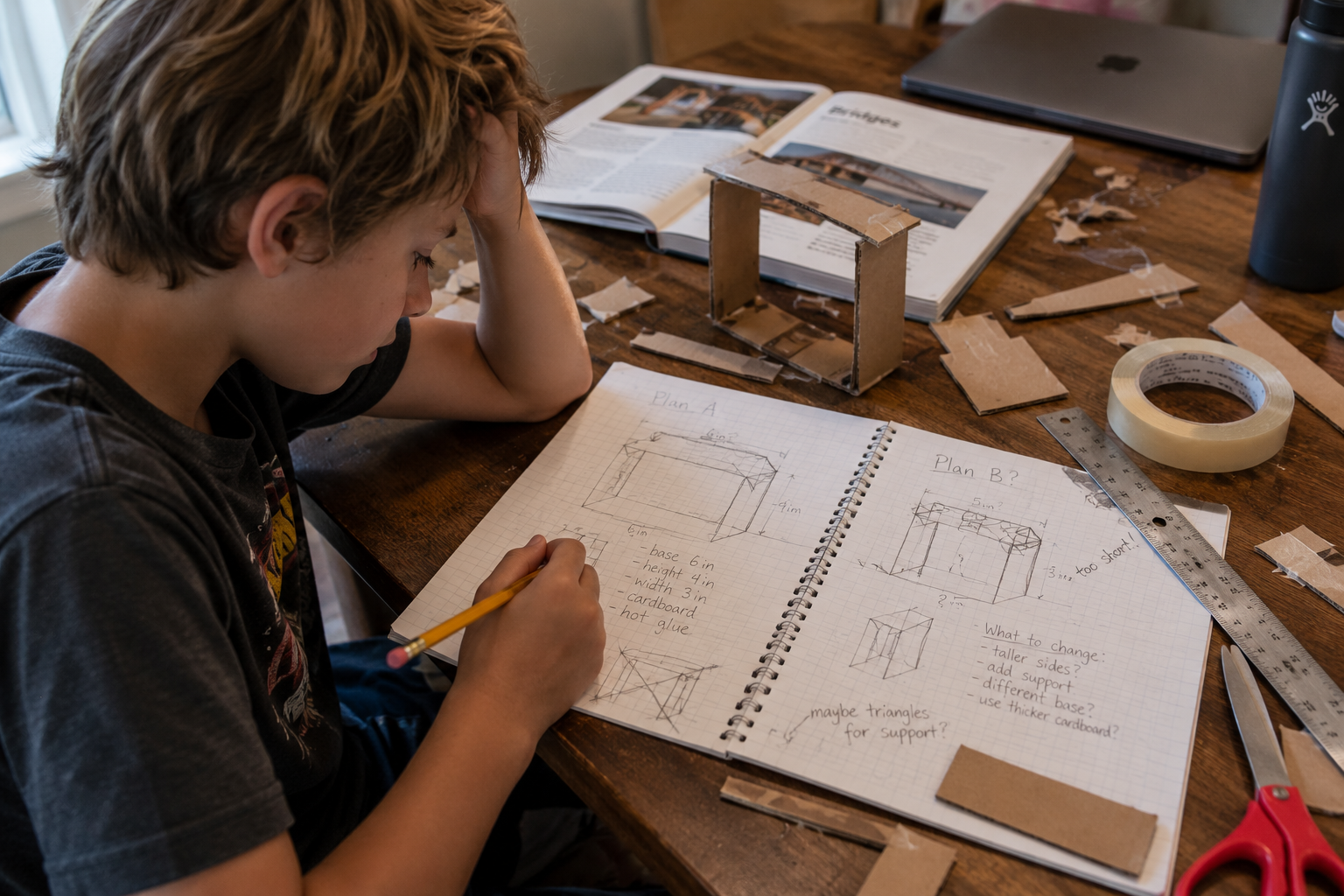
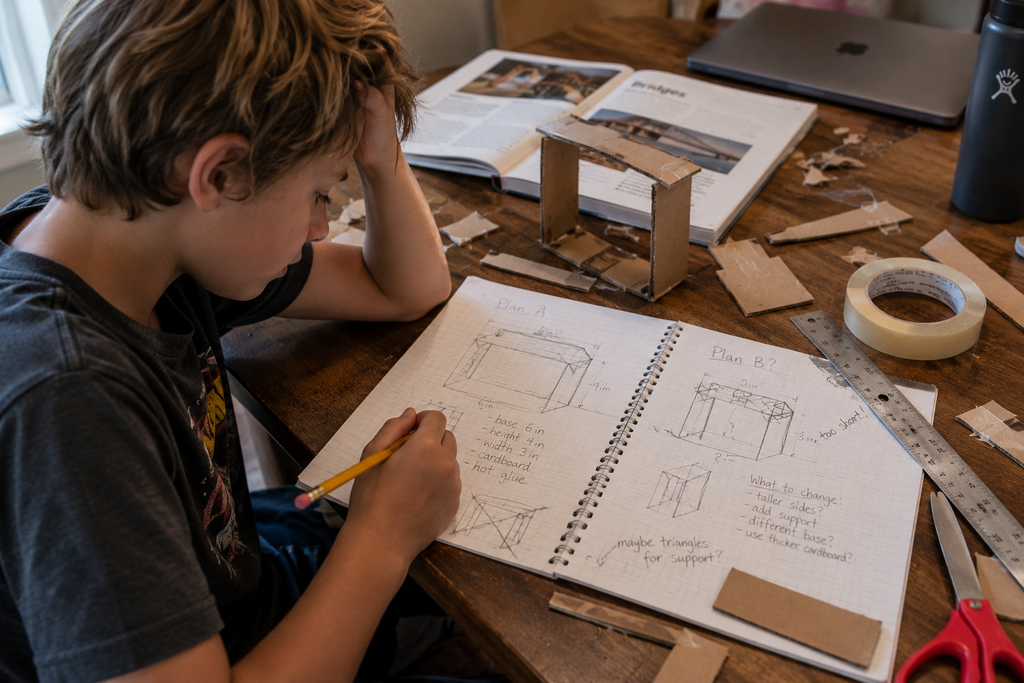
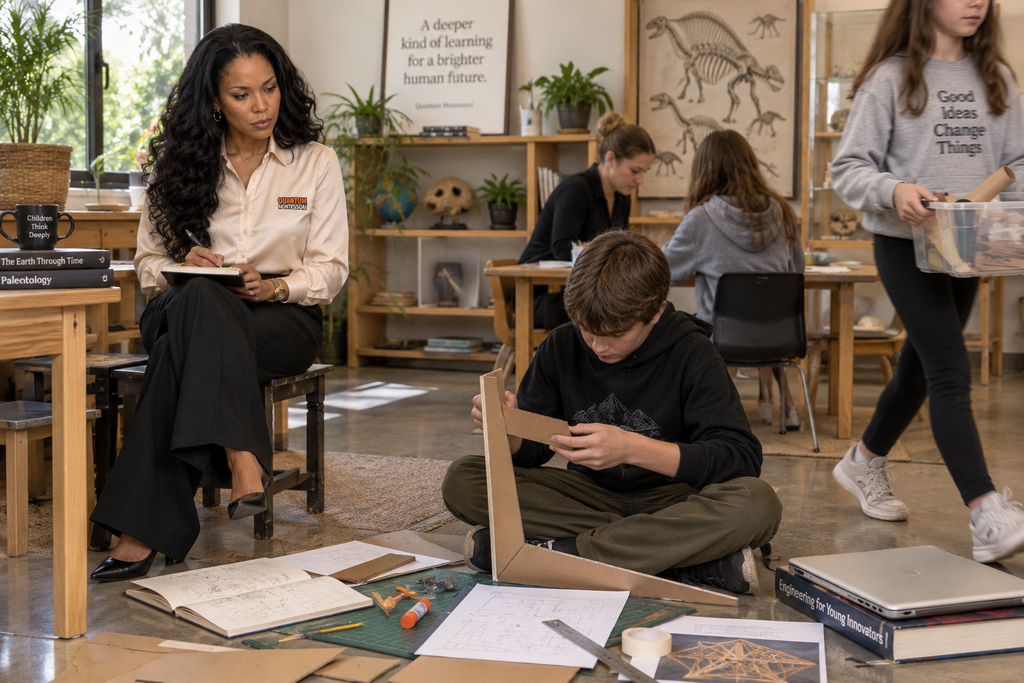
The cardboard is bending. The measurements are wrong. The student has changed the plan three times. There are pieces of paper everywhere. Something that looked completely reasonable in the sketch does not work once it is built. The child who announced two days ago that this was going to be “easy” is now staring at the project as though it has personally betrayed them.
This is usually the moment when an adult becomes very tempted to help.
We straighten something. We suggest a better material. We quietly redo the lettering. We show the child how the model should be constructed. We reorganize the display because company is coming and the dining room table has disappeared beneath research books, rulers, cardboard, tape, and somebody’s abandoned pencil.
I understand the temptation.
But sometimes the project is supposed to look terrible for a while.
When I use project-based learning with students, I am much less interested in whether the work looks impressive halfway through than I am in what the child is doing because it does not. Is she reconsidering her design? Is he returning to his research? Did they notice the measurement was wrong? Can the student explain why the first approach failed? Does she know what she needs to try next? Is he frustrated because the work is genuinely challenging, or completely lost because I did not provide enough preparation?
A beautiful final project can be wonderful.
The mess that came before it often tells me more.
A Project Is Not Just a Fancy Assignment
Sometimes we call almost anything a project.
Read about an animal and make a poster. Research a state and create a slideshow. Write five facts on a tri-fold board. Color the title. Add pictures. Present it on Friday.
There is nothing inherently wrong with those assignments. A student can practice research, writing, organization, speaking, and visual presentation through them. But putting information on poster board does not automatically make something project-based learning.
The projects I find most valuable contain a problem the child has to think through.
There may be a question that cannot be answered with the first search result. Something may need to be designed, tested, compared, constructed, revised, defended, measured, organized, or explained. The student has to make decisions. Those decisions create consequences, and the consequences create more thinking.
That is where the work becomes interesting.
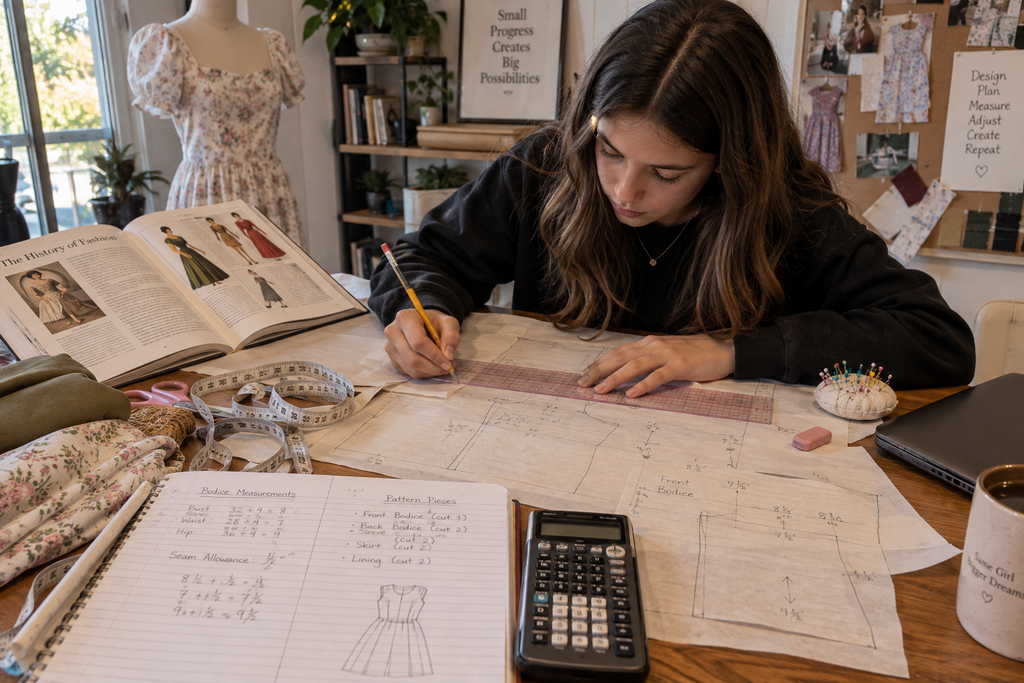
A child researching architecture might eventually try to design a structure that has to satisfy certain measurements and constraints. A student studying ecosystems might design a small habitat or investigate what could realistically survive under particular conditions. A history project might require the student to examine conflicting accounts rather than simply create a timeline. A student interested in fashion could move from sketches into measurements, fractions, geometry, pattern construction, textiles, budgeting, and eventually a physical garment.
The subject provides the content.
The project gives the child something to do with it.
I Want to See the First Attempt
When students know their work will eventually be displayed, there can be a strong desire to make every visible part look finished. Adults do this too. We like the clean version.
Education needs access to the version underneath it.
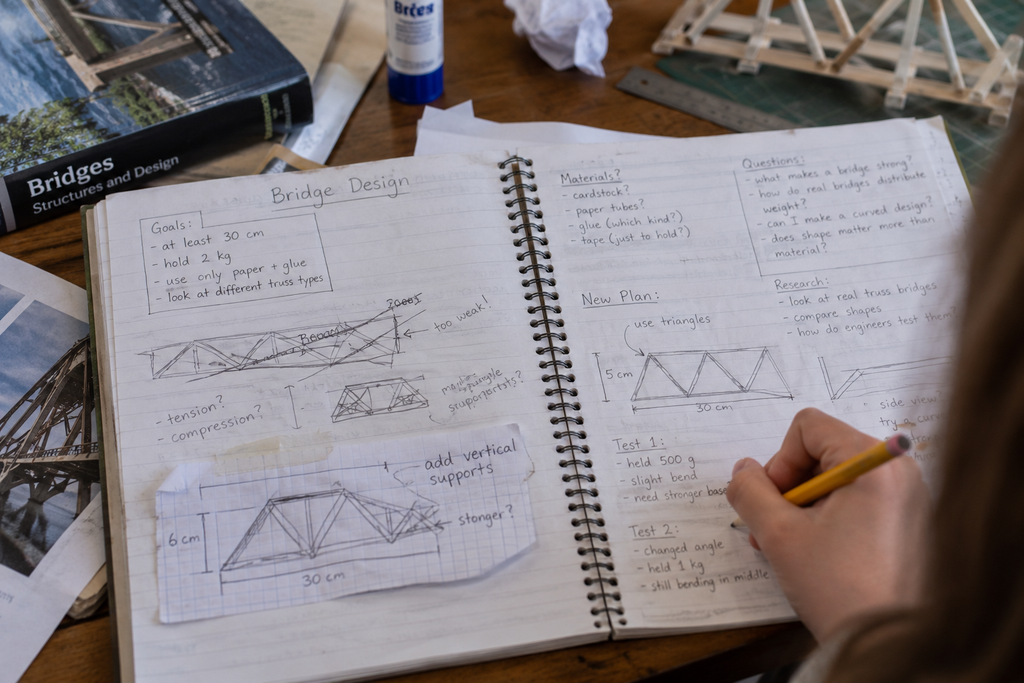
I want to see the sentence that was rewritten. I want the original measurement beside the corrected one. I want to know why a student abandoned the first design. I want to hear, “I thought this would work, but then…” because everything after the word but may tell me more about the student’s thinking than the polished product sitting on the table.
Revision is not evidence that the student failed to understand the assignment. Often it is evidence that the student understands more now than when the project began.
That distinction is important for children who are afraid of being wrong. If every piece of work we celebrate is polished, corrected, mounted, and finished, children can begin to believe that competent people simply produce good work on the first attempt.
They don’t.
Writers revise. Engineers redesign. Scientists repeat experiments. Architects change plans. Researchers abandon questions. Artists paint over things. Programmers debug. Bakers discover that something they were very confident about should not, in fact, have been put in the oven.
Children deserve to know this.
The Adult Does Not Need to Save the Project
This is one of the harder parts.
Sometimes I can see exactly what a student needs to do.
I know why the structure is leaning. I know the research question is too broad. I know the student has forgotten an important step. I can see that if she cuts that piece right now, she is probably going to regret it.
There are times when I should intervene. Safety is not an opportunity for productive struggle. Neither is allowing a child to remain completely stuck when they do not have the knowledge necessary to move forward.
But there are also many moments when the student is capable of discovering the problem.
So I wait.
That pause can be uncomfortable because teaching often feels most visible when we are actively explaining something. Montessori observation asks something different of us. Sometimes my job is to notice without immediately interfering.
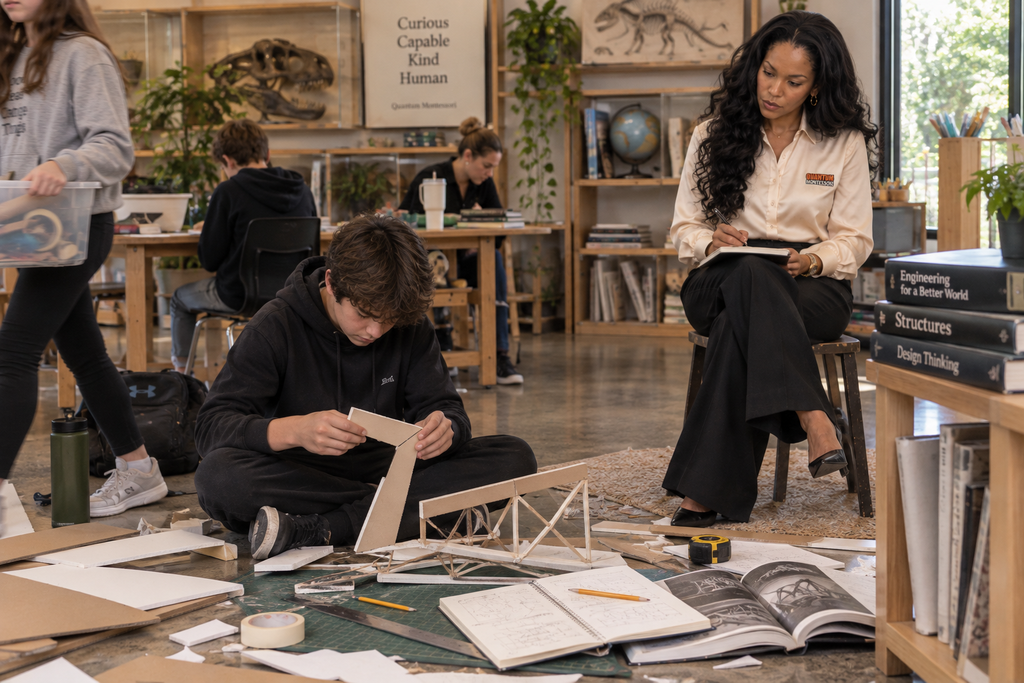
A student measures once, cuts, and discovers the piece is too short. That experience may accomplish something my reminder to “measure twice” could not.
The next time, I may hear the student mutter, “I’m checking this again before I cut it.”
There it is.
The lesson belongs to them now.
Projects Give Academic Skills Somewhere to Go
One reason I enjoy project work is that subjects stop behaving as though they live in separate rooms.
A student may begin with science and suddenly need mathematics. Research creates a reason to read carefully. Reading creates notes. Notes have to be organized before they can become writing. A physical design requires measurement. The student realizes fractions matter because two pieces have to fit. A presentation requires the child to decide which information is actually important. A disagreement between sources creates a reason to evaluate evidence.
This is not an argument for abandoning explicit instruction. Children still need someone to teach mathematics. They need systematic literacy instruction. They need vocabulary, background knowledge, demonstrations, practice, feedback, and opportunities to develop skills before those skills can be used independently.
Projects give those skills somewhere to go.
A student who asks me, “How do I figure out the scale for this?” is encountering mathematics differently from a student who asks, “How many of these problems do I have to do?”
Both kinds of practice have a place.
But I want children to experience the moment when something they learned because an adult said it was important becomes useful because they need it.
Not Every Child Needs the Same Project
This is also where differentiation matters.
If several students are studying the same subject, I do not need identical final products to prove that everyone learned. In fact, identical projects can sometimes hide enormous differences in understanding because children become focused on reproducing the expected format.
I would rather establish what the academic work needs to accomplish and then consider how different students can reach that goal.
A younger student may need a shorter project with clearly defined stages. An older student may be responsible for planning those stages independently. A student who is still developing research skills may work from a carefully selected collection of sources, while another may be ready to locate sources and evaluate them. One child may need to demonstrate a mathematical concept concretely before explaining it in writing. Another may be ready to use the same mathematics inside a much larger design problem.
Different does not mean easier.
It means appropriate.
The question I keep returning to is not, “Does this project look like everyone else’s?”
It is, “What did this particular student have to do intellectually to produce it?”
Please Don’t Finish It After They Go to Bed
Parents, this one is said with affection.
Please don’t.
I know the display is tomorrow.
I know the letters are crooked.
I know you own a Cricut.
I know exactly how beautiful you could make it.
Resist.
There is a difference between helping a child access a tool they cannot safely use and quietly becoming the project’s unpaid creative director.
If the child asks how to attach something securely, teach the technique. If they need help sourcing materials, help. If they have never used the tool before, demonstrate it. If they want feedback, ask questions that help them evaluate their own work.
But if the title is slightly crooked, perhaps the title is slightly crooked.
If a sixth grader can explain an extraordinary piece of research beside a display that looks unmistakably like it was made by a sixth grader, I am perfectly happy.
Actually, I prefer it.
I want to see the child in the work.
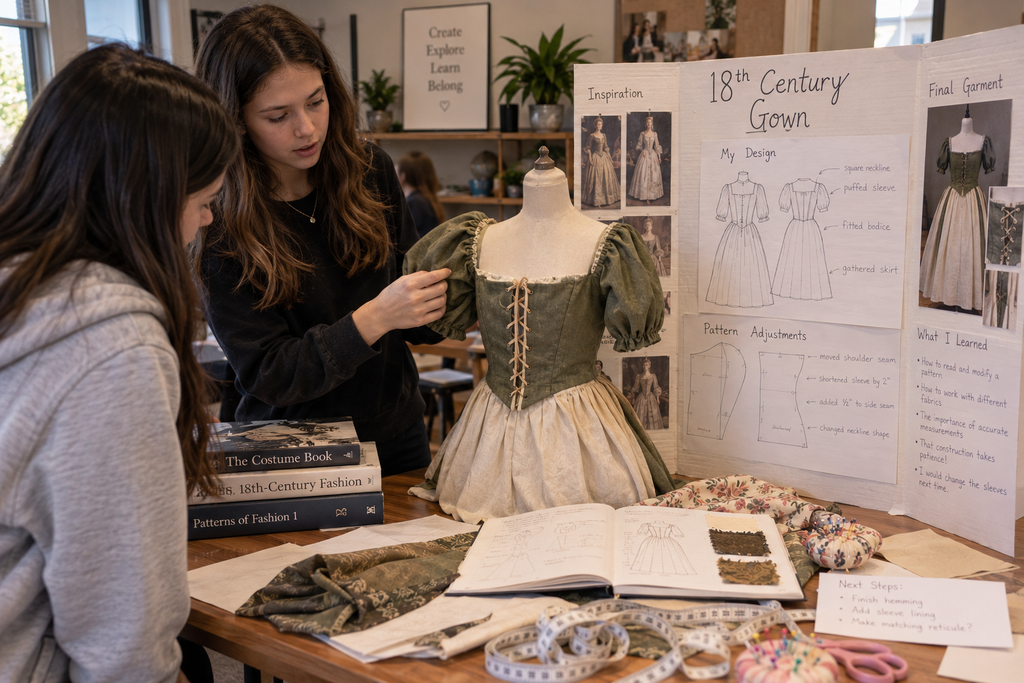
The Presentation Is Not a Beauty Contest
Displaying student work can be incredibly valuable when the purpose is sharing thinking.
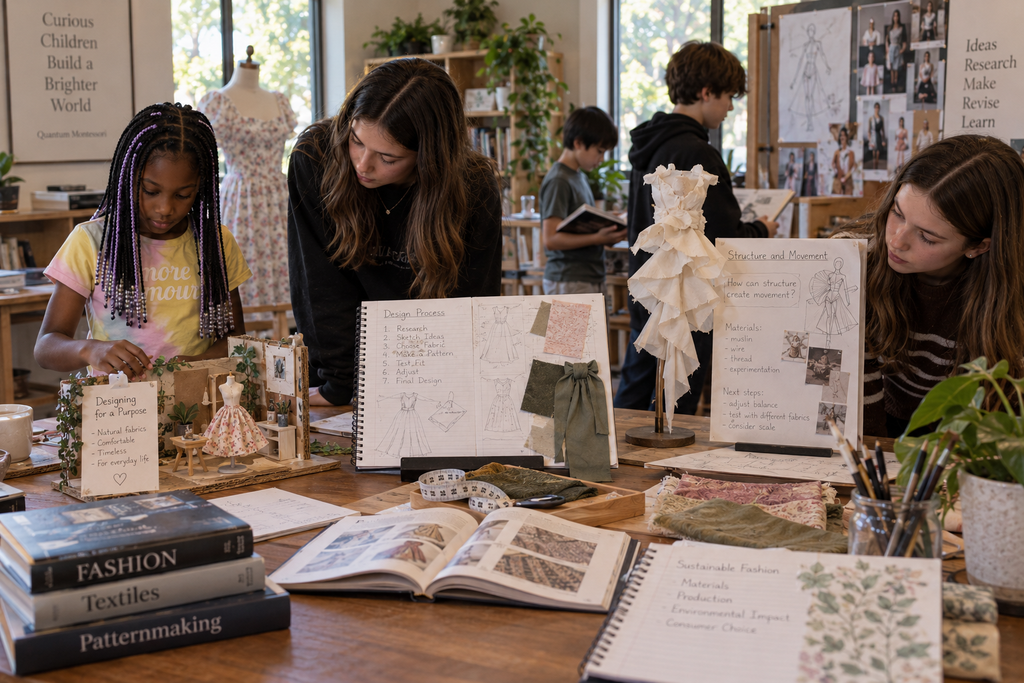
I want younger students to see what older students are capable of doing. I want older students to remember how their own work has developed. I want a child to discover that another student approached the same question completely differently. I want someone to ask, “Why did you decide to do it that way?” and hear an actual explanation.
A display gives students an audience beyond the adult who assigned the work.
That can raise the level of care.
But I do not want the audience to become the reason the work exists.
The project should not gradually transform from What am I trying to understand? into What will look impressive when people walk into the room?
Those are very different goals.
When students share work at Quantum Montessori, I want us to be interested in the decisions, discoveries, mistakes, evidence, construction, research, and questions behind what we see. The final product gives us somewhere to begin the conversation.
It is not the whole story.
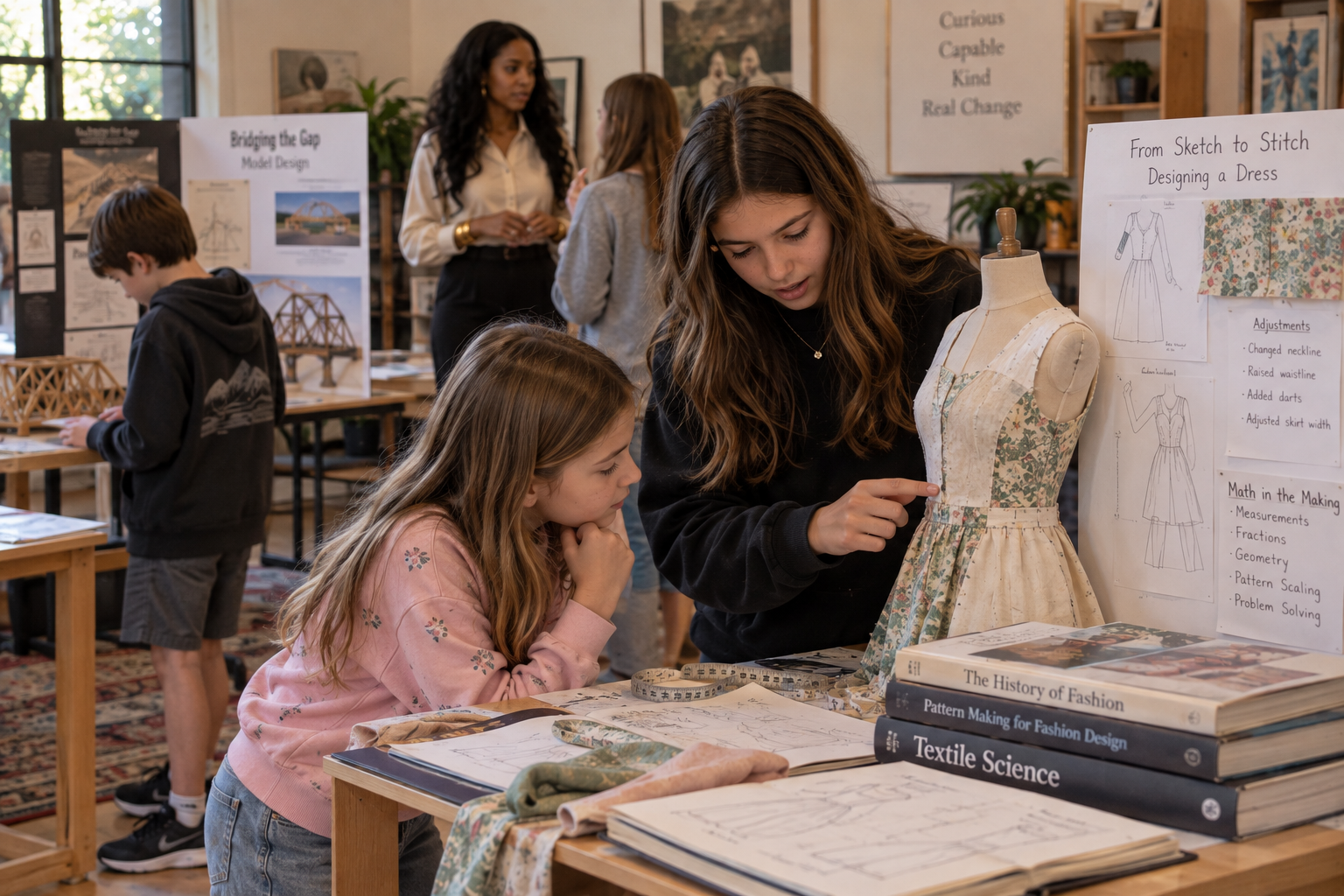
Sometimes the Best Project Ends With Another Question
There is a version of schoolwork that ends very cleanly.
Complete the assignment. Submit it. Receive the grade. Move on.
Real inquiry is not always that cooperative.
A student may finish an entire project and discover the part she wants to investigate next. A model may answer one question and expose another problem. Research may reveal disagreement that the child did not know existed. Building something may make the student curious about how professionals solve the same problem.
I like that.
Education should occasionally leave a loose thread.
We do not have to turn every interest into another mandatory assignment. Sometimes the child can simply leave with a new question.
And sometimes that question comes back three weeks later in a completely different piece of work.
That is one of the things that makes project-based learning so compatible with Montessori education. We are not only trying to produce finished products. We are helping children build the habits that allow them to approach unfamiliar problems: observe, question, research, plan, attempt, notice, revise, communicate, and try again.
Those habits become increasingly important as students grow.
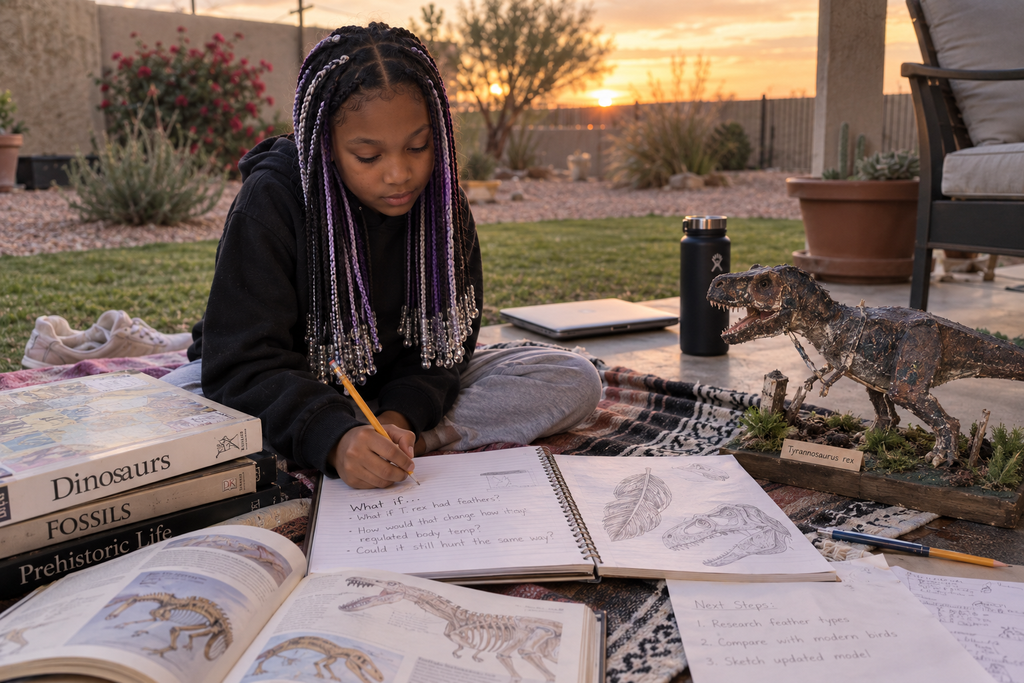
The Work Should Belong to the Child
When I look at a student’s finished project, I certainly want to see evidence of learning. I want accurate information. I want care. I want the child to use the skills we have been developing. Expectations still matter.
But I also want fingerprints.
Not literal ones, necessarily, although with some projects we are absolutely getting those too.
I want evidence that a child made decisions. I want to see where something changed. I want the student to know why the project looks the way it does. I want them to be able to tell me what was difficult, what surprised them, what they would change, and what they now understand that they did not understand when they began.
That is why I am not particularly interested in making every student project Pinterest-perfect.
Perfect can be purchased.
Perfect can be copied.
Perfect can be produced by an adult at 11:47 p.m. the night before the project is due.
Thinking is harder to fake.
Good project-based learning leaves evidence of the mind that made it. There may be an imperfect edge, a rewritten paragraph, a redesigned model, an unexpected solution, or a question the student still cannot answer.
Good.
I don’t need the project to convince me that an adult knew how to make it beautiful.
I want it to show me what the child learned how to do.
Leave a Reply