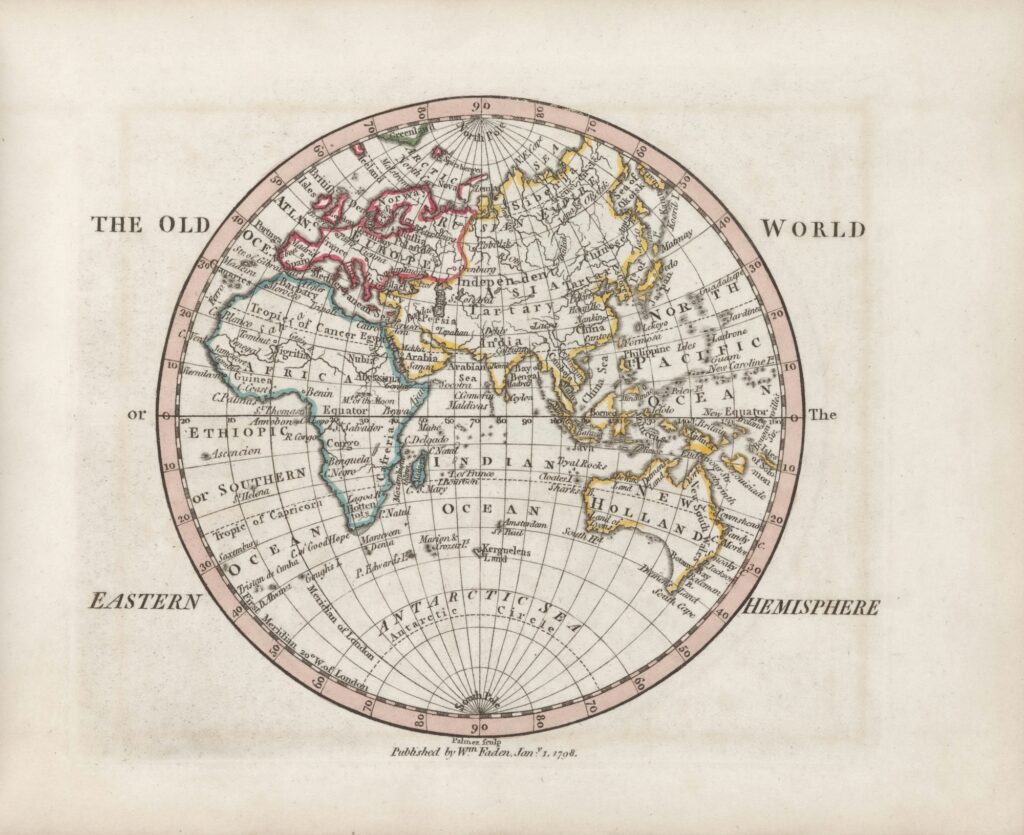
The Great Lessons Reimagined
Cosmic Education and Why We Start With the Story of Everything
In Montessori elementary education, children begin with the biggest picture possible: the origin of the universe. Here is why that matters for everything that follows.
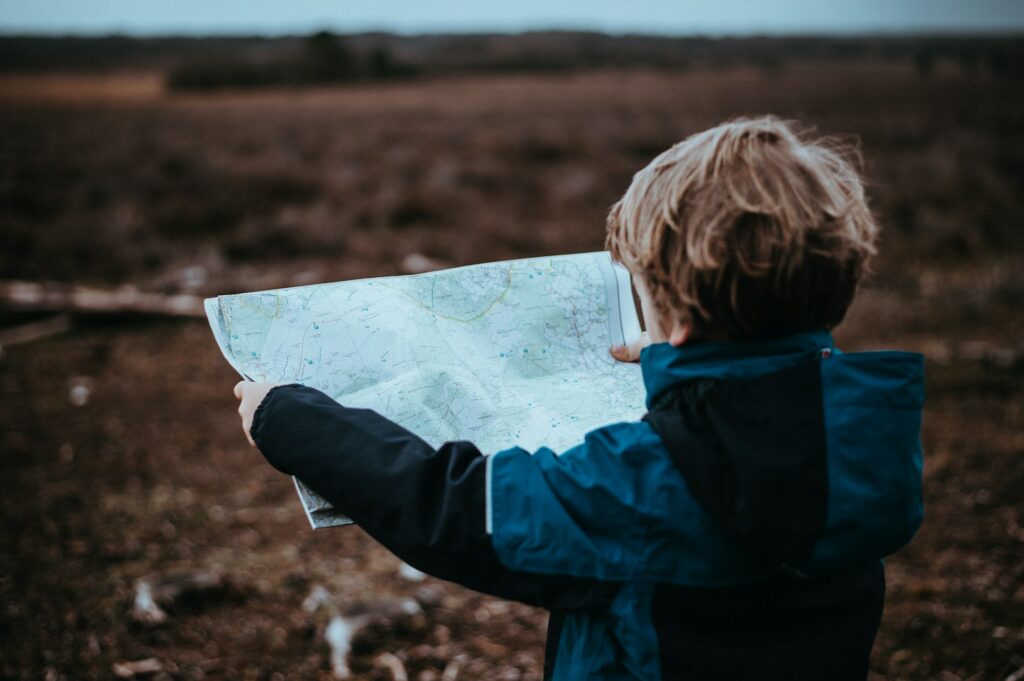
On one of the first days of a Montessori elementary year, something unusual happens. Instead of reviewing rules or beginning a math unit, the Guide tells a story.
It is the story of the universe.
The Guide describes a time before stars, when everything existed in darkness. Then particles began to come together. Stars formed, then galaxies, then planets. The Earth cooled. Water collected. Life appeared, changed, and spread.
Children listen with wide eyes. Sometimes there is a small demonstration, a volcano erupting or liquids of different densities settling into layers. By the end, children have been given something enormous: a sense of where everything comes from.
This is the beginning of what Montessori called Cosmic Education.
The big picture first
Most education moves from small pieces toward a larger picture. Children learn isolated facts in separate subjects, and only later, if ever, see how those pieces connect.
Cosmic Education reverses this. It begins with the whole, then invites children to explore the parts.
The idea is that elementary-aged children have a powerful drive to understand how things work and why. They ask endless questions. They want to know about origins, causes, and connections. Giving them the big picture first satisfies that drive and creates a framework for everything they learn afterward.
The Great Lessons
Cosmic Education is built around five foundational stories, often called the Great Lessons.
- The Coming of the Universe and the Earth. How the universe began and how Earth formed.
- The Coming of Life. How life emerged and developed over time.
- The Coming of Human Beings. How humans appeared and what made them unique.
- The Story of Writing. How humans developed ways to record language.
- The Story of Numbers. How humans developed systems for counting and calculating.
These are not lectures to memorize. They are stories designed to spark curiosity. Each one opens dozens of paths for further study in science, history, geography, language, and mathematics.
Everything is connected
A central idea of Cosmic Education is interconnection. Every part of the universe has a role, and every part affects others.
The sun provides energy. Plants use it. Animals eat plants. Soil forms from decomposition. Rivers shape land. Humans depend on all of it.
When children understand these connections, subjects stop feeling separate. A lesson on plant biology connects to geography, which connects to history, which connects to economics. Learning becomes a web rather than a set of boxes.
Gratitude and responsibility
Cosmic Education also carries a moral dimension. When children understand how much had to happen for them to exist, how many people contributed to the knowledge they inherit, and how much the Earth provides, they often develop a sense of gratitude.
That gratitude tends to lead toward responsibility. If everything is connected, then our actions matter. We are part of the system, and we can contribute to it or harm it.
Montessori believed every living thing has a cosmic task, a role in the larger whole. For children, discovering their own possible contribution can be deeply motivating.
Bringing it home
Homeschool families can bring the spirit of Cosmic Education into their own learning, even without formal Great Lesson presentations.
Tell big stories. Read books about the origin of the universe, the history of life, and human history. Choose ones written with wonder, not just facts.
Follow questions outward. When your child asks a question, help them see where it connects. A question about volcanoes can lead to plate tectonics, to ancient civilizations that lived near volcanoes, to the chemistry of rocks.
Use timelines. Long timelines that show the history of the Earth or human civilization help children grasp scale. Many families make one that stretches across a hallway.
Ask “how did this get here?” About food, clothing, books, tools. Tracing the origins of everyday objects reveals how many people, places, and processes are connected to each one.
Make room for awe. Look at the night sky. Visit natural places. Let children feel the size of the world.
A simple timeline project
One of the most effective ways to bring Cosmic Education home is a long timeline. Here is an approach many families enjoy.
Take a long roll of paper, at least several meters. Decide on a scale. For the history of Earth, one common approach is to let the full length represent about 4.5 billion years.
Then mark key events together: the formation of Earth, the first oceans, the first single-celled life, the first plants on land, the age of dinosaurs, the first mammals, the first humans.
The striking moment usually comes at the end. All of recorded human history fits into the last sliver of paper, often less than the width of a pencil line.
Children rarely forget this. It gives them a physical sense of deep time that no textbook statement can.
Older children can make their own timelines of topics they are studying: the history of writing, a civilization, the life of a scientist. Each timeline helps them see how events connect over time.
Why it still matters
In an age of easy information, it is tempting to think children can just look things up. And they can. But information without a framework is hard to hold onto.
Cosmic Education gives children a structure for organizing what they learn. It also gives them something less tangible: a sense of wonder, and a feeling that they belong to a story much larger than themselves.
That feeling can carry them through years of curious, connected learning.

Written by the Guides of Quantum Montessori, who teach students from preschool through high school in our homeschool, hybrid, distance learning and Learning Pod programs. Explore our programs.