From a Montessori Guide to Homeschool Parents
When parents hear the words online homeschool, it is understandable that the first thing they picture is a computer. After all, the computer is what allows children to meet with teachers, participate in live classes, access lessons, communicate with classmates, conduct research, and use resources that may otherwise be unavailable to them at home. Technology has made it possible for families to build educational experiences that would have been much more difficult to create even a generation ago.
But I don’t believe the computer should become the classroom.
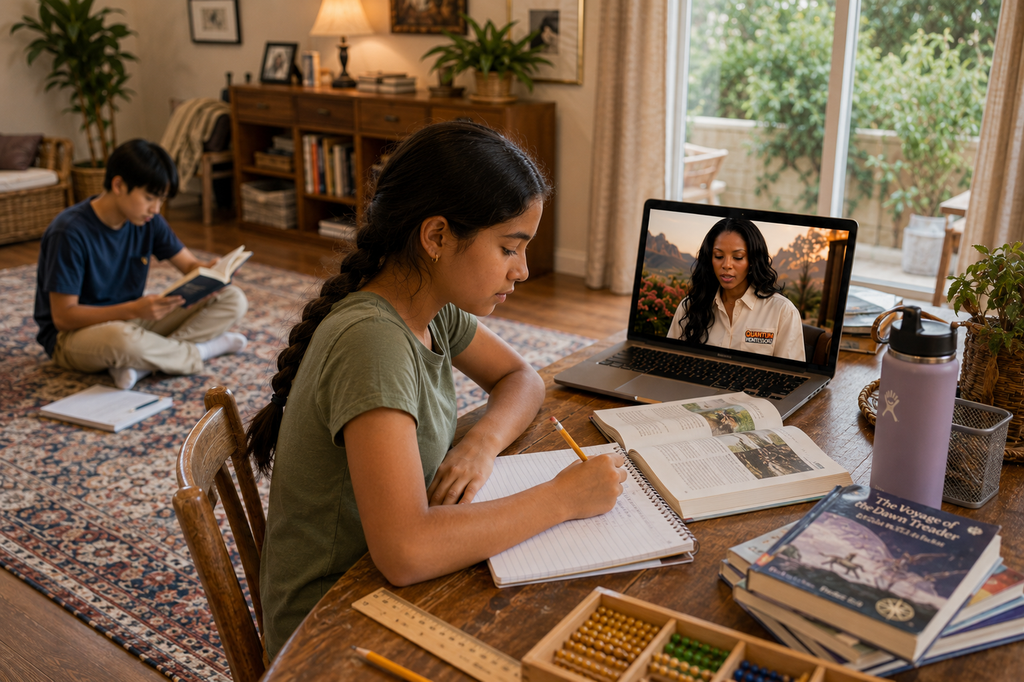
There is an important difference between using technology to access education and building a child’s entire education around a screen. A teacher can introduce a science investigation online and then send students outside to observe weather conditions. A math lesson can begin on a computer and continue with a notebook, ruler, measuring cup, fraction material, or handful of coins. Students can meet online to discuss literature while holding physical copies of the book in their hands. A history lesson can begin with a teacher and end with maps spread across the floor, handwritten notes, research, timelines, and a conversation about what students discovered.
That is the kind of online homeschool experience I want children to have. Technology can open the door to learning, but children should still have a whole world to explore once they walk through it.
The Screen Should Start Learning, Not Contain All of It
Technology is an extraordinary educational tool when we remember that it is exactly that: a tool. It can connect a child in Arizona with a teacher, allow students in different communities to discuss the same novel, bring a historical document onto everyone’s screen, provide access to simulations and demonstrations, or allow a teacher to watch a student work through a difficult problem in real time. I value those possibilities, and they are part of what makes online education exciting.
The problem begins when we start designing education around what a device can easily deliver instead of what a child actually needs to experience. Children need opportunities to think, talk, write, calculate, build, measure, manipulate objects, investigate questions, make mistakes, revise their thinking, and create things that cannot always be completed by selecting an answer from a screen. Sometimes they need to stand up, walk across the room, retrieve a material from a shelf, spread their work across the floor, or go outside and find out whether something they learned is actually true.
Physical books still belong in this environment too. Digital texts are useful, and children absolutely need to develop digital literacy, but I don’t want every book in a child’s education to become another tab on a computer. There is something valuable about holding a book, placing a bookmark where you stopped, flipping backward because you remember something important from an earlier chapter, keeping the book beside your notebook during a discussion, and eventually seeing familiar books accumulate on a shelf.
Children should have books they become attached to. They should discover authors they love and subjects they didn’t know they were interested in. They should have nonfiction available when a question suddenly occurs to them and literature that sometimes has absolutely nothing to do with an assignment. A child attending an online homeschool program can use technology every day without experiencing every piece of literature through technology.
Pencils, Paper, and Hands-On Work Still Matter
I also want pencils and paper in online education. Older children should learn to type efficiently, compose and edit digitally, organize files, conduct responsible research, and use technology as a normal part of their academic lives. None of that requires us to abandon handwriting. I still want students solving math problems on paper, keeping notebooks, recording observations, writing vocabulary, sketching diagrams, planning paragraphs, taking notes, journaling, and occasionally crossing something out because their thinking changed.
A handwritten notebook gives me information as a teacher that a final digital answer may not. I can see how a student approached a problem, where the thinking changed, what was erased, whether the work is organized, how an idea developed across a page, and sometimes exactly where a misunderstanding began. The finished answer matters, but the path a child took to reach it matters too.
Math is an especially important example. Digital practice can be useful, but mathematics is much larger than a problem appearing on a screen followed by a box for the answer. Children should measure actual objects, handle money, estimate quantities, work with fractions, explore geometry, collect data, make graphs, use rulers, and show their mathematical reasoning on paper. When an idea is still abstract, a child may need something concrete in front of them before that idea makes sense.
That progression is deeply compatible with Montessori education. Montessori mathematics has long recognized that children can develop abstract understanding through purposeful experiences with concrete materials. The goal is not for a child to depend on manipulatives forever. The materials help construct understanding until the child is ready to carry more of that understanding internally.
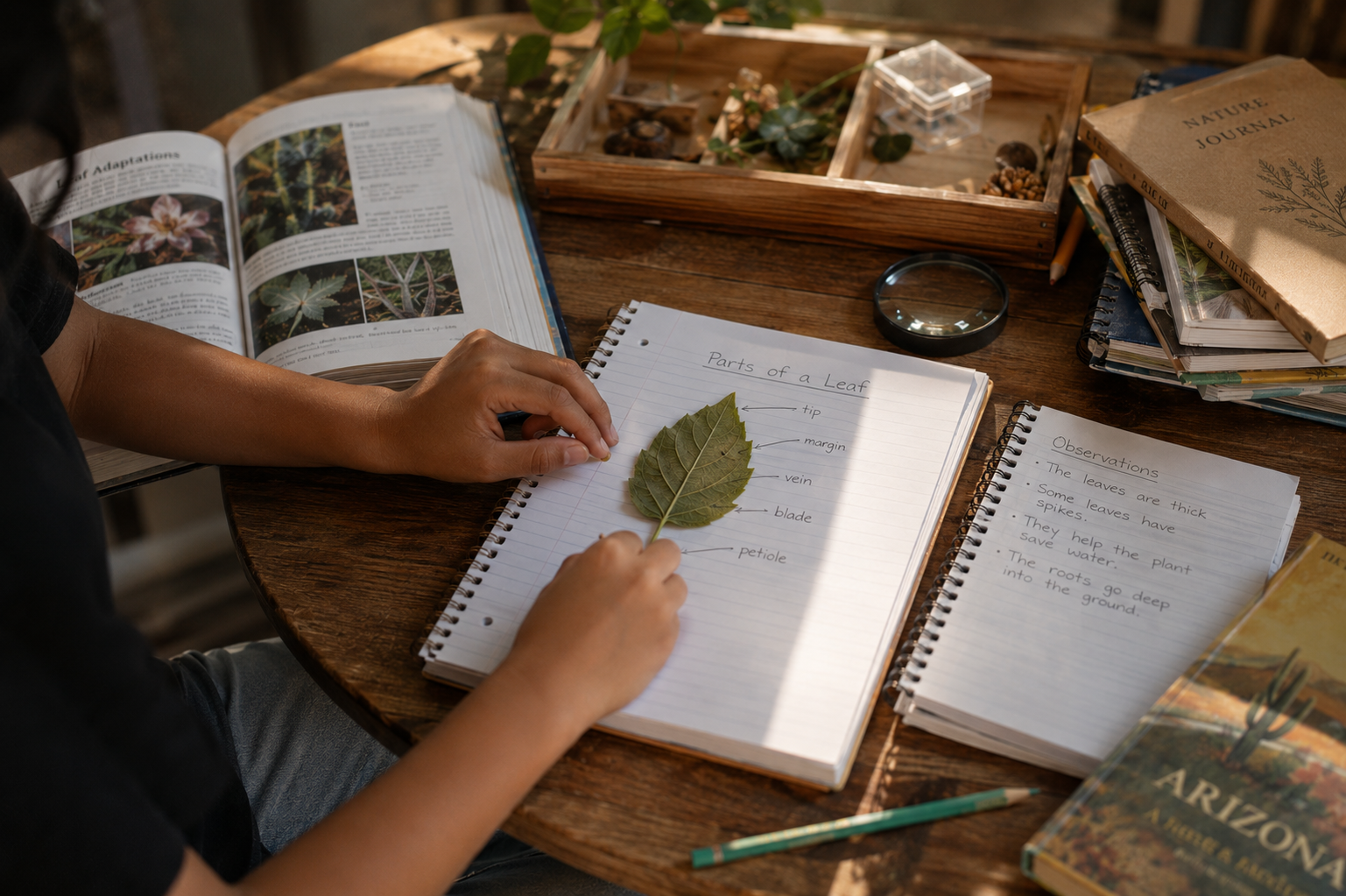
The same principle applies to science. A child can watch someone demonstrate density on a screen, but there is a different kind of learning that happens when the child makes a prediction, handles the materials, conducts the investigation, watches something unexpected happen, records the result, and then tries to explain it. Children can study weather and go outside with instruments. They can learn about plants and grow something. They can explore force and motion by building something that moves. They can study animals through observation and geology by actually holding rocks in their hands.
Sometimes the experiment won’t work.
That is not wasted instructional time. That is often when the interesting learning begins.
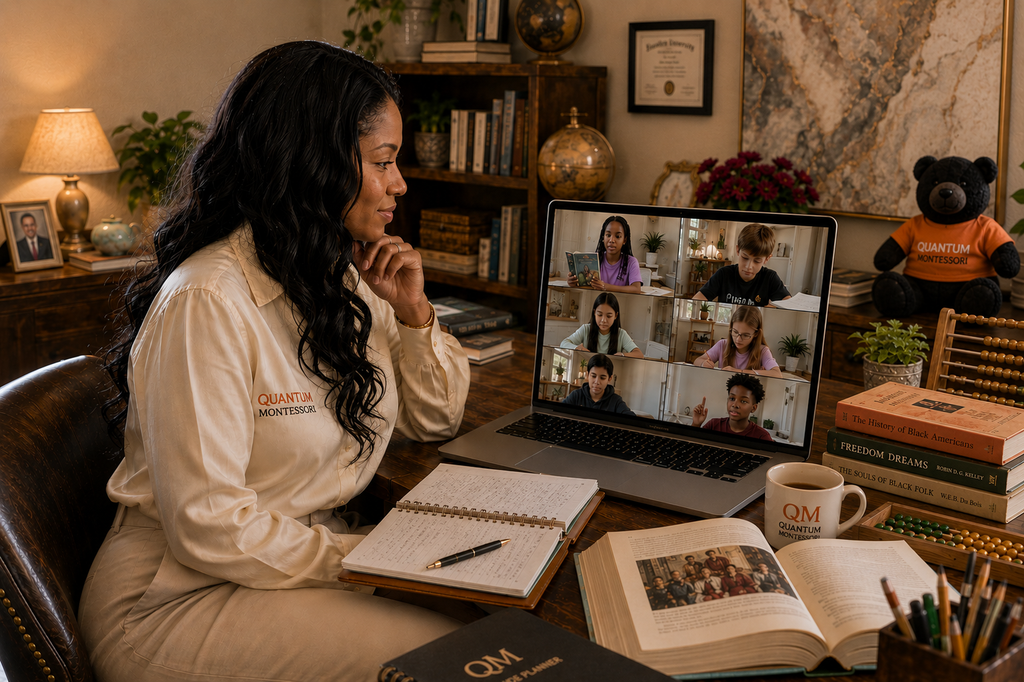
Children Need People, Movement, and Real Life
Conversation is another part of education that should not disappear simply because students meet online. I don’t mean asking a question and having twenty children type answers into a chat box. I mean actual conversation in which children explain their reasoning, listen to another perspective, disagree respectfully, ask questions, defend an idea, reconsider something they believed, and sometimes admit that they don’t understand.
As a teacher, I learn an enormous amount by listening to children talk. A student may consistently produce the correct mathematical answer, but when I ask how they reached it, I may discover that the underlying concept is not secure. Another child may struggle to produce a written response but explain an extraordinarily sophisticated idea during conversation. That tells me something completely different. Perhaps the problem isn’t comprehension at all. Perhaps we need to work on helping that student translate complex thinking into organized writing.
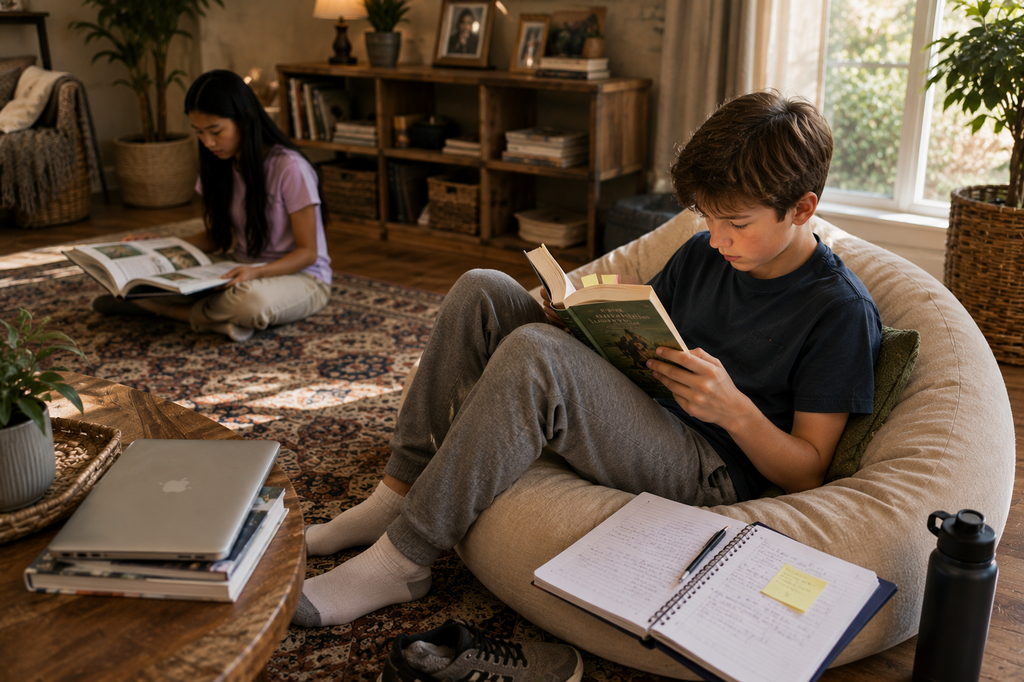
Children also need movement. We know children have bodies, yet we sometimes design learning environments as though the body should disappear during school hours. Students do not always need to remain in one chair. They can stand while working, move to the floor, retrieve materials, take a book outside, measure something across the room, build, conduct an experiment, or take a purposeful movement break and return to their work.
This is one reason a Montessori work cycle translates so beautifully into an online homeschool environment. A child does not have to move from one video call directly into another video call all day. There can be teacher-led instruction followed by independent work, reading, writing, hands-on materials, research, practical life, movement, and collaborative work. A teacher can introduce something, allow students time to investigate it, meet individually with a child who needs additional guidance, and bring students back together later to discuss what they discovered.
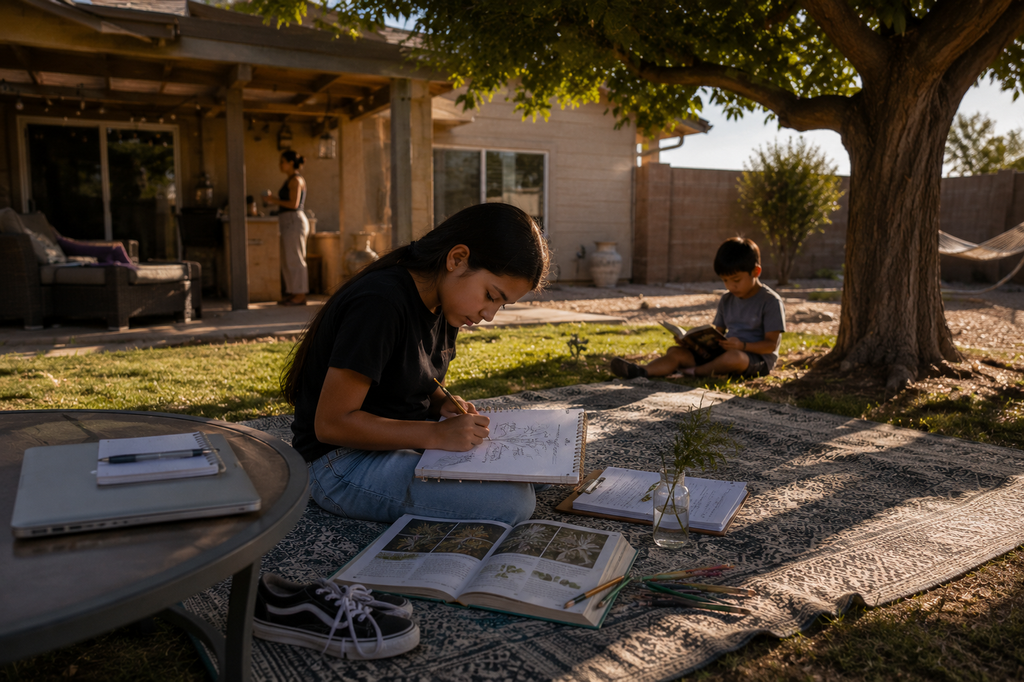
The home itself can also become part of the learning environment. A kitchen contains fractions, ratios, measurement, chemistry, reading, sequencing, time management, and practical life. A backyard can become a place for biology, weather observation, writing, art, measurement, or quiet reading. A grocery store contains mathematics, economics, budgeting, nutrition, comparison, and decision making. A family trip can lead to geography, history, science, photography, writing, and research. Even caring for an animal can raise questions about biology, behavior, ecosystems, anatomy, responsibility, and animal care.
When learning moves naturally between academic lessons and real environments, children begin to understand something important. Knowledge is not something that exists only inside school. Mathematics isn’t something that happens only in a workbook. Science isn’t something performed only by scientists. Reading isn’t something we do only because a teacher assigned a chapter. Learning is connected to the world children already inhabit.
Sometimes the Screen Should Simply Close
There are moments during online teaching when the best thing I can do is give a student enough information to begin and then send them away from me.
Now go try it.
The student may need to close the laptop, open the book, get the notebook, build the model, measure the object, conduct the experiment, make the observation, write the response, or go outside. Later, we can come back together and talk about what happened.
That is still online education.
The teacher and technology helped initiate the learning, but the learning did not remain trapped inside the technology.
This is also where independence begins to develop. Online learning should not mean that children are suddenly expected to manage everything alone. A younger student may need help preparing materials before class. An older student may need to be taught how to organize assignments, take useful notes, or manage a longer project. Independence develops gradually as children become more capable. We teach the necessary skills, provide opportunities to practice them, observe what happens, and transfer increasing responsibility to the child.
Technology doesn’t change that developmental process.
It can, however, tempt us to mistake completion for independence. A child can click through an entire digital assignment without necessarily demonstrating much independent thinking. Likewise, some of the most meaningful things children do cannot be automatically scored by software. I want to know whether a student can explain an observation, defend their reasoning, improve something after the first attempt fails, apply a mathematical idea in a new situation, organize a multi-step project, or connect today’s lesson to something they studied months ago.
Those things are harder to reduce to a percentage on a screen.
They are also part of education.
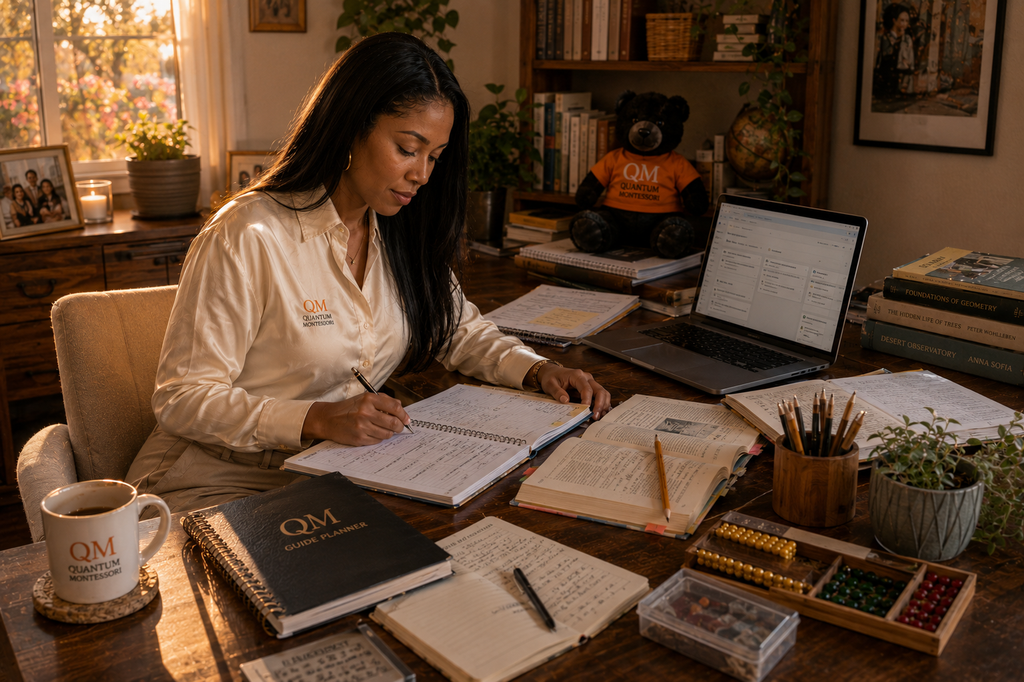
What I Want an Online Homeschool Day to Feel Like
When I imagine a meaningful online homeschool day, I don’t picture a child sitting alone in front of a glowing screen from morning until afternoon. I picture a child meeting with a teacher and then opening a notebook. I picture books spread across a table because someone became curious about something. I picture math materials on a rug, pencils that need sharpening, handwritten pages, conversations between students, and experiments that don’t always work the first time. I picture children building things, measuring things, reading things, questioning things, and eventually returning to their teacher with something new to discuss.
There will still be technology, and there should be. Children are growing up in a world where digital literacy matters, and preparing them to use technology thoughtfully is part of preparing them for that world. I simply want technology to serve education rather than allowing education to become limited by what technology can deliver most efficiently.
That is one of the things I encourage parents to think about when evaluating an online homeschool program. Don’t only consider what platform the program uses or how many hours of live instruction are offered. Look at what children are actually doing with the education they receive. Are they reading meaningful books? Are they writing by hand as well as typing? Are they having real conversations? Are they using materials? Are they investigating questions? Are they learning to manage their own work? Does learning ever leave the screen and enter the child’s actual life?
An online homeschool can use technology every day without allowing technology to become the child’s entire educational world. The laptop can connect a child to a teacher, a community, a lesson, and ideas they may never have encountered otherwise. That is incredibly valuable.
But eventually, the screen should close.
The child should pick up the pencil, open the book, ask the question, make the measurement, conduct the experiment, have the conversation, go outside, and discover what happens next.
That is where the learning continues.
At Quantum Montessori®, online learning is designed to extend beyond the screen. Students connect with teachers and classmates through technology while continuing to read, write, discuss, investigate, create, use hands-on materials, and develop increasing independence. We believe an online homeschool experience should connect children to meaningful learning, not simply connect them to a device.
Leave a Reply