American History & Heritage
Women in American History: Teaching a Fuller Story
Women have shaped every era of American history, often without credit. How to weave their stories through the curriculum, from Native nations to the present day.
Ask children to name famous people in American history, and the list often fills quickly with presidents, generals and inventors, most of them men. Women were there all along: farming, teaching, healing, organizing, inventing, writing, leading and building communities. Their stories are not a side note. They are central to how the nation came to be.
Teaching women in American history makes the story more complete and gives every child a wider sense of what is possible. This article offers an era-by-era guide, ideas for including diverse women and ordinary lives, activities for home learning and tips for talking with children about difficult topics.
Weave Women Through Every Era
Women’s history should not be confined to one unit or one month. When studying any period, ask two simple questions: What were women doing? Which women made a difference? Those questions open new perspectives on familiar events and reveal people whose contributions are often overlooked.
Native Nations
In many Native nations, women held significant authority and responsibility. Among the Haudenosaunee, clan mothers chose leaders and could remove them. Women across many nations were farmers, healers, traders, artists and keepers of tradition and language. Studying these roles helps children understand that leadership has taken many forms across cultures.
When possible, use sources created by Native authors and nations themselves, and emphasize that Native women continue to lead their communities today.
The Colonial Era and the Revolution
Women in the colonies ran farms, households and businesses. Anne Hutchinson challenged religious authorities in Massachusetts and was banished for her beliefs. During the Revolution, women organized boycotts of British goods, raised funds, nursed soldiers and sometimes fought. Abigail Adams urged her husband and other lawmakers to “remember the ladies.” Phillis Wheatley, who had been enslaved, became a celebrated poet whose work drew international attention.
The 1800s
- Abolition: Sojourner Truth, Harriet Tubman, Frances Ellen Watkins Harper and the Grimké sisters spoke, wrote and acted against slavery.
- Women’s rights: The Seneca Falls Convention of 1848, organized by Elizabeth Cady Stanton and Lucretia Mott, issued a Declaration of Sentiments demanding equal rights.
- Work: Young women in the Lowell textile mills organized for better working conditions.
- Medicine: Elizabeth Blackwell became the first woman to earn a medical degree in the United States, and Rebecca Lee Crumpler became the first Black woman to earn a medical degree in the country.
- The Civil War: Clara Barton, who later founded the American Red Cross, and many women served as nurses, spies and even soldiers in disguise.
Reform and the Vote
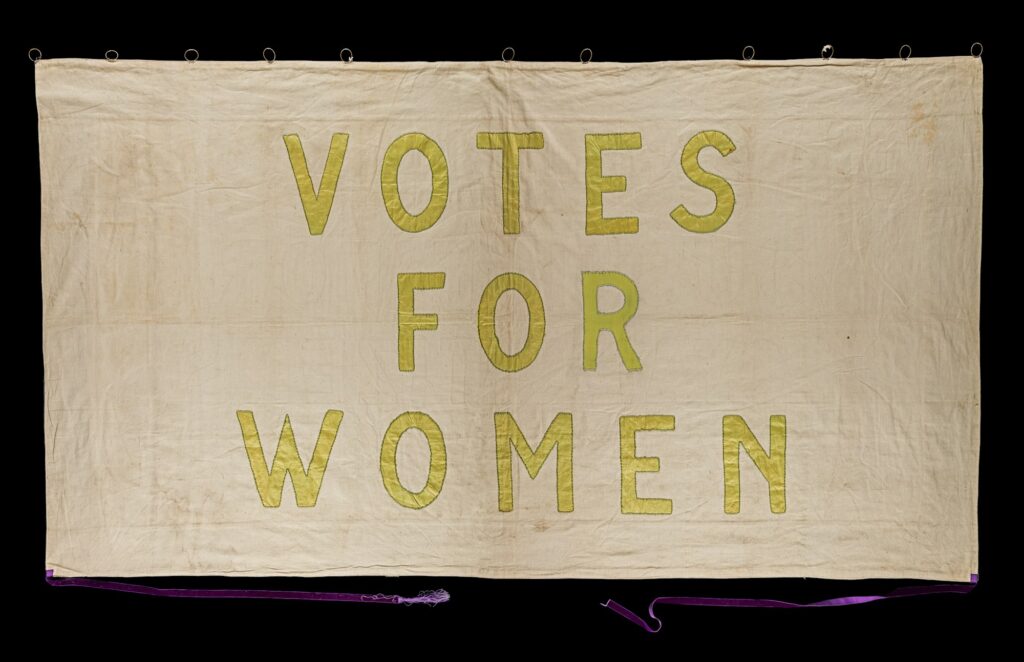
Women led reform movements for education, public health, workers’ rights and voting rights. Ida B. Wells investigated and exposed racial violence through fearless journalism. Jane Addams founded Hull House in Chicago to serve immigrant families. After decades of activism, the Nineteenth Amendment was ratified in 1920, prohibiting the denial of voting rights based on sex.
With older children, discuss how many women of color continued to be blocked from voting by discriminatory laws and practices until the civil rights era, and how Native Americans were not recognized as citizens nationwide until 1924.
The Twentieth Century
- Women’s work in factories, offices and the military during both world wars
- Scientists and innovators such as Katherine Johnson, Grace Hopper and Barbara McClintock
- Civil rights leaders including Rosa Parks, Fannie Lou Hamer, Ella Baker and Dolores Huerta
- Political leaders such as Shirley Chisholm, the first Black woman elected to Congress
- Writers and artists including Zora Neale Hurston, Maya Angelou and Georgia O’Keeffe
Women in Science and Invention
Many children are surprised to learn how many American scientific and technological advances involved women. Maria Mitchell discovered a comet in 1847 and became one of the first professional women astronomers in the country. Madam C. J. Walker built a hair care business and became one of the most successful self-made entrepreneurs of her era. Katherine Johnson, Dorothy Vaughan and Mary Jackson worked as mathematicians and engineers at NASA, contributing to early spaceflight. Grace Hopper helped develop early computer programming languages. Rachel Carson’s writing about pesticides helped launch the modern environmental movement.
Exploring these stories connects history with science and shows children that curiosity and skill have always mattered more than who someone is.
Women Who Shaped Education
Women have played a central role in American education. Emma Willard opened a school offering advanced academic subjects to young women in 1821. Mary McLeod Bethune founded a school for Black girls that grew into a university. Countless women taught in one-room schoolhouses across the frontier, often with few resources and many responsibilities. Exploring these educators helps children appreciate how schools came to be and who built them.
Today
Women continue to shape the nation as scientists, astronauts, judges, entrepreneurs, artists, educators and public servants. Encourage children to notice women leaders in their own community and in current events, connecting history to the present. Ask who is shaping your town today, and how their work builds on the efforts of women who came before them.
Include Diverse Women
Women’s experiences have varied widely depending on race, class, region, religion and background. A fuller story includes Black women, Native women, Latina women, Asian American women, immigrant women, working-class women and women with disabilities. Highlighting diverse voices helps children understand that history is made by many people, not just a few well-known names.
Ordinary Women’s Lives
History is not only about famous figures. Ordinary women kept families fed, ran farms, taught in one-room schools, nursed the sick and built churches and community organizations. Diaries, letters, quilts, recipes and photographs reveal these lives. Exploring them helps children see that everyday work and care are part of history too.
Local historical societies and museums often hold collections of these everyday objects and documents. A quilt pieced together over a winter, a handwritten recipe passed down for generations or a letter sent home from a factory town can open rich conversations about how women lived, worked and supported their families. Children can also create their own artifacts, such as a family recipe card or a short memoir, to understand how history is preserved.
Activities for Teaching Women in American History
- Biography research: Choose a woman from any era, research her life and present findings through a report, poster or dramatic monologue.
- Timeline project: Add women’s contributions to an existing timeline of American history.
- Primary sources: Read excerpts from letters, speeches or diaries, such as Abigail Adams’s letters or the Declaration of Sentiments.
- Family history: Interview grandmothers, aunts or other women in the family about their lives and work.
- Women in the community: Research a woman who shaped your town or state.
- Compare eras: How did women’s daily lives, rights and work change from 1800 to 1900 to today?
Talking With Children
Some parts of women’s history involve injustice, discrimination and hardship. Tell the truth in age-appropriate ways. With younger children, focus on fairness and courage: some people were not allowed to vote or go to school, and brave people worked to change that. With older children, explore laws, debates and the complexity of historical movements, including disagreements and exclusions within reform movements themselves.
Emphasize agency. Women were not simply victims of their circumstances. They organized, resisted, created and led, often in creative ways.
Women in American History by Age
Younger children
Use picture book biographies and simple stories of courage and creativity.
Older elementary learners
Explore specific movements, primary sources and comparisons across eras.
Middle school and older
Analyze arguments, compare perspectives and examine how race, class and region shaped women’s experiences.
Questions to Spark Discussion
- Why do you think some women’s contributions were left out of history books?
- What obstacles did women face in different eras, and how did they respond?
- How did women’s experiences differ depending on where and how they lived?
- Which woman from history would you most like to meet, and what would you ask her?
- What women in your own family or community have made a difference?
Our Approach
At Quantum Montessori, women’s stories are woven throughout history learning, not set aside for one month. Our Women Who Built America course explores these stories in depth, and related themes appear in our Making of America course.
Frequently Asked Questions
Why teach women in American history separately?
The goal is integration, not separation. Highlighting women’s contributions corrects gaps in traditional narratives so the full story is told.
What age should children learn about women’s history?
Children of any age can learn about women’s contributions through stories and biographies adapted to their level.
How do I find good sources?
Look for biographies, museum websites, primary sources and books by diverse authors. Libraries are excellent starting points.
How do I discuss injustice with young children?
Focus on fairness, courage and the people who worked for change, using simple, honest language.
A Fuller Story
Teaching women in American history gives children a more accurate and inspiring picture of the past. When children see women as leaders, thinkers, workers and changemakers in every era, they understand history more fully and imagine their own futures more broadly.
To explore our history courses, book a parent meeting.

Written by the Guides of Quantum Montessori, who teach students from preschool through high school in our homeschool, hybrid, distance learning and Learning Pod programs. Explore our programs.