Homeschooling & Families
Military Families and the Gift of Continuity
When the address changes every few years, a child's education does not have to start over each time. Here is how homeschooling can provide stability.
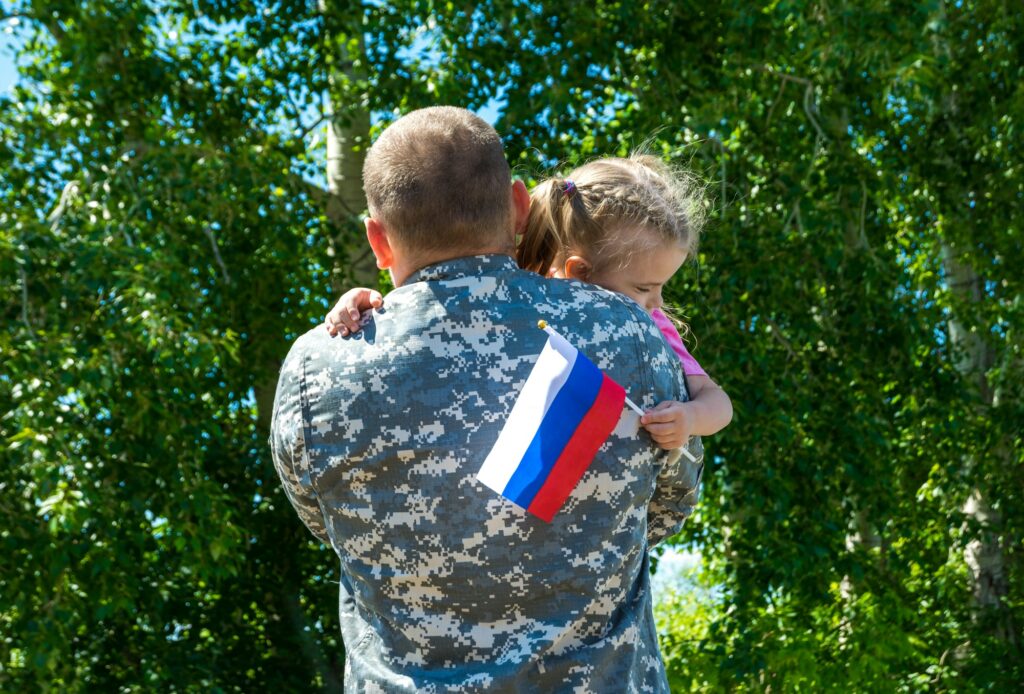
Military families know transitions well. New duty stations, new houses, new neighborhoods, new friends. For children, each move can also mean a new school, new teachers, new curriculum, and new expectations.
Children in military families often move many times before graduating. Each move can bring gaps in learning, repeated material, mismatched credits, and the social challenge of starting over.
For many military families, homeschooling, or a program that moves with them, offers something that is hard to find elsewhere: continuity.
What continuity provides
When a child’s education does not change with every move, several things stay steady.
Academic progression. The child continues from where they left off, rather than adjusting to a new school’s sequence. Gaps and repetitions become less likely.
Relationships with educators. In an online program, a child can keep the same Guide across a move. The person who knows them best academically stays in their life.
Routines. The rhythm of the learning day can continue, even when the surroundings change. That familiar structure can be comforting during a time of upheaval.
Records. Academic records stay consistent and complete, making future transitions easier.
Peer connections. Students in online classes can keep their classmates even when they move across the country, or the world.
Making moves smoother
Even with continuous education, moves are still disruptive. A few strategies help.
Plan a lighter schedule around move dates. The weeks before and after a move are rarely productive for academic work. Plan for this, and do not expect a full load.
Keep learning materials accessible. Pack a small box of essential materials separately, so learning can continue while the household is still in boxes.
Use the move as learning. Research the new location’s geography, history, climate, and culture. Track the journey on a map. Learn about the new state or country before arriving.
Maintain anchors. Keep a few daily routines constant, even during chaotic weeks: a morning read-aloud, a bedtime routine, a familiar breakfast.
Talk about feelings. Moves can bring sadness, excitement, anxiety, and grief. Children benefit from time and space to talk about what they are feeling.
Deployments
Deployments bring a different kind of stress. A parent is absent for months, routines shift, and children may experience worry, sadness, or behavior changes.
During deployments, the remaining parent often carries extra responsibility. A homeschool program that provides structure and support can help lighten that load. Consistent Guides and classmates can provide stability and connection during a difficult season.
Many families also find ways to involve the deployed parent in learning, such as reading together over video calls, sharing projects, or writing letters that become part of a child’s writing practice.
Building community
One challenge for military homeschool families is community. Each move means finding new homeschool groups, activities, and friendships.
Online programs can provide one consistent community, but local connections matter too. Many installations have homeschool groups, and military families often have a strong culture of welcoming newcomers.
Encourage children to maintain friendships across moves, through letters, video calls, or online classes, while also building new ones.
Flexibility is the point
Military life requires flexibility. Orders change. Timelines shift. Plans fall apart.
An educational approach that adapts to these realities, rather than adding another layer of rigid requirements, can make a real difference. Families who homeschool can adjust schedules around moves, deployments, and family time without falling behind.
A practical moving checklist
Families who have moved several times often develop their own systems. Here is a checklist that pulls together what we have learned from them.
Before the move
- Tell your child’s Guide the dates as early as possible, so lessons can be planned around them.
- Make digital copies of recent work samples and your child’s portfolio.
- Pack a “learning box” with current books, a math kit, notebooks, pencils and a device charger.
- Look up the homeschool requirements for your new state or country.
- Research the new location together: climate, history, wildlife, local foods.
During the move
- Keep a travel journal. Even a sentence and a sketch each day counts as writing practice.
- Use maps to track the route, calculate distances and estimate arrival times.
- Listen to audiobooks in the car.
- Keep live classes if the schedule allows. A familiar face on a screen in an unfamiliar hotel room can be grounding.
After the move
- Set up a learning space early, even if the rest of the house is still in boxes.
- Restart the daily rhythm within the first week, even in a lighter form.
- Find the local library and get library cards.
- Look for a homeschool group, co-op or activity where your child can meet local peers.
A move will always be disruptive. With a plan, it can also become one of the more memorable learning experiences of the year.
Our military families
Over the years, we have worked with many military families who have shared what continuity has meant for their children. One family described how their child kept the same Guide through two moves and a deployment, and how that relationship became an anchor during a turbulent time.
Every family’s situation is different, and homeschooling is not the right choice for everyone. But for many military families, the ability to carry education with them from one duty station to the next is a genuine gift.
If you are a military family considering your options, we would be glad to talk with you about what might work best.

Written by the Guides of Quantum Montessori, who teach students from preschool through high school in our homeschool, hybrid, distance learning and Learning Pod programs. Explore our programs.